The U.S. Supreme Court's decision last year in Melendez-Diaz v. Massachusetts caused an uproar among prosecutors by interpreting the Constitution to require that forensic and other evidence be presented mainly in person, not by affidavit.
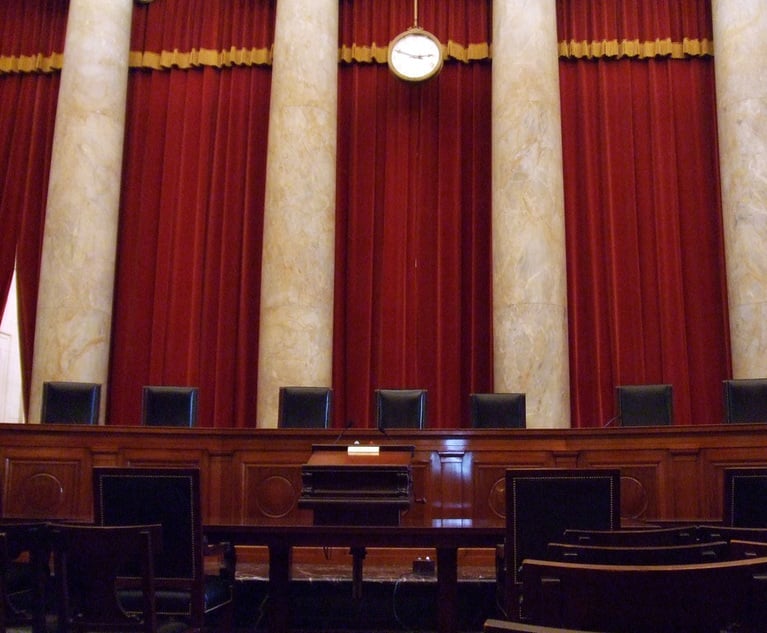
On Monday, the Court heard arguments in a case that could be a vehicle for reversing that 5-4 decision (pdf) less than a year after its issuance. But that outcome appears far from certain.
Justice Sonia Sotomayor, who was not on the Court for the Melendez-Diaz case, sent out mixed signals on whether she would provide the vote needed for reversal. (Her predecessor David Souter was in the majority.) As has become her custom, Sotomayor actively questioned both sides during Monday's argument in Briscoe v. Virginia.
Meanwhile Justice Antonin Scalia, who authored last year's ruling, fought vociferously to save it during the hourlong hearing, and he strongly implied that the four dissenters in Melendez-Diaz had voted to review Briscoe just to overturn the precedent. "Why is this case here except as an opportunity to upset Melendez-Diaz?" Scalia asked, later adding, "I'm criticizing us for taking the case."
In the case before the Court, Mark Briscoe and Sheldon Cypress were prosecuted in Virginia courts on drug charges based in part on "certificates of analysis" from the state laboratory attesting to the amount and type of drugs found during their arrests. They both invoked the confrontation clause of the Sixth Amendment, which gives defendants the right to be confronted with the witnesses against them. They argued that the drug evidence needed to be presented in person so it could be subjected to cross-examination. The Virginia Supreme Court upheld use of the written certificates because state law allows defendants to call the forensic analysts as witnesses, and Briscoe and Cypress had not done so.
The Court in Melendez-Diaz indicated that an approach like Virginia's, shifting the burden of calling the witness to the defendant, would not satisfy the Sixth Amendment.
Upholding the Virginia approach, said the defendants' lawyer Richard Friedman, would "severely impair the confrontation right and threaten a fundamental transformation in the way Anglo-American trials have been conducted for hundreds of years."
But a brief (pdf) filed by state attorneys general asking that Melendez-Diaz be overturned was on the mind of several justices. The brief said the decision has already had an "overwhelming negative impact" on drug prosecutions by requiring short-staffed and underfunded state labs to spend too much time in courtrooms.
When Friedman said that, in fact, "the expense is not inordinate," Justice Samuel Alito Jr. snapped, "How can you say that? We have an amicus brief from 26 states and the District of Columbia arguing exactly the contrary."
Virginia Solicitor General Stephen McCullough, joined by Leondra Kruger, an assistant to the U.S. solicitor general, argued that a system in which the defendant has the burden of calling the forensic witness satisfies the Constitution.
McCullough said that, since the Melendez-Diaz ruling was handed down, Virginia has seen "extensive gamesmanship" by criminal defense lawyers using the requirement of in-person testimony to their advantage.
Sitting at the defendants' counsel table with Friedman was Stanford Law School professor Jeffrey Fisher. Either Fisher or Friedman has argued the defense side in a series of cases that, since 2004, have revived the confrontation clause as a tool for defendants.