• Home
  • News
  • Firms & Lawyers
  • Courts
  • Judges
  • Surveys/lists
  • Columns
  • Verdicts
  • Public Notices
  • Advertise
  • Subscribe

Home > E-Discovery Cost-Shifting Approaches Get New Attention From Courts

Font Size: increase font decrease font

E-Discovery Cost-Shifting Approaches Get New Attention From Courts

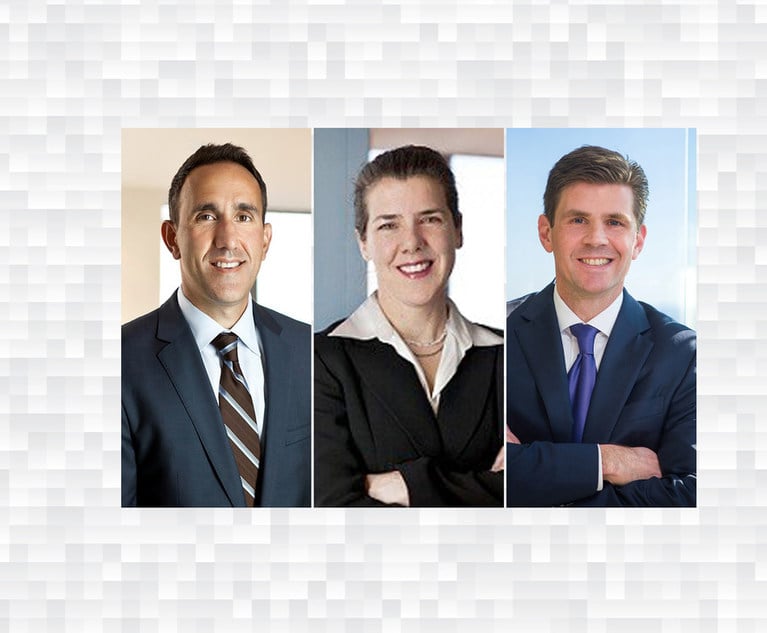
By Scott J. Etish and Stephen J. Finley Contact All Articles 

The Legal Intelligencer

January 29, 2013

  •    
  •    
  •    
  •      
 
Scott Etish

Scott Etish

Stephen Finley

Stephen Finley

The question of e-discovery-related cost-shifting typically arises in two settings: (1) when a party seeks to shift the cost of electronically stored information production during litigation to the requesting party pursuant to Fed.R.Civ. P. 26(b)(2)(B); and (2) when a prevailing party seeks to recover its costs after judgment has been entered in its favor pursuant to Fed.R.Civ.P. 54(d). This article will discuss both scenarios as they have been addressed in two recent cases – Boeynaems v. LA Fitness Int'l, 2012 U.S. Dist. LEXIS 115272 (E.D. Pa., Aug. 16, 2012), a decision involving cost-shifting prior to class action certification, and Race Tires America v. Hoosier Racing Tire, 674 F.3d 158 (3d Cir. 2012), in which the U.S. Court of Appeals for the Third Circuit addressed applications to recover e-discovery-related costs under 28 U.S.C. §1920.

Cost-Shifting Prior to Class Certification

While there is substantial precedent regarding cost-shifting during active litigations pursuant to Fed.R.Civ.P. 26(b)(2)(B), the U.S. District Court for the Eastern District of Pennsylvania's decision in Boeynaems is noteworthy because it appears to be the first decision in which e-discovery costs have been shifted prior to class certification on the rationale that even where the discovery sought is relevant to class certification (i.e., is appropriate initial stage discovery), it can be excessive and burdensome enough to warrant a directive that the requesting party share in (or bear entirely) the cost.

After incurring significant expenses in responding to the plaintiffs' first set of discovery requests, LA Fitness sought to shift the costs related to responding to the plaintiffs' second requests. In the latter, the plaintiffs asked for extensive information, some of which was irrelevant to class certification. The defendants claimed that the information was excessive, even if it related to certification, and would be "very expensive." The court agreed. In assessing fairness concerns, the Judge Michael M. Baylson of the Eastern District pointed out that the parties' respective discovery burdens, as in many employment class action matters, were "asymmetrical," and further noted that in determining whether a class is appropriate pursuant to Fed.R.Civ.P. 23, virtually all of the discovery throughout the case (and especially post-certification) will be directed to LA Fitness. Accordingly, with regard to initial phase discovery, the court held:

"The court is persuaded, it appearing that defendant has borne all of the costs of complying with plaintiffs' discovery to date, that the cost burdens must now shift to plaintiffs, if plaintiffs believe that they need additional discovery. In other words, given the large amount of information defendant has already provided, plaintiffs need to assess the value of additional discovery for their class action motion. If plaintiffs conclude that additional discovery is not only relevant, but important to proving that a class should be certified, then plaintiffs should pay for that additional discovery from this date forward, at least until the class action determination is made."

While it currently appears to be an outlier decision, Boeynaems could prove to be an important precedent for defendants in cases involving staged discovery, such as putative class actions. The holding is significant, as it illustrates that litigants who actively participate in the e-discovery process are able to demonstrate sound and good-faith efforts to comply with ESI discovery obligations, and those who cooperate with their adversaries can be rewarded with a balancing of costs under a Fed.R.Civ.P. 26 analysis.

Post-Judgment E-Discovery-Related Cost Recovery Under 28 U.S.C. §1920(4)

In Race Tires, the Third Circuit addressed the issue of "whether [28 U.S.C.] §1920(4) authorizes the taxation of an electronic discovery consultant's charges for data collection, preservation, searching, culling, conversion and production as either 'exemplification [or] the … making [of] copies of any materials where the copies are necessarily obtained for use in the case.'" 28 U.S.C. §1920 outlines the scope of costs that may be taxable in favor of a prevailing party pursuant to Fed.R.Civ.P. 54(d). Specifically, §1920(4) permits the taxation of "fees for exemplification and the costs of making copies of any materials where the copies are necessarily obtained for use in the case." In Race Tires, the defendants made an application pursuant to §1920(4) to recoup in excess of $365,000 in costs for e-discovery-related activities, including preservation and collection of ESI, processing of the collected ESI, keyword searching, culling for privileged material, scanning and TIFF conversion, optical character recognition and conversion of videos to DVD format.

The District Court found these charges taxable under §1920(4) as "the electronic equivalent of exemplification and copying" and awarded all costs to the defendants. However, in a detailed opinion espousing a strict and plain-meaning interpretation of §1920, the Third Circuit disagreed. The court acknowledged a split in the circuits on this issue, and that certain e-discovery vendor activities – including "the scanning of hard copy documents, the conversion of native files to TIFF, and the transfer of VHS tapes to DVD" – could be reimbursed under the statute as the electronic equivalent of "copying." However, it drew the line at other e-discovery costs, like a consultant's charges for data collection, preservation, searching, culling, conversion and production, which it held do not fall with in the restricted ambit of §1920(4). The plaintiffs' petition for a writ of certiorari to the U.S. Supreme Court was denied October 1, 2012.

The question now remains whether the Third Circuit's narrow view as to what constitutes "exemplification" and "making copies" will be embraced as the majority rule. In fact, since the Third Circuit's opinion in Race Tires, courts have been divided as to whether §1920 should be afforded a narrow or expansive interpretation when awarding e-discovery-related costs.

Not long after the Race Tires decision, the Northern District of California endorsed a more expansive interpretation of taxable costs under §1920(4) when it authorized taxation of more than $700,000 in costs – much of which was related to electronic discovery services, including data processing – in In re Online DVD Rental Antitrust Litigation, 2012 U.S. Dist. LEXIS 55951 (N.D. Cal., Apr. 20, 2012). The court specifically noted the contrary Race Tires holding, but elected to take a more expansive view of taxable costs under the statute in light of the absence of Ninth Circuit authority on the issue.

More recently, in Johnson v. Allstate Insurance, 2012 U.S. Dist. LEXIS 148282 (S.D. Ill., Oct. 16, 2012), the defendant sought costs associated with "processing ESI, extraction of metadata, rendering ESI word searchable, deduplication of ESI, creation of TIFF images, electronic data hosting and preparation of productions of ESI," as well as generation of trial graphics and traditional photocopying services. More than half of the total costs sought were for database hosting, which the court disallowed, determining that such expenses fell within Race Tires' prohibition on taxing costs for "collecting and preserving" data. At least one other court adopted similar reasoning in a subsequent opinion. (See Abbott Point of Care v. Epocal, 2012 U.S. Dist. LEXIS 159042 (N.D. Ala., Nov. 5 2012) (rejecting a request for costs associated with preparing and maintaining an electronic database).) Moreover, Allstate's request for more than $100,000 in costs associated with "preparation of productions of ESI" did not, in the court's opinion, qualify as exemplification or copies of necessary materials and was, therefore, also not taxable.

A browser or device that allows javascript is required to view this content.

Continue reading

  • 1
  • 2

Next


Subscribe to The Legal Intelligencer

You must be signed in to comment on an article

Find similar content

Firms mentioned

    
  • Gibbons

Companies, agencies mentioned

    
  • Third Circuit
  • Hoosier Racing Tire
  • Discovery-Related Cost Recovery Under 28 U.S.C.
  • Ninth Circuit
  • Kan Pacific Saipan
  • Amazon.com, Inc.
  • LA Fitness PLC
  • HDR Engineering Inc.
  • US District Court
  • Allstate Corporation
  • Tampa Bay Water
  • United Air Lines
  • University of California
  • Supreme Court
  • U.S. Court of Appeals

Key categories

    
  • E-discovery
  • Product Liability

Most viewed stories

    
  1. Pa. Justices Uphold Mandatory Judicial Retirement
    •      
  2. Senate Confirms Two Fed. Judges for Eastern District
    •      
  3. Corbett to Nominate Stevens to High Court
    •      
  4. O'Connor Suggests End to Judicial Elections in Pa.
    •      
  5. Sources: Justice McCaffery Contacted FJD About Cases
    •      
lawjobs.com

TOP JOBS

MORE JOBS

POST A JOB

From the Law.com Network

In-House Counsel Go to Privacy Boot Camp

In-House Changes at News Corp Ahead of Corporate Split

Proskauer, Former CFO Settle Bias Suit

Global Firms Cope With Istanbul Unrest

D.C. Circuit Nominations a Defining Moment

D.C. Circuit Nominees Widely Respected Within the Bar

Nine Tips to Avoid Starring in a Spreadsheet Horror Story

Snapshot: Tom Gelbmann

The Recorder 25: California Golden Again for Many Firms
  •      
    • Subscription Required

Capital Accounts: Judicial Branch's Brothers Don't See Eye to Eye
  •      
    • Subscription Required

Miami Photographer Sues Pop Star Justin Bieber
  •      
    • Subscription Required

Jeremy Alters Settles With Argentinian Firm For $1 Million
  •      
    • Subscription Required

Alcotest Should Be Discontinued Right Away, DWI Lawyers Say

Lawyer's Fudging of HUD Forms Draws Supreme Court Censure
  •      
    • Subscription Required

The Affordable State-Specific Practice Solution
Available in NY, NJ, PA and CT editions - research, draft and prepare even the most complex cases with ease.

Restaurant in Union Square Park Ruled Permissible
  •      
    • Subscription Required

Magistrate Judge Finds Few Benefits to Class in Settlement
  •      
    • Subscription Required

Third Circuit Could See Rise in Pay-for-Delay Litigation

Cozen Debt Forgiveness Is Campaign Contribution, Court Says
  •      
    • Subscription Required

Sorry, Charlie, Your Wife Won't Support You

Top Reasons to Take Your Husband's Name

Interim Dean Named at Texas Wesleyan University School of Law
  •      
    • Subscription Required

Water Works: H2O Kept Lawyer-Lobbyists Busy
  •      
    • Subscription Required

Boosting Lawyers And Saving Lives
  •      
    • Subscription Required

11th Circuit Conflicted On Juveniles Stance
  •      
    • Subscription Required

Chimp Attack Victim Is Denied $150M State Lawsuit

Auto Body Case May Lead To CUTPA Reassessment

  • About |
  • ALM Properties |
  • ALM Reprints |
  • Customer Support |
  • Privacy Policy (updated 6/14/13) |
  • Terms & Conditions |
  • ALM User License Agreement
ALM Media