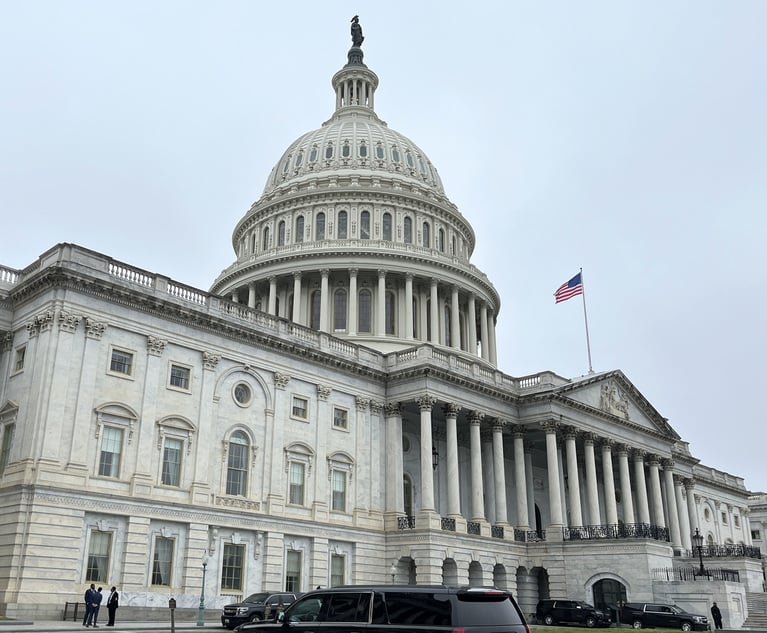
Veteran correspondent Tony Mauro leads coverage of the nation's highest court Sotomayor Touts Privacy, Questions Cameras at Court In her first major talk on issues of free speech and privacy, Supreme Court Justice Sonia Sotomayor said recently that her experiences as a nominee and as a justice have led her to censor herself and to question whether camera coverage of the court should be allowed.

"Yes, my notion of freedom has changed since I became a justice of the Supreme Court" Sotomayor said in a New York City speech on May 5 that got little press attention at the time. "There for the first time in a court of final resort, I have come to appreciate in an unanticipated way the great burden that my work imposes."

That burden, as Sotomayor explained it, includes self-censorship and barring media coverage in some situations to promote the court's image as a neutral and apolitical institution. "The veil of privacy that shelters us from political influence and protects the public perception of the court is necessary because history shows that our authority is not unassailable." She added, "Maintaining the court's decorum and its respect in the public eye are not minor questions of image and public relations but essential to the proper functioning of the institution and our democracy."

In her speech delivered at Cooper Union before the PEN America Center, Sotomayor said she has tempered her own tendency toward transparency because of this responsibility. "When I give a speech or express myself publicly outside of court opinions, I voluntarily and scrupulously censor myself," she said. "I am cautious to avoid any topic that might foreseeably come before the court or to express myself in any way that would telegraph a future decision, because it's clear that such expression can and does undermine the public's confidence in the court."

Sotomayor criticized news coverage of Supreme Court oral arguments, which she said "becomes the occasion for dramatic prognostication in the press as pundits examine the entrails of every utterance for some hint of how we will decide."

That kind of coverage, she said, places too much emphasis on "who might have been having a bad day at the podium," missing other parts of the deliberative process -- including the impact that lawyers' answers to justices' questions sometimes have on the outcome of a case. "A sportscaster's reckless account does not guide a ball through the air and neither does the flood of commentary that follows oral arguments sway our decision."

Continue Reading ...

This Week's Headlines

Supreme Court Defers to Agencies in Jurisdiction Case

The Supreme Court on Monday ruled in favor of deferring to administrative agencies in determining the scope of their own jurisdiction, issuing a 6-3 decision that featured a sharp dissent from Chief Justice John Roberts Jr.

 
Brief of the Week: Copyright board may get Court review

While many eyes are on the constitutional challenge to President Obama's recess appointments to the National Labor Relations Board, another appointments clause controversy—one involving judges responsible for potentially billions of dollars—also has reached the U.S. Supreme Court.

 
Prison Inmate's Complaint Gets Supreme Court Review

The Supreme Court's running feud with the U.S. Court of Appeals for the Sixth Circuit resumed Monday with the justices' decision to grant review in a Tennessee case involving civil rights complaints filed by prison inmates.

 
Justices Asked to Decide Restitution for Porn Victims

When he left the federal bench in 2007, Paul Cassell made victims' rights a centerpiece of a litigation practice intermingled with a full-time teaching load. Today, the former federal judge is asking the U.S. Supreme Court to act on behalf of the most vulnerable of victims.

 
Supreme Court Bar Shows Verrilli Some Love

After a tough year for Solicitor General Donald Verrilli Jr., veterans of the U.S. Supreme Court bar gave him a collective bear hug recently, praising his integrity and abilities as a top-notch advocate.


From PBS NewsHour: An Inside Look at Backstories of Big Decisions in Chief Justice Robert's Court
May 9, 2013
In her new book, "The Roberts Court," Marcia Coyle of the National Law Journal and regular NewsHour contributor takes a look at the landmark decisions that have reached the Supreme Court during the tenure of Chief Justice John Roberts. She talks to Jeffrey Brown about her observations and interviews with the justices.

From Law Technology News: Supreme Court Confidential
Jesse Londin | May 8, 2013
Just about everything you could want to know about highest U.S. court via two apps from the Oyez Project.

From NLJ.com: High Court Defends Consumer Rights and Economic Freedom
Robert Steinbuch | May 9, 2013
Given any ambiguity, as Justice Anthony Kennedy has aptly proclaimed in his book, "the tie goes to freedom." That is what the court did in Kirtsaeng v. John Wiley & Sons.

SPONSOR SPOTLIGHT

VIDEO CENTER

Marcia Coyle on writing The Roberts Court

The National Law Journal's senior reporter Jenna Greene interviews Chief Washington Correspondent Marcia Coyle about her new book, The Roberts Court: The Struggle for the Constitution.


VIEW ALL VIDEO »

SUPREME COURT FEED

Subscribe today to get the full story

From two of the most influential journalists covering SCOTUS: Tony Mauro and Marcia Coyle, The Supreme Court Brief will provide exclusive daily coverage while the Court is in session on all issues that will or may be coming to Supreme Court, interviews and video with the nation's leading appellate litigators, win-loss records for practitioners and more. Sign up today!

Subscribe Today Returning Users

PREVIOUS COVERAGE


About ALM  |  About Law.com  |  Customer Support  |  Reprints  |  Privacy Policy  |  Terms & Conditions |  ALM User License Agreement