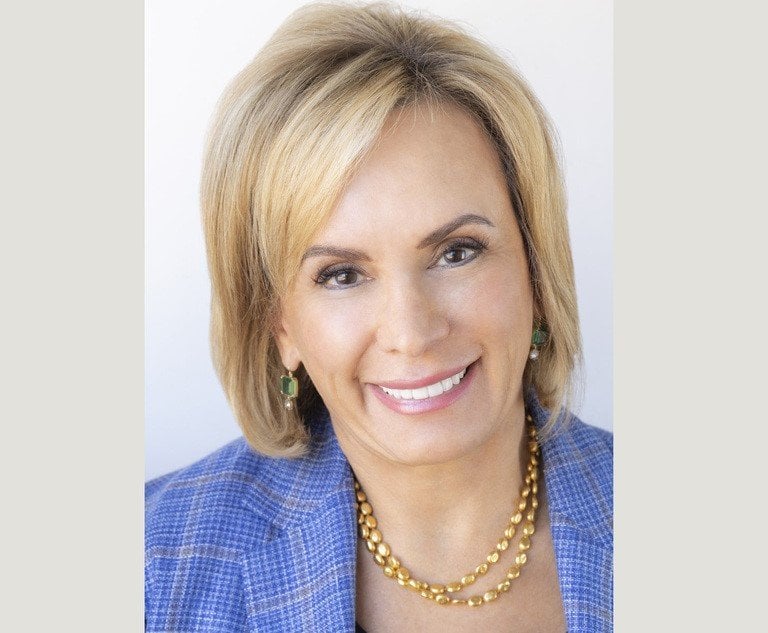
A gathering of women in-house counsel on the eve of the American Bar Association's Women in Law Leadership (WILL) Academy was set up to foster discussions on how female in-house counsel can, and need to, help promote women in law firms and the profession as a whole. But survey results presented at Wednesday's talk at times showed how little influence in-house counsel currently have on the way women lawyers are paid and advanced in law firms.
The first-ever regional summit for in-house counsel presented by the ABA's Commission on Women in the Profession was held in Philadelphia in advance of the two-day leadership academy being held today and Friday. At the summit, Minority Corporate Counsel Association Executive Director Veta T. Richardson presented the results of a joint study by the MCCA, the ABA's commission and the Project for Attorney Retention at the University of California Hastings College of the Law. The study, "Survey of Women Partners on Law Firm Compensation," asked nearly 700 female partners in regional and international firms alike how they are compensated and promoted in their firms.
As other studies have shown, billable amounts collected, hours worked and clients generated were the key factors to promotion, followed by cross-selling, billing partner status and work that binds the client to the firm. Factors that contributed the least to promotion opportunities were contributions to firm diversity, development of human capital, efficient leveraging of associates, associate development and pro bono or community service, according to the survey.
The 7.9 percent of survey respondents who were de-equitized said the top reasons for their de-equitization were the firm's decision to increase profits per equity partner, low revenue generation from client origination, low billables, low revenue generation from cross-selling and seniority.
With client generation so important in law firms, many of the GCs attending Wednesday's summit were surprised to learn how little the client perspective played into which attorneys get which clients.
When asked how it is decided who inherits the work of a retiring partner, 32 percent of respondents said there is no consistent approach at their firm, while 29.7 percent said the current partner selects the successor. The surprise to the audience was that in only 2.2 percent of firms do the clients choose who is next to do their work.
Richardson said that number is a wake-up call for female in-house counsel who have the ability to influence engagements.
Another 15.7 percent of the respondents said they didn't know how the work was passed on, 5.6 percent said firm management decides and another 2 percent said there is an objective process at their firms.
With the survey showing origination credit being an important factor to overall compensation, the attendee GCs discussed whether they had the power to enter into firm politics and procedures and suggest they want a certain partner to get the credit. One attendee said they absolutely have the power and that she has used it to ensure the person she hired is the one getting the credit.
Other aspects of the survey showed the majority of firms use both subjective and objective criteria in assessing points or levels in terms of partner compensation. Revenue generation was shown as the key factor in that equation, Richardson said. The positive was that most firms re-evaluate their assessments each year, which Richardson said was a chance for in-house counsel to exert their influence and help move law firm attorneys forward.
When asked who most influences compensation, survey respondents said executive committees have the most influence, followed by compensation committees and then the managing partner or chairperson of the firm.
The problem with all three of those groups, Richardson said, is that women are "severely underrepresented" in each.
Fifty-five percent of survey respondents said they were occasionally or frequently denied their "fair share" of origination credit. Two-thirds of the respondents said they were uncomfortable with appealing their compensation decisions, and 30 percent said they were subjected to intimidation, threats and bullying when they did express disagreement.
In terms of the methods used to determine partner compensation, reports on billable hours and origination along with self-assessments were most frequently mentioned. That was followed by evaluations by practice group leaders, the compensation committee and other partner evaluations.
Of the 694 respondents to the survey, 458 were at a firm with more than one partnership tier. Richardson said an overwhelming majority of equity partner respondents were not promoted from income partner to equity partner but had to achieve equity partner status by lateraling to another firm.
Wednesday's summit, which was held at Temple University Center City, was opened by Temple University Beasley School of Law Dean JoAnne Epps. She likened the plight of female lawyers to minority attorneys, and said they are inching forward and then falling back in the recession.
Lauren Stiller Rikleen, founder and executive director of the Bowditch Institute for Women's Success, said a profession so focused on equality should look to ensure equality among its own members.
She said surveys have shown that law firms with clients who have women in high positions tend to have higher growth rates for women among their own partnerships. She said female general counsel have to use their voices to make measurable change. Rikleen pointed to recent commentaries saying that, as corporate counsel gain more influence in their relationships with law firms, they have an ethical responsibility to have a greater say on the firms' diversity.
The two-day WILL Academy will bring together in-house and outside counsel as well as judges and other members of the legal community to discuss leadership attributes, alternatives to law firm practice, advice from judges and general counsel, rainmaking techniques and work-life balance.