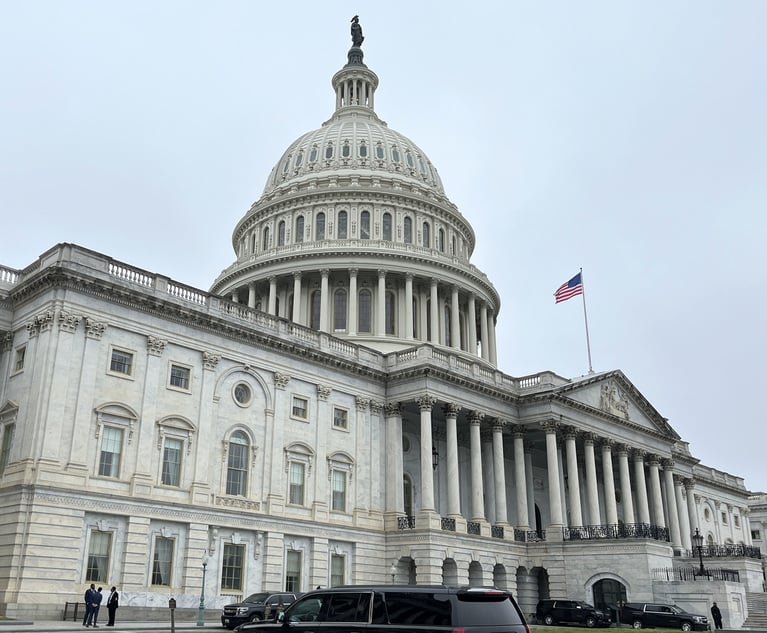
Ever since Judge James Robertson of Washington, D.C., federal district court urged Congress to act on the Cobell settlement, there's been a lot of buzz on Capitol Hill about the proposed deal, which would award more than $1.4 billion to a class of hundreds of thousands of Indians.
The deal, announced in December, can't move forward without congressional approval, and the deadline for Congress to pass the necessary legislation has been extended three times already. Robertson pushed back the latest deadline to the end of May, and he said he would invite members of Congress to testify before him if nothing is done about approving the settlement before then.
Tuesday, Sen. John Barrasso, R-Wyo., proposed five changes to the settlement -- including imposing a $50 million cap on pre-settlement attorney fees, costs and expenses. That's half of the $100 million cap that the plaintiffs lawyers had agreed to with Justice and Interior department attorneys. Barrasso first voiced concern over the amount of attorney fees during a Dec. 17 hearing of the Senate Indian Affairs Committee.
Lawyers for lead plaintiff Elouise Cobell -- she is represented by a team from Kilpatrick Stockton in Washington, D.C., and in Atlanta, and D.C. solo practitioner Dennis Gingold -- have agreed to a range of fees between $50 million and $100 million, which would be taken from the $1.41 billion settlement. Plaintiffs lawyers in Washington have said the range is well below the percentage awarded in large, complex class actions. The Cobell suit has been anything but swift: It was filed in 1996.
Gingold on Wednesday called the proposed fee range "bottom of the barrel" and also said that the plaintiffs lawyers never thought there would be unanimous support for the settlement on Capitol Hill. "Sen. Barrasso is one person who has expressed opposition," Gingold said. "We know that we have very strong supporters in the House and Senate."
Kilpatrick Stockton partner Keith Harper was not immediately reached for comment Wednesday morning on the proposed amendments to the settlement.
Last week, Senate Majority Leader Harry Reid, D-Nev., urged his colleagues to approve two settlements -- the Cobell deal and a settlement in the Pigford case in which black farmers have been in litigation against the Agriculture Department.
House Majority Leader Nancy Pelosi said in a statement April 23 that she is "committed to finding funding for the Pigford and Cobell settlements."
If Congress approves the Cobell settlement, that's not the end of the road for the plaintiffs and government lawyers. Congressional approval would put the settlement in front of Robertson, giving class members a chance to object to all, or part, of the proposed deal, including attorney fees.
Earlier this month, at a status hearing in the case, Robertson said "from where I sit, this does not look like a partisan matter." He said the settlement needs "an appropriate sense of priorities" and urged Congress to move swiftly. Robertson said that until Congress acts, "justice is on hold."
This article first appeared on The BLT: The Blog of Legal Times.