Law.com
  • News
    • Newswire
    • Supreme Court
    • International
    • Legal Blog Watch
    • The Hot Seat
    • Video
  • Publications
    • The American Lawyer
    • Corporate Counsel
    • Law Technology News
    • The National Law Journal
    • New York Law Journal
    • New Jersey Law Journal
    • Connecticut Law Tribune
    • The Legal Intelligencer (PA)
    • Daily Business Review (FL)
    • Delaware Law Weekly
    • Daily Report (GA)
    • The Recorder (CA)
    • Texas Lawyer
    • Publication E-Alerts
    • More Publication Sites
  • Legal Research & Directories
    • Books Online
    • Smart Litigator
    • ALM Experts
    • Verdict Search
    • Court Reporters
    • Legal Dictionary
    • LegalTech® Directory
    • Newsletters
    • More Directories
  • Surveys, Lists & Rankings
    • Amlaw 100
    • NLJ 250
    • Global 100
    • The A-List
    • ALM Legal Intelligence
    • Surveys
    • More Lists & Rankings
  • Special Reports
  • lawjobs.com
  • LawCatalog Store
  • CLE & Events
    • CLE Center
    • ALM Events
    • LegalTech
    • Virtual LegalTech
    • Insight Legal Events
    • Webinars
Home
 
Article
Twitter LinkedIn RSS
Sign Up for Newsletters

Law.com Home > Supreme Court Likely to Leave Accounting Oversight Board as Is

Font Size: increase font decrease font

Supreme Court Likely to Leave Accounting Oversight Board as Is

By Tony Mauro All Articles 

The National Law Journal

December 8, 2009

  •    
  •    
  •    
  •      
 
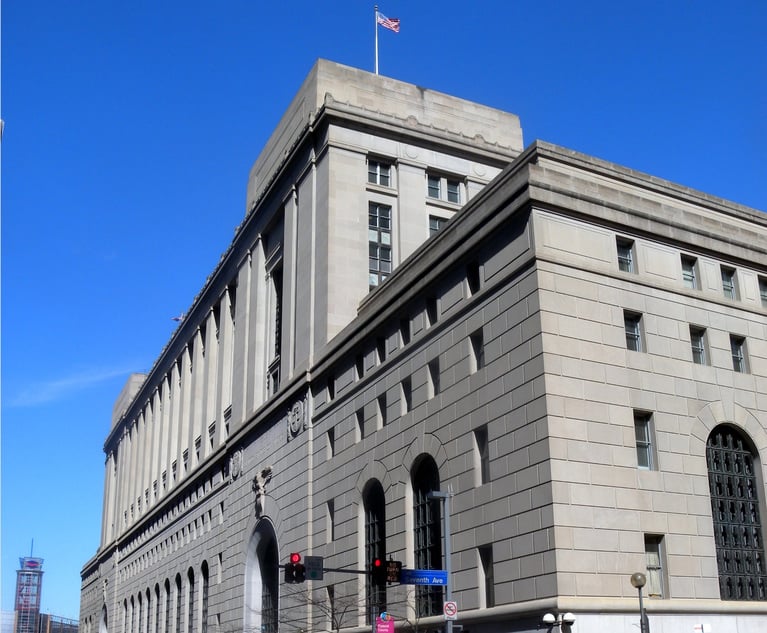
The United States Supreme Court

The United States Supreme Court
Photo: Stacey Cramp

Related Items

  • Critical Time for Corporate Oversight Agency
  • Divided D.C. Circuit Rejects Challenge to SOX Oversight Board

The U.S. Supreme Court appeared inclined to leave well enough alone Monday and not tinker with the structure of an accounting oversight board created by the Sarbanes-Oxley Act of 2002.

"My goodness, there are so many shapes and sizes" for government agencies, said Justice Stephen Breyer at one point during oral argument in Free Enterprise Fund v. Public Company Accounting Oversight Board. Breyer seemed to suggest it would be hard to single out the Public Accounting Oversight Board as uniquely unconstitutional.

Congress created the board in the aftermath of the Enron and WorldCom accounting scandals, giving the board broad and independent power to regulate accounting firms, which had been self-regulated before.

Its five members are appointed by the U.S. Securities and Exchange Commission, not the president. And the board's members, like those of the commission, can only be fired "for cause," not merely for policy disagreements.

This "double for-cause" feature of the law triggered a lawsuit challenging the board's constitutionality as too insulated from presidential power. The Free Enterprise Fund and a Nevada accounting firm under audit by the board mounted the challenge.

The U.S. District Court for the District of Columbia and the U.S. Court of Appeals for the D.C. Circuit upheld the board. In dissent, D.C. Circuit judge Brett Kavanaugh said presidential control over the accounting board's members is too attenuated, hampering his ability to control the executive branch. Kavanaugh also called the dispute "the most important separation-of-powers case regarding the President's appointment and removal powers to reach the courts in the last 20 years."

Some business groups view the case as a chance to weaken the law, if the Court strikes down the board. And the case comes against the backdrop of a long-running debate over the so-called "unitary executive," a theory of the presidency that would hold the president accountable for all executive branch actions.

Michael Carvin of Jones Day, representing the plaintiffs, made some headway with an impassioned plea that "the board is unique among federal agencies" in its insulation from presidential control. He urged that it be held unconstitutional as a violation of the appointments clause of the Constitution, which is "designed to achieve accountability."

But Solicitor General Elena Kagan, representing the SEC, and Jeffrey Lamken of Molo Lamken, representing the accounting board, seemed successful in reassuring the Court that the president has "constitutionally sufficient control" over the accounting board, as Kagan put it. He exerts this control, Kagan said, through his authority over the SEC -- which, in turn, has "full control" over "anything and everything" the board does.

Kagan also said Congress, in creating the accounting board, sought to make it independent from the accounting industry, not from the SEC.

Asked by Chief Justice John Roberts Jr. to name other agencies that have "double for-cause" insulation from the president, Lamken said a range of employees, from administrative law judges to postal inspectors general are in a similar posture.

"The president has the same control over the SEC that he has over any other independent agency, and the SEC has pervasive control over the board," said Lamken.


Subscribe to The National Law Journal

You must be signed in to comment on an article

Find similar content

Companies, agencies mentioned

    
  • U.S. Securities and Exchange Commission
  • Free Enterprise Fund
  • Public Company Accounting Oversight Board
  • U.S. Supreme Court
  • Enron
  • WorldCom
  • US District Court
  • U.S. Court of Appeals

Key categories

    
  • financial and business service
  • litigation
  • parliament
  • local authority
  • lawyer

Most viewed stories

    
  1. Court Officials Seek to Reform Process of Naming Acting Justices
    •      
  2. The 2013 Am Law 100
    •      
  3. Harvard Law Opens Applications to Juniors
    •      
  4. Prolific ADA Plaintiff Faces Nemesis in Harassment Suit
    •      
  5. Lawyers Sanctioned Over Porn Lawsuits File Appeal
    •      
lawjobs.com

TOP JOBS

MORE JOBS

POST A JOB

From the Law.com Network

EEOC Gets Tough With Companies on Genetic Privacy

Retailers Facing Employment Law Vulnerabilities

Ex-Dewey Partners Face New Foe in Firm's Bankruptcy

S&C Adds Linklaters Restructuring Partner in London
  •      
    • Subscription Required

Contrite Companies Can Win Forgiveness in Bribery Cases
  •      
    • Subscription Required

Plaintiffs Want to See Toyota's 'Crown Jewels'
  •      
    • Subscription Required

Cisco E-Book Delivers Ethics on the Go

Collaboration Is Key to Defending Cyberattacks

Prolific ADA Plaintiff Faces Nemesis in Harassment Suit

Ullyot Exit Closes Chapter for Facebook

Fla. Attorneys Lead Force-Placed Insurance Fight

Lawsuit Names Missing Fla. Attorney for Alleged Fraud
  •      
    • Subscription Required

Loaner Judges Helping Essex Cope With Persistent Vacancies
  •      
    • Subscription Required

Surrogate Faces Suspension for Political Activity, Drunken Driving
  •      
    • Subscription Required

The Affordable State-Specific Practice Solution
Available in NY, NJ, PA and CT editions - research, draft and prepare even the most complex cases with ease.

Circuit Reinstates Lawsuit by Inmate Over Cell Conditions
  •      
    • Subscription Required

Custody Ruling in Bitter Fight May Turn on 11-Year-Old's Wish
  •      
    • Subscription Required

Castille Testifies in Favor of 'Civil Gideon' Funding

Workers' Comp Judges Can't Fight Rescinded Raise
  •      
    • Subscription Required

Law Schools Are Looking Beyond LSATs, Says Mich. Dean

Is Freezing Your Eggs the Solution?

Advising Clients on Weather and the Workplace
  •      
    • Subscription Required

Texas Sues BP, Others Over Deepwater Oil Spill Disaster
  •      
    • Subscription Required

Filing Blunder To Cost $142,600
  •      
    • Subscription Required

Court: Injured College Student Can't Sue State
  •      
    • Subscription Required

Corporate Bribery Case Part Of National Trend
  •      
    • Subscription Required

Court Continues To Grant Lawyers Fraud Immunity
  •      
    • Subscription Required

  • About |
  • ALM Properties |
  • ALM Reprints |
  • Customer Support |
  • Privacy Policy |
  • Terms & Conditions |
  • ALM User License Agreement
ALM Media