Stripped of his freedom by the FBI early Tuesday, disgraced Fort Lauderdale, Fla., lawyer Scott Rothstein appeared in a packed Fort Lauderdale federal courtroom and was accused by prosecutors of using forged judicial signatures to defraud investors as part of a $1.2 billion Ponzi scheme.
Wearing a brown designer T-shirt and blue jeans, Rothstein, 47, appeared nonchalant as he stood in handcuffs and leg restraints before U.S. Magistrate Robin Rosenbaum, who ordered him held without bail because he is a flight risk.
Agents arrested Rothstein in the early morning hours and took him to FBI headquarters in North Miami Beach. He was then transported to U.S. District Court in Fort Lauderdale for his initial appearance.
John V. Gillies, special agent in charge of the Miami FBI office, called Rothstein's crime, "arguably the largest fraud in Miami's history."
In a criminal information filed with the court, prosecutors charged him with five counts, including racketeering conspiracy that includes mail fraud, wire fraud and money laundering. Between 2005 and 2009, the government said, Rothstein took millions in investor money in a scheme that focused on the sale of confidential settlements of legal disputes. By statute, a conviction on all charges could result in 100 years in prison.
Assistant U.S. Attorney Paul Schwartz told Rosenbaum that during the alleged multi-year scheme, Rothstein concocted phony orders and forged the signatures of judges' names including those of federal judges and a District Court of Appeal judge.
The forging of those documents, Schwartz declared, "goes to the heart of our justice system."
Prosecutors said Rothstein forged signatures on judicial orders to scam friend and auto magnate Ed Morse out of $57 million, which went to pay investors in the Ponzi scheme.
Prosecutors made a reference to unidentified co-conspirators but did not elaborate.
Neither did acting U.S. Attorney Jeff Sloman, who refused to give details on the many accusations made in the information or the alleged co-conspirators. He did say that Rothstein was brazen in his crimes by forging judges' names and bilking his own clients.
"That is a height of chutzpah," Sloman said. "This is one of a small handful of cases in which a law firm has been named as a RICO [racketeering] enterprise."
One accusation contained in the criminal information was that Rothstein and co-conspirators paid large bonuses to employees of his Fort Lauderdale law firm, Rothstein Rosenfeldt Adler, designed to make large political contributions in their names.
"Such conduct was designed to conceal the true source of the contribution and to illegally circumvent campaign finance laws," according to prosecutors.
Sloman said all of Rothstein's trappings of outrageous wealth were a smoke screen to fool investors that his schemes to defraud were hugely successful.
"This case is a glaring example of greed run amok," he said. "Now the mansions, the Ferraris, the yachts, the law firm, his friends are all gone. He sought to buy power and influence at the expense of his clients and instead has potentially bought himself a lengthy prison sentence."
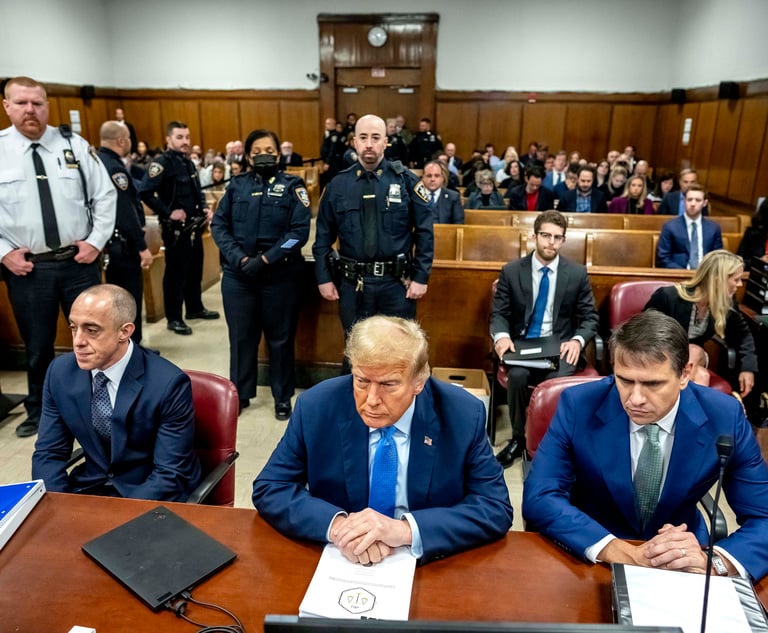
Rothstein's attorney and former colleague, Marc Nurik of Fort Lauderdale, did not oppose Rosenbaum's detention order. "Under the circumstances at this point, we don't contest pretrial detention," he told the court.
Nurik also waived Rothstein's right to be charged by a grand jury. Defendants charged by criminal information often end up pleading guilty to some of the charges against them. But there was no indication when the defense might head in that direction and Nurik told reporters there is no prospective plea deal.
Prosecutors said Rothstein, who took a bizarre overseas excursion by charter jet to the North African country of Morocco in October, had $400,000 to $500,000 in his possession when the plane landed in Casablanca from Fort Lauderdale. He had also transferred $16 million into a Moroccan bank account.
Among the spectators in the overflow audience was Fort Lauderdale attorney Jeffrey Sonn, who represents investors who say they were defrauded by Rothstein. He insisted Rothstein had help with the scheme.
"There is no way Scott Rothstein did this on his own," he said.
Of Rothstein's appearance in court, Sonn said: "It was like watching a megalomaniac come to grips he is going to jail. He acted like it was surreal."
But Nurik told reporters outside the courthouse that his client was calm and accepting his fate well.
"Scott is a strong individual, and he is taking it like a man," Nurik said. But he acknowledged Rothstein's mental state is "not good" and that he feels "very remorseful." He also told reporters that the actual loss to investors was less than $500 million. "Legitimate investors," he added, would receive their money back. He did not elaborate on how.
Federal agents have seized Rothstein's boats, including an 87-foot yacht, as well as 20 luxury cars and numerous other assets, including his share of the Miami Beach mansion formerly owned by fashion designer Gianni Versace. Prosecutors are also going after 21 homes and other properties linked to Rothstein in Florida, New York and along Rhode Island's Narragansett Bay.
The once fast-growing law firm Rothstein Rosenfeldt Adler is defunct and Rothstein has been permanently disbarred by the Florida Supreme Court. Several investors have filed lawsuits seeking their money back, including one case demanding more than $100 million in damages.
Rothstein promised huge returns on investments in legal settlements he said would pay out over time. Prosecutors say most of the settlements never existed and that Rothstein operated a pyramid scheme, using money from new investors to pay older ones.
Shortly after the scandal broke, the Florida Democratic Party returned $200,000 in contributions from Rothstein and his law firm. The state Republican Party gave back $150,000, and Gov. Charlie Crist returned $9,600 that Rothstein and his wife, Kim, had donated to Crist's campaign for the U.S. Senate.
This report was supplemented by reporting from The Associated Press.