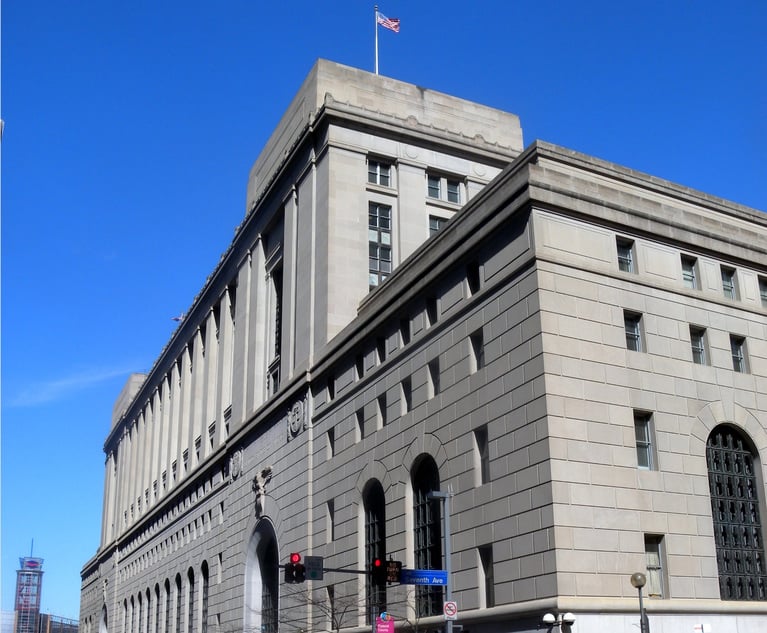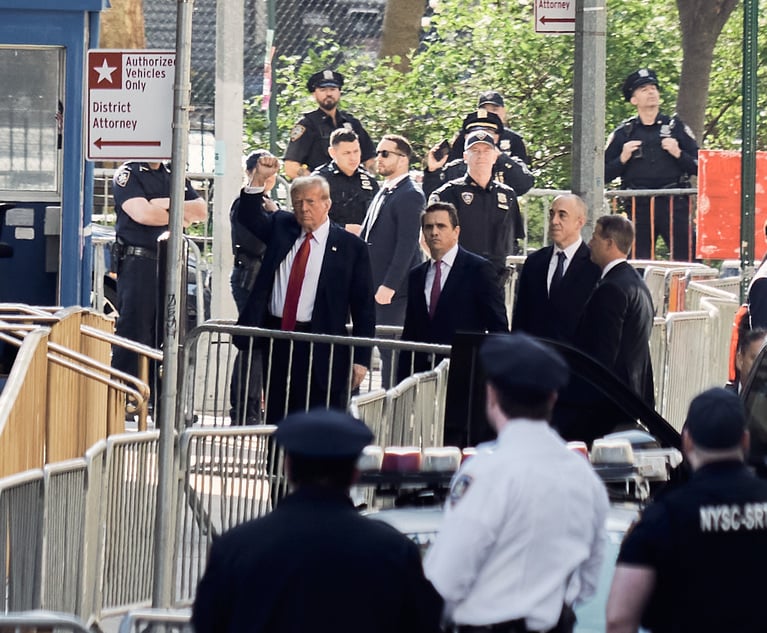
Ralph Cioffi and Matthew Tannin weren't the only ones grinning when they left court Tuesday. The Litigation Daily noticed that Frederic Bourke Jr. managed to crack a smile, too, after his sentencing in Manhattan federal court. Although federal district court Judge Shira Scheindlin sentenced the Connecticut entrepreneur and co-founder of Dooney & Bourke to a year and a day of prison time for his role in a scheme to bribe government officials in Azerbaijan, she granted his request for bail pending appeal.
The government had asked that Bourke receive the maximum penalty of 10 years, but Scheindlin ruled that she was able to depart from sentencing guidelines. She did, however, levy a fine of $1 million against Bourke, which she said could be paid after he serves his sentence.
Bourke was convicted in July of violating the Foreign Corrupt Practices Act and Travel Act and making false statements to the FBI. The verdict followed a six-week trial in Manhattan where prosecutors tried to prove that Bourke knew about a scheme in the late 1990s to bribe senior officials in Azerbaijan to ensure the country would privatize the State Oil Company of the Azerbaijan Republic. Bourke and a group of investors hoped to buy the oil company and turn a huge profit. Prosecutors tried to show that Bourke was not just a passive investor and that he had an especially close relationship with Viktor Kozeny, the alleged mastermind behind the scheme who is currently in the Bahamas fighting extradition. (In a feature in The American Lawyer, Kozeny said the bribes were made under duress.)
The plan to buy SOCAR ultimately failed, and Azerbaijan did not privatize the company. Investors, including Bourke, lost their entire investment.
At the hearing Tuesday, Judge Scheindlin discussed at great length the reasoning behind her sentence. She said that she balanced the interest of deterrence for future bribery offenses against Bourke's exemplary record as a private citizen, which has included efforts at finding cures for cancer and protecting national parks. And although she found no problem with the instructions the jury received, she said that Bourke's conviction could be reversed on appeal.
"It's not entirely clear to me whether Mr. Bourke was a victim, a crook, or a little bit of both," she said.
Harry Chernoff, an Assistant U.S. Attorney who led the government's case at trial, told Scheindlin that he was also impressed with the life Bourke had led, as detailed in letters submitted to the court. But he said that Bourke's intelligence made it all the more puzzling why he would not "accept responsibility for his conduct in this case." Chernoff also tried to argue that Scheindlin needed to send a message to the world that the U.S. would not go lightly on FCPA violations.
"It is important to stop corruptors like Mr. Bourke ... from going into places like Azerbaijan ... and victimizing the people there," said Chernoff.
Bourke is represented by Harold Haddon and Saskia Jordan of Haddon Morgan Mueller Jordan Mackey & Foreman, and John Cline of Jones Day.
This article first appeared on The Am Law Litigation Daily blog on AmericanLawyer.com.