Law.com
  • News
    • Newswire
    • Supreme Court
    • International
    • Legal Blog Watch
    • The Hot Seat
    • Video
  • Publications
    • The American Lawyer
    • Corporate Counsel
    • Law Technology News
    • The National Law Journal
    • New York Law Journal
    • New Jersey Law Journal
    • Connecticut Law Tribune
    • The Legal Intelligencer (PA)
    • Daily Business Review (FL)
    • Delaware Law Weekly
    • Daily Report (GA)
    • The Recorder (CA)
    • Texas Lawyer
    • Publication E-Alerts
    • More Publication Sites
  • Legal Research & Directories
    • Books Online
    • Smart Litigator
    • ALM Experts
    • Verdict Search
    • Court Reporters
    • Legal Dictionary
    • LegalTech® Directory
    • Newsletters
    • More Directories
  • Surveys, Lists & Rankings
    • Amlaw 100
    • NLJ 250
    • Global 100
    • The A-List
    • ALM Legal Intelligence
    • Surveys
    • Top Rated Lawyers
    • More Lists & Rankings
  • Special Reports
  • lawjobs.com
  • LawCatalog Store
  • CLE & Events
    • CLE Center
    • ALM Events
    • LegalTech
    • Virtual LegalTech
    • Insight Legal Events
    • Webinars
Home
 
Article
Twitter LinkedIn RSS
Sign Up for Newsletters

Law.com Home > A Math Geek's Ride to the High Court in Landmark Patent Fight

Font Size: increase font decrease font

A Math Geek's Ride to the High Court in Landmark Patent Fight

By Tony Mauro All Articles 

The National Law Journal

November 9, 2009

  •    
  •    
  •    
  •      
 
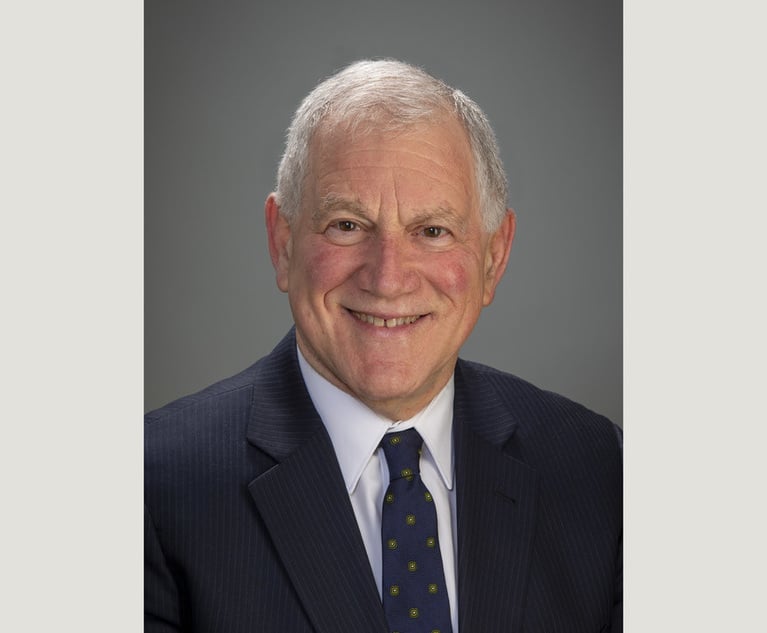
WeatherWise's Rand Warsaw

WeatherWise's Rand Warsaw

Related Items

  • Supreme Court to Hear 'Bilski' Case on Business Method Patents
  • 'Bilski' Amicus Briefs Already Piling Up at the Supreme Court

Bernie Bilski and Rand Warsaw were just a couple of "math geeks for hire" from Pittsburgh when they applied for a patent in 1997.

They had an idea for making the unpredictable predictable for utility companies: a way to make energy bills consistent, month to month, no matter what Mother Nature had in store, weatherwise. WeatherWise USA Inc. is the name of their company, in fact.

What Bilski and Warsaw did not predict is that their patent application would be rejected and, on appeal, would make its way to the U.S. Supreme Court 13 years later. The case of Bilski v. Kappos, set for argument today, has been touted as the biggest patent case in decades, with implications for the full range of 21st century-style inventions from software to medical diagnostics, not just so-called "business methods" like the one at issue.

"We're in a different place. We're not patenting 19th century gears," said Warsaw, the more talkative member of the duo. "It's electrons, or new ways of sequencing genes or software algorithms now."

For all its global implications, the case begins with Warsaw and his partner Bilski trying to build a business. Bilski left WeatherWise in 2003 and is not giving interviews before the arguments. But Warsaw, 54, is eager to talk.

He described his six-employee company as a "very small boutique and risk-management firm" run by mathematicians like himself, with revenues of less than $5 million a year. They work out ways to play unpredictable factors like supply, demand and weather against each other in energy and other commodity markets. The company has several product lines, including a new one that takes weather fluctuations into account when measuring energy efficiency and carbon footprint.

The process that is the subject of the patent application at issue before the Supreme Court, Warsaw said, was ultimately aimed at helping utilities regularize their costs and set the right rate for consumers who want a consistent monthly bill, rather than one that rises or falls depending on seasonal usage. Some companies that offer such fixed-payment plans have to tack on an extra bill in cold years or issue refunds in milder years. But the WeatherWise product makes those adjustments unnecessary, Warsaw said. "Behind that is a lot of work and calculation space and hedging," said Warsaw. "Like anything else, the simpler it is for consumers, the more work has to go on behind the curtains first."

SEEKING MARKET POWER

The company is marketing the product even without the patent, so Warsaw was asked: Why keep fighting for it? "Our revenues are down millions of dollars because we don't have the patent" and the royalty stream that would have resulted, he said. "We have no market power. That's the essence of it. You can't protect your interests." He said competitors have entered the market, and utilities themselves have "reverse-engineered" WeatherWise processes based on "things that leak out at presentations and the like." Without the patents, Warsaw said the company can do nothing to pursue poachers.

At the time its patent was being considered, Warsaw said, "there was no issue with business-method patents. Everybody wrote patents this way." The traditional view that patents are issued to tangible, mechanical innovations was fading, a trend that the U.S. Court of Appeals for the Federal Circuit blessed in the 1998 ruling State Street Bank v. Signature Financial Group. That ruling set a loose standard for deciding patent eligibility, allowing patents for inventions that produce a "useful, concrete and tangible result," even if they aren't widgets. Thousands of business-method patents were issued, some of which could be affected by the outcome of the Bilski-Warsaw case.

But then, said Warsaw, "Suddenly the rules changed and the rug was pulled out from under us. It was a staggering reversal from where the government was after State Street." He said the Patent and Trademark Office was overwhelmed by patent applications and decided to revert to tighter standards. "They went back to the 19th century and said, 'We like gears.' " The Federal Circuit completed the pendulum swing last year when it rejected the Bilski-Warsaw patent, applying a more traditional "machine-or-transformation" test for patent eligibility.

Not everyone sees the history in the same way. James Myers of Ropes & Gray said that, even in the State Street heyday, the Bilski-Warsaw patent application was extreme, "a polar example of a process with no technology attached."

Many analysts, including Temple University James E. Beasley School of Law patent law expert Gregory Mandel, think the high court will uphold the Federal Circuit's rejection of the Bilski-Warsaw patent, even as it loosens the circuit's standard. "It's inconceivable that the Court will ultimately issue an opinion that will restrict biotechnology patenting and most likely will not restrict software patenting, either," Mandel said.

Asked whether his patent application was too ethereal to be eligible for a patent, Warsaw said the patent was legit but added, "I'm not an attorney. I have an MBA and a couple of engineering degrees. Some of the legal arguments are beyond me."

But Warsaw and Bilski believed in the patent and decided to fight all the way. "At one point we had seven law firms representing us," Warsaw said. He won't estimate the legal fees he has paid to pursue the patent. "It's a staggering amount, and I prefer not to hazard a guess." J. Michael Jakes of Finnegan, Henderson, Farabow, Garrett & Dunner will argue before the high court today.

SECOND THOUGHTS

On the eve of the argument, Warsaw said, "I'm in awe" of the gravity the dispute. Sixty-seven amicus briefs have been filed from all business sectors and on all sides. "What has surprised me about this whole process is how interconnected the world is. We're all in the same boat. It begs for very careful thought."

The 54-year-old father of four said that, when he's not working or sleeping, "I'm on the soccer field" as a coach or player. He sees parallels between soccer and his patent battle. "Soccer is a very fluid game, with few fixed plays," Warsaw said. "You never know how the game is going to shape."

Warsaw is not sure he would have pursued the legal battle had he known "how steep this climb would be." He said, "If you laid out the path for me in 1996, would I have continued? Probably not."

Bilski and Warsaw are still good friends six years after Bilski left the firm, Warsaw said. A Finnegan spokeswoman would only say that Bilski lives in Maryland and works "in the public sector."

Both will be at the Court for the argument, said Warsaw, who also noted that it was only an accident of the alphabet that Bilski was listed first.

"I kid him about it all the time that my name could be the one all over the Web," said Warsaw. "But Bernie says there are drawbacks to that. Maybe he's right."


Subscribe to The National Law Journal

You must be signed in to comment on an article

Find similar content

Companies, agencies mentioned

    
  • WeatherWise USA Inc.
  • Bilski-Warsaw
  • Federal Circuit
  • Supreme Court
  • U.S. Court of Appeals
  • State Street Bank
  • Signature Financial Group
  • Patent and Trademark Office
  • Ropes & Gray
  • Temple University
  • MBA
  • Henderson, Farabow, Garrett & Dunner

Key categories

    
  • soccer
  • patent, copyright and trademark
  • company information
  • civil and public service
  • commodity markets
  • biotechnology

Most viewed stories

    
  1. Proskauer, Former CFO Settle Bias Suit
    •      
  2. Largest State Poised to Require Practical Skills Training
    •      
  3. Budget Plan Contains Funds to Reassign 26,000 18-B Cases
    •      
  4. The 2013 Am Law 100
    •      
  5. Judge Strikes Law Banning Demonstrations at Supreme Court
    •      
lawjobs.com

TOP JOBS

MORE JOBS

POST A JOB

From the Law.com Network

SEC Issues Whistleblower Award; More on the Horizon

Fixing Outside Counsel Budget Forecasting With Data

Proskauer, Former CFO Settle Bias Suit

Global Firms Cope With Istanbul Unrest

D.C. Circuit Nominations a Defining Moment

D.C. Circuit Nominees Widely Respected Within the Bar

iPad Competition Heats Up

Discovery on Discovery Demands Cost-Shifting

The Recorder 25: California Golden Again for Many Firms
  •      
    • Subscription Required

Capital Accounts: Judicial Branch's Brothers Don't See Eye to Eye
  •      
    • Subscription Required

Miami Photographer Sues Pop Star Justin Bieber
  •      
    • Subscription Required

Jeremy Alters Settles With Argentinian Firm For $1 Million
  •      
    • Subscription Required

Alcotest Should Be Discontinued Right Away, DWI Lawyers Say

Lawyer's Fudging of HUD Forms Draws Supreme Court Censure
  •      
    • Subscription Required

The Affordable State-Specific Practice Solution
Available in NY, NJ, PA and CT editions - research, draft and prepare even the most complex cases with ease.

Socialite's Son Mounts Bid for Prison Sentence Reversal
  •      
    • Subscription Required

NYLJ 100

Pa. Justices Uphold Mandatory Judicial Retirement

Pa. Senate Mulling Bill Aimed at Redefining Child Abuse

Sorry, Charlie, Your Wife Won't Support You

Top Reasons to Take Your Husband's Name

Texas DA Faces Removal Suits Over DWI, Alleged Misconduct
  •      
    • Subscription Required

Court Upholds Disqualification of Bickel & Brewer
  •      
    • Subscription Required

Fighting Over The Fifth
  •      
    • Subscription Required

Atlanta School Defendants Rely On New Jersey Officers' Case
  •      
    • Subscription Required

Chimp Attack Victim Is Denied $150M State Lawsuit

Auto Body Case May Lead To CUTPA Reassessment
  •      
    • Subscription Required

  • About |
  • ALM Properties |
  • ALM Reprints |
  • Customer Support |
  • Privacy Policy (updated 6/14/13) |
  • Terms & Conditions |
  • ALM User License Agreement
ALM Media