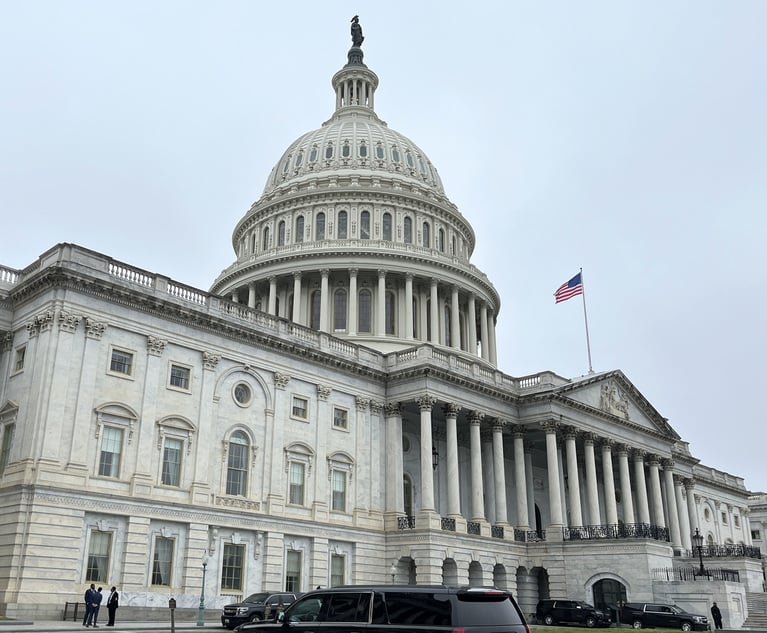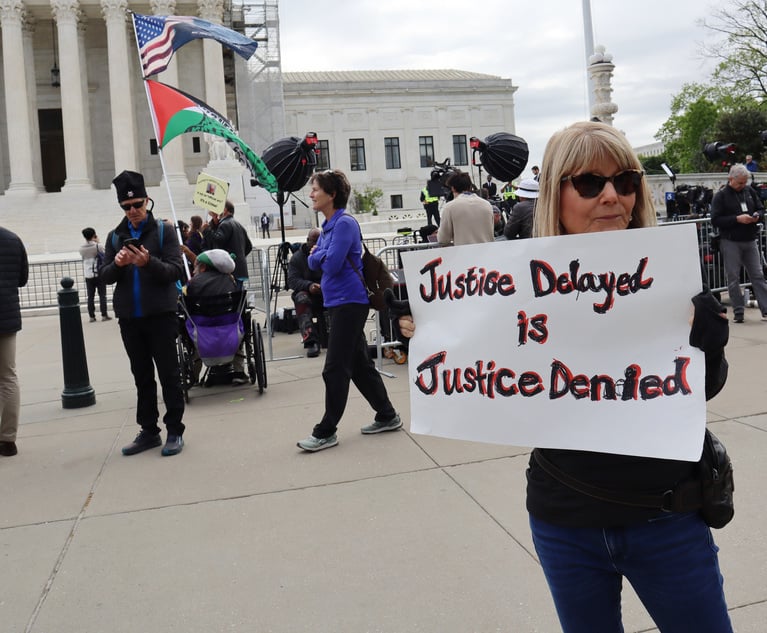
The sudden, if unsurprising, announcement that Supreme Court Justice David H. Souter will retire instantly ratcheted up the scrutiny and political pressure on President Barack Obama and on the growing list of potential replacements -- some of whom are already drawing fire.
The earlier-than-usual prospect of a vacancy -- they are usually announced at the end of a Supreme Court term in late June -- will give potential opponents of whomever Obama names more time to gather steam before confirmation hearings are scheduled. Planning for a departure on the high court, Obama and aides have been drawing up lists of candidates for months, but were not expecting to have to finalize a choice in the glare of the public spotlight.
Within hours of the first press leaks about Souter's planned retirement on Thursday, forces already began lining up for the battle to come, with female nominees -- appeals Judges Sonia Sotomayor and Diane Wood, and Solicitor General Elena Kagan, among others -- topping speculative lists.
Beyond the names, a debate is also emerging over whether Obama should play it safe and name a moderate, or instead pick a full-throated liberal who can stand up to the conservative mettle of Justice Antonin Scalia or Chief Justice John G. Roberts Jr.
"In November, President Obama was given a mandate to appoint federal judges who are committed to our core constitutional values of justice, equality, and opportunity for all," said Marge Baker of the liberal People for the American Way, which held a conference in December urging Obama to appoint justices in the mold of the late liberal lions Thurgood Marshall and William Brennan Jr.
With a comfortable Democratic majority, bolstered last week by Pennsylvania Sen. Arlen Specter's defection to the Democratic side, Obama might be tempted to name a strong liberal, but Drexel University law professor Lisa McElroy thinks he'll be more cautious, especially since he may have more vacancies to fill next year or later. "He can name someone much more in line with his party's views, but not someone who will send conservatives screaming to the hills," said McElroy, a Supreme Court expert.
But even in the absence of a name, conservatives were already planning their attack. "It is clear that he will appoint a justice who views the U.S. Constitution like a Wikipedia entry that can be edited, revised and distorted for the political agenda of the justice," said Andrea Lafferty of the Traditional Values Coalition. Curt Levey of the conservative Committee for Justice urged Republicans not to "roll over," and not to fear asking "the kinds of tough questions that Democrats asked of nominees such as Robert Bork, Clarence Thomas and Samuel Alito."
FAST BREAKING
The usual practice at the tradition-bound high court is that justices privately deliver a retirement letter to the White House at the end of the court term, before a public announcement is made. When Justice Sandra Day O'Connor sent her letter in 2005, she had already left town before it was made public. It was hard to imagine that the decorous and intensely private Souter wanted word to spill out before he told the White House -- before, even, he had told some of his colleagues, as appears to be the case.
But the news did emerge late on Thursday in the nation's persistently leaky capital, putting Obama, at least briefly, in the awkward spot of gearing up for the search of a replacement before the existence of a vacancy was formally known. Souter solved that problem on the afternoon of Friday by making his retirement official. Still, potential nominees will be picked apart from both ends of the political spectrum and by the media.
"In general, delay is not the friend of a Supreme Court nominee," says Rachel Brand, counsel at Wilmer Cutler Pickering Hale and Dorr and a former Bush Justice Department official who guided Samuel A. Alito Jr. through the confirmation process in 2005 and 2006. "Everybody on the conservative side will be scrutinizing the candidates, because the stakes are really high."
Obama will likely replace the mostly liberal Souter with another liberal, meaning that most votes won't change. But Souter is 69, and his replacement is almost certain to be younger and will change the dynamics of the court in big and small ways for decades to come. Northwestern University law professor John McGinnis, a critic of Souter's, said a "more able successor" to Souter "could help provide greater coherence to liberal constitutional jurisprudence than in the past five decades."
The early betting is that Obama will choose a woman, a minority or someone who fits both categories. Hispanics and Asian-Americans are two groups that have never been represented on the nation's highest court. With Justice Ruth Bader Ginsburg the only female sitting after O'Connor's retirement in 2006, pressure will be strong to replace Souter with a woman.
"It's unfortunate that even at this point in our history, we have only had two women on the nation's highest court, said Linda Coberly of Winston & Strawn, a former clerk to Justice Stephen G. Breyer. She singled out federal appeals judge Wood and Georgia Chief Justice Leah Ward Sears as potential picks.
Obama might also cast his net beyond the pool of experienced appellate judges. All nine justices on the court today were judges on federal appeals courts.
During the presidential campaign in 2007, Obama said, "Sometimes we're only looking at academics or people who've been in the [lower courts]. If we can find people who have life experience and they understand what it means to be on the outside, what it means to have the system not work for them, that's the kind of person I want on the Supreme Court."
That said, most of the names that have been mentioned as possible Obama nominees do have judicial or academic experience. Kagan, the solicitor general, was until recently the dean of Harvard Law School. Judge Sotomayor, who sits on the 2nd U.S. Circuit Court of Appeals, is Hispanic. Sotomayor won the early support of the Puerto Rican Bar Association, whose president-elect Roberto Ramirez praised her "extraordinary legal career, judicial temperament and personal leadership style."
Wood of the 7th U.S. Circuit Court of Appeals is also drawing praise as a scholarly and exacting jurist. Mayer Brown's Stephen Shapiro remembers an oral argument before her where Wood arrived holding a yellow legal pad with nearly 50 questions on it. "She covered every one of them" during his 20 minutes at the lectern, Shapiro recalls.
Other names that have been mentioned include Stanford Law School professors Kathleen Sullivan and Pam Karlan. Sullivan, the former dean, is also a partner in the New York office of Quinn Emanuel Urquhart Oliver & Hedges.


Reader Comments