Incisive Media's Law.com
  • Law.com Network
  • Legal Web
Register for Law.com Newswire
Newsletters
RSS

Law.com Home > Madoff Trustee Stakes Claim to Any Funds From Brother

Font Size: increase font decrease font

Madoff Trustee Stakes Claim to Any Funds From Brother

Vesselin Mitev

New York Law Journal

April 09, 2009

  • deliciousdel.icio.us
  • digg Digg
  • redditReddit
  • facebookFacebook
  • googleGoogle Bookmarks
  • newsvineNewsvine
  • linkedinLinkedIn
  • mixxMixx
  • stumbleuponStumbleupon
  • Print
  • Share
  • Email
  • Reprints & Permissions
  • Post a Comment

Lawyers for Irving H. Picard, the trustee overseeing the liquidation of the assets of Bernard L. Madoff, are staking a claim on any money recovered by a law student suing Madoff's brother, Peter, for allegedly depleting the student's $500,000 trust fund in the massive Ponzi scheme orchestrated by Bernard Madoff.

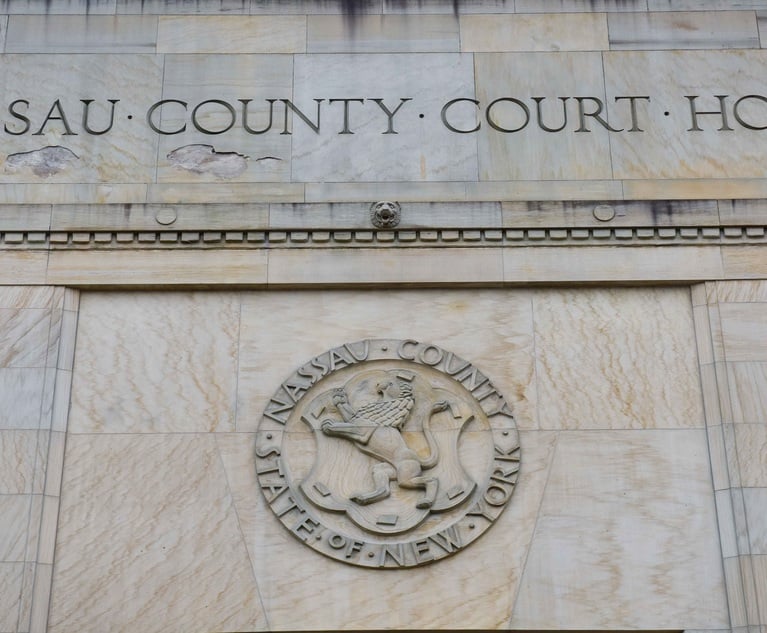
The maneuver coincided with an order by a state court judge in Nassau County extending a temporary freeze on Peter B. Madoff's assets to safeguard any potential recovery by Andrew Samuels, a first-year Brooklyn Law School student whose family had close ties to the Madoffs.

"[T]he Trustee reserves the right, without limitation, to seek to recover from Mr. Samuels, as a mediate or immediate transferee of Mr. Madoff, any amounts which Mr. Samuels collects from Mr. Madoff in the Lawsuit or otherwise in order to distribute such amounts to all the victims of the fraud," Marc Hirschfield, counsel for Picard, wrote in a letter to Steven R. Schlesinger, the attorney for Samuels.

In his letter, Hirschfield, of Baker & Hostetler in Manhattan, relied on §550(a) of the U.S. Bankruptcy Code. That section provides that a trustee can seek to recover assets that have been transferred and include them in the pool of funds to be dispersed for the benefit of the creditors.

In response, Schlesinger, of Jaspan Schlesinger in Garden City, N.Y., fired back that Hirschfield was attempting to "twist a federal statute to intimidate our client" into withdrawing his action, which Schlesinger asserts is based on an independent claim.

"Obviously, our Client's claims against Peter Madoff for dissipating the assets of the Andrew Samuels Trust established for him by his grandfather is a claim independent of, and separate from those you are administering," Schlesinger replied. "Accordingly, I request that you withdraw your letter as it is frivolous and without any cognizable legal basis."

Hirschfield said he is investigating Peter Madoff's role in his brother's scheme. Samuels' suit alleges that Peter Madoff was aware of the scheme but allowed the assets of the trust to be paid out to Bernard Madoff's investors.

Peter Madoff served as the senior managing director and chief compliance officer for Bernard L. Madoff Investment Securities (BLMIS) but has not been charged with a crime in connection with the Ponzi scheme, and he has denied any knowledge of his brother's activities.

Last December, Madoff signed a voluntary confidential agreement with the U.S. Department of Justice to limit his spending and refrain from dissipating his assets.

Last Friday, Supreme Court Justice Stephen A. Bucaria of Nassau County essentially codified that agreement in a duplicate state court order capping Madoff's monthly expenditures at $10,000 and forbidding him from removing assets worth more than $1,000 from his home.

Madoff's attorneys agreed to the order, claiming it allowed their client and his family to be able to "function in society" and at the same time reserve funds to pay Samuels, should he prevail in his claim.

In his letter to Hirschfield, Schlesinger attempted to distance Peter Madoff's actions from those of his brother.

The claims advanced by Samuels "are claims that are personal to our client as the beneficiary of the Andrew Samuels Trust and not as a general investor who invested money [with Bernard L. Madoff Investment Securities]," he wrote.

DIFFICULT STANDARD TO MEET

Hirschfield declined to comment, but bankruptcy experts said that any attempt to go after Samuels would have to be based on proof that Samuels and Peter Madoff knew their investments were part of the fraudulent scheme.

"The law is really quite clear -- you have to have knowledge of the fraud for a trustee or anyone else to succeed against you or anyone else," said Richard J. McCord, who serves as a Chapter 7 trustee in the Eastern District Bankruptcy Court and is a partner in Certilman Balin Adler & Hyman in East Meadow, N.Y.

"In this case, from what I understand, this young man obviously didn't have any knowledge of the fraud and it hasn't been proven that Peter Madoff knew of the fraud. There have been no criminal charges filed against him," said McCord, who is not involved in the Madoff matter.

Richard S. Feinsilver, a bankruptcy attorney in Carle Place, N.Y., agreed with McCord, pointing out that as the sole trustee of the fund, Peter Madoff had a separate, fiduciary duty to Samuels. Madoff became the sole trustee in 2003, taking over the fund that had been started with a $2 gift from Samuels' grandparents, and a $20,000 gift from Bernard Madoff and his wife, Ruth. He resigned as trustee last year.

"The trust itself is a separate entity with a unique responsibility over and above anything having to do with the Madoff family dealings," said Feinsilver, of Feinsilver & Cuocci. "I do not believe that the money could be commingled and pulled back in the [payout] pool."

Schlesinger said the lawsuit against Peter Madoff would proceed, calling Picard's actions a "waste of time and resources" and "an attempt to chill my client's right to seek a recovery for the theft by Peter Madoff of the trust set up by his grandfather."

In the letter, Schlesinger also advised Hirschfield that sanctions against Picard may be sought, should an adversary proceeding against Samuels be commenced.

Meanwhile, the U.S. government said Wednesday it will not try to keep any money recovered from the sale of Bernard Madoff's assets, a message meant to reassure skittish investors who feared some proceeds might land in the U.S. Treasury rather than their pockets.

Federal prosecutors and the Securities and Exchange Commission each filed papers with Southern District Judge Louis Stanton to say the proceeds would all go to investors.

The SEC first filed papers Wednesday to calm investors who fear they need to initiate bankruptcy proceedings to protect their money. It said bankruptcy would create unnecessary confusion and cause costly and potentially wasteful litigation.

Later in the day, prosecutors filed their own arguments, saying the action brought April 1 by a half dozen investors "is premised on a fundamental misunderstanding of forfeiture and bankruptcy law."

They said a bankruptcy proceeding also would delay the recovery of victim funds.

"Moreover, the motion, if granted, would risk detracting from the recovery to victims because funds otherwise available for return to victims by way of forfeiture would unnecessarily be used to pay the fees of a bankruptcy trustee," prosecutors said.

Madoff, who pleaded guilty on March 12 to running the $50 billion investment ruse, is awaiting his June 16 sentencing date in the Manhattan Metropolitan Correctional Center. He faces a maximum of 20 years in prison on each of the six top charges, including investment fraud, meaning he will likely spend the rest of his life behind bars.

For more coverage of the Bernard Madoff case, see the Law.com Madoff Watch page.

For continuous updates, follow Law.com's Madoff Watch on Twitter.


Subscribe to New York Law Journal

  • Print
  • Share
  • Email
  • Reprints & Permissions
  • Post a Comment

Related Items

  • N.Y. Attorney General Sues Financier Over Madoff Losses

Advertisement

Top Stories From Law.com

Legal Technology

  • Public Performance in the Digital Age

Corporate Counsel

  • United Technologies Takes a Stand, Puts Billable Hour 'on Life Support'

Small Firm Business

  • Holiday Parties: Keeping Expenses Low and Deductibility High

Advertisement

lawjobs.com

TOP JOBS

MORE JOBS >>

POST A JOB >>

Advertisement

About ALM  |  About Law.com  |  Customer Support  |  Reprints  |  Privacy Policy  |  Terms & Conditions
Close [ X ]