A "clerical error" could cost Bank of America and Citibank $51 million if Heller Ehrman has its way in bankruptcy court.
Bank of America, acting for itself and as an agent of Citibank, terminated both institutions' security interests in Heller (pdf) on Aug. 3, 2007, according to public records obtained from the California Secretary of State. The banks admit they made a mistake, and still want to be considered secured creditors, but courts haven't looked kindly on similar errors in the past.
A secured creditor must "perfect" its security interests with uniform commercial code filings and file updates every five years. The bank last submitted such a "continuation" in 2005, so another filing wasn't needed until 2010. On Oct. 1, a week after Heller said it would dissolve, the bank filed a "correction statement" saying the 2007 filing was a "clerical error." On Monday, the bank declined to discuss how or why the error occurred, or who made it -- the 2007 filing required no signature.
Pillsbury Winthrop Shaw Pittman attorney Michael Ellis filed the October correction and a subsequent document, but did not return a call for comment on Monday.
Heller's dissolution committee discovered the termination document in November, according to court filings, and upon filing for bankruptcy asked the court to throw out the October correction. The firm had paid the banks $51 million since announcing its dissolution and would owe them almost $6 million more if they remain secured creditors.
If the court rejects the correction, the banks would have to return money received from Heller within the 90 days preceding the firm's bankruptcy. Heller filed for Chapter 11 bankruptcy protection on Dec. 28, nine days after its San Francisco landlord had been granted a writ of attachment against the firm.
Heller moved quickly to file for bankruptcy, before the 90-day window closed, said Heller's outside counsel, Greenberg Traurig partner Leslie Corwin.
"That was precisely the reason we had to file for bankruptcy," he said. "Not because we ran out of money, not because the dissolution committee was not effective in carrying out its tasks."
After seeking opinions from two uniform commercial code experts, the dissolution committee was convinced that Heller would be in strong standing with the court, Corwin said.
"The documents speak for themselves, and because of that, the dissolution committee had to act. We could not ignore that evidence," Corwin said.
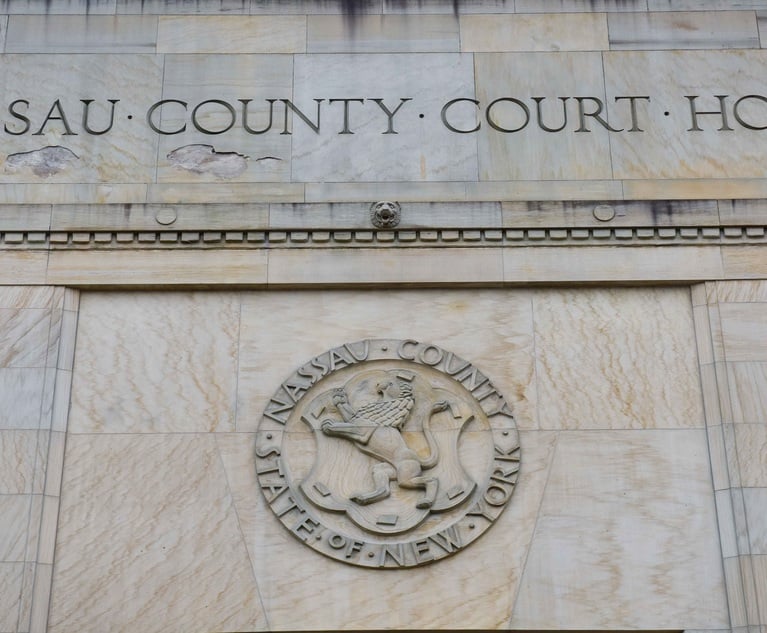
The case is before the U.S. Bankruptcy Court for the Northern District of California. The case is assigned to Judge Dennis Montali, who also presides over the 2003 bankruptcy of Brobeck, Phleger & Harrison, which is still in progress. The next hearing in the Heller case is Jan. 16.
The 9th Circuit weighed the issue of correcting filing errors in 1984's In Re Pacific Trencher & Equipment. The creditor in that case had erroneously checked the box marked "termination" on its forms. The creditor had argued that the law allows room for fixing mistakes.
But the court said the effectiveness of the filing outweighed California's case law providing for mistakes to be fixed. It affirmed a lower court's ruling and said that the "doctrines of mistake and reformation were not available to alter the clear language used in UCC filing statements."
Usually terminations are filed when a loan is paid off, according to Jerome Grossman, a partner at Luce, Forward, Hamilton & Scripps specializing in commercial finance. Such a routine "administerial" filing is usually performed by someone in-house, perhaps even at the paralegal level, Grossman said. The filer could have entered the wrong debtor number or checked the wrong box.
Article 9 of the Uniform Commercial Code was revised in 2001, making it easier for mistakes to occur because no one has to sign the forms, Grossman said.
But the revisions probably would not have changed the result of the 9th Circuit case, Grossman said.
In addition, the code says corrections do not "affect the effectiveness of an initial financing statement or other file record."
"People do rely on the public record. You either had an effective financing statement or you didn't," Grossman said.