Font Size:
![]()
Former Judge Convicted for Lying About Injuries in Auto Accident
The Legal Intelligencer
November 20, 2008
In the end, the jury looked past the medical documents.
Former Superior Court Judge Michael T. Joyce was convicted Wednesday on charges that he lied about neck and back injuries and abused his position on the bench to receive a $440,000 payout from two insurance companies following a slow-speed automobile accident.
The verdict came at 4:05 p.m. Wednesday -- guilty on two counts of mail fraud and six counts of money laundering.
Joyce, who was suspended from the bench by the Pennsylvania Supreme Court in August 2007 after his indictment and later decided against seeking retention for a second term, is scheduled to be sentenced March 10.
The charges carry a maximum of decades in prison, but a shorter sentence is likely for someone like Joyce, who has no criminal record, The Associated Press has reported. He could be forced to forfeit at least part of his state pension and could be on the hook for hundreds of thousands of dollars as part of a forfeiture proceeding.
"I was incredibly shocked by the verdict, to tell you the truth," said Joyce's attorney, Philip Friedman. "I really don't think that the government proved their case, and I was hopeful, obviously, that the jury would resolve the case in our favor."
Friedman said the jury of seven men and five women left without discussing the case. He described his client as "devastated."
"The jury's finding of guilt demonstrates that no person, even a judge, is above the law," U.S. Attorney for the Western District of Pennsylvania Mary Beth Buchanan said in a prepared statement.
Bruce Ledewitz, a law professor at Duquesne University, said Joyce's claim had an everyday quality about it and could have led to him being held up as an example.
"This is going to make everybody sit up and take notice when they think about pushing their insurance claims over the line," Ledewitz said. "The allegations were quite ordinary. This was not a sophisticated scheme. ... It's exactly what the insurance industry says a lot of us do."
Regardless, it was a sad day for the judiciary, said Lynn Marks, executive director of Pennsylvanians for Modern Courts.
"We never want to see someone in a position of public trust found guilty of violating that public trust and that is especially true of a member of the judiciary," Marks wrote in an e-mail. "One message here is that no matter what one's position, no one is above the law."
Word that Joyce was the subject of an investigation by federal authorities began circulating in June 2007 when an Erie newspaper reported that a close friend of Joyce had testified to a federal grand jury about Joyce's leisure activities.
Daniel Strong, an Erie body shop owner, said he also told the grand jury about the nature of damage to Joyce's car, although his shop didn't repair the damage from the crash.
An indictment followed in August of last year. Prosecutors suggested from the beginning that Joyce had abused the power of his office to obtain preferential treatment from the insurance companies.
Buchanan noted at the time that Joyce's initial claim in September 2002 was made on Superior Court letterhead. The insurance company paid the claim in November of that year.
Joyce, who was less than three months away from facing voters in a retention election, was suspended from his judicial duties by the state Supreme Court. Although the state Judicial Evaluation Commission had recommended Joyce for retention amid talk of the grand jury investigation, Joyce elected to withdraw from the retention election and resigned at the start of 2008.
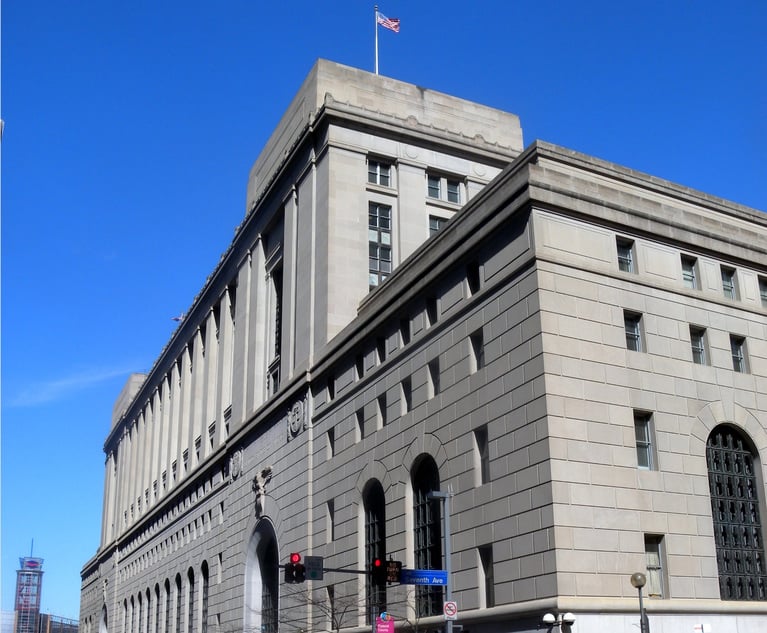
Following Joyce's indictment, the case generated such intense publicity his lawyers successfully petitioned to have the trial moved from Erie to Pittsburgh. Joyce's defense attorneys also took the unusual step of subpoenaing sitting appellate judges including Superior Court President Judge Kate Ford Elliott and state Supreme Court Justice Seamus P. McCaffery to appear as character witnesses.
During the trial, the defense attempted to paint Joyce as a man obsessed -- often wrongly -- over his health. To do so, they pointed to medical documents that showed Joyce often overreacted to his medical conditions, including his visits to several doctors to determine whether he had Lou Gehrig's disease.
But Assistant U.S. Attorney Christian Trabold claimed none of that mattered.
Joyce took up flying after the August 2001 automobile accident, continued to play golf for some time and went scuba diving and inline skating, he said. And the judge filed his claims on judicial letterhead, Trabold said, and referred to himself as a judge 115 times in the letters.
Much like Friedman, Trabold also used medical documents. But they painted two vastly different pictures.
On April 8, 2002, Trabold said, Joyce visited a doctor and complained of muscle twitches and other pains. But in the afternoon, the judge filled out a form for his private pilot's medical checkup. On it was a question as to whether the applicant had ever been diagnosed with a "neurological disorder." Joyce checked "no."
"If you've had a significant neck injury, you would not fly," a rebuttal witness told the court on the last day of testimony. "If you feel like you're weak, you would have trouble driving a car, much less flying an airplane."