Wachovia Bank has agreed to pay more than $178 million to settle a class action RICO suit that accused the bank of allowing two telemarketing firms to swindle elderly victims by obtaining their bank account information and then drawing from their accounts through the use of "remotely created checks."
The proposed settlement in Faloney v. Wachovia Bank replaces a previous $125 million settlement between Wachovia and the U.S. Treasury Department's Office of the Comptroller of the Currency.
That settlement drew sharp criticism from plaintiffs lawyers and a trio of Congress members who complained that it would be ineffective because it would have required victims of the scheme to file claim forms.
Lead attorney Howard Langer of Langer Grogan & Diver moved to block the OCC settlement and replace it with one that would lead to checks being mailed directly to the victims.
"The use of a claim form would likely result in a consumer response rate that would be only a fraction -- probably less than 10 percent -- of the affected consumers, with the result that Wachovia would end up paying consumers only a fraction of what the OCC estimated was at least $125 million in losses," Langer wrote in court papers.
Since all of the victims are easily identified in bank databases, Langer said, there is no reason not to make all of the victims whole with a full refund mailed directly to them.
Langer was soon joined by three members of Congress -- Reps. Joseph Sestak, D-Pa., Edward Markey, D-Mass., and Barney Frank, D-Mass., the chair of the House Committee on Financial Services -- who filed an amicus brief urging the court to block the OCC settlement and insisting that any restitution be paid by sending checks directly to consumers.
The U.S. Attorney's Office also joined in supporting Langer's position.
Now Wachovia has agreed to increase the settlement to $163 million, with checks mailed directly to approximately 900,000 victims of the schemes, and to pay $15 million in attorney fees to the team of lawyers from Langer Grogan & Diver that also included John Grogan, Edward Diver, Irv Ackelsberg and Judah Labovitz.
The size of the settlement could grow significantly because victims whose accounts were hit with fines when the fraudulent checks left their accounts overdrawn will also be given access to a simplified procedure for obtaining a $35 refund by filing online. Those who can show they were hit with multiple fines will be required to file a written claim.
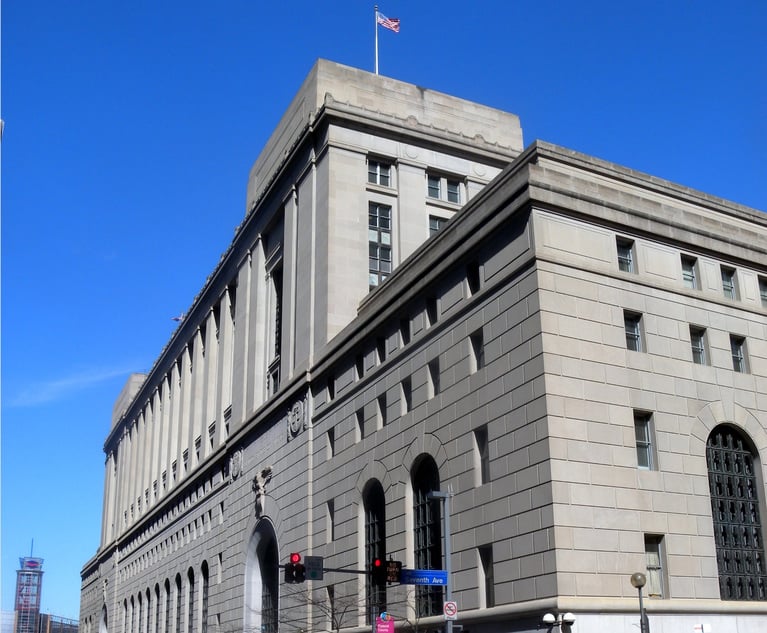
The settlement must be approved by U.S. Magistrate Judge Timothy R. Rice.
"The settlement provides full compensation to those on whose behalf we brought the suits and for refunds of the charges against the accounts to be mailed directly to the consumers," Langer said. "That was our goal and we are obviously very happy for the classes that in the end they received what was sought."
The suit against Wachovia stemmed directly from a government investigation of telemarketing fraud allegedly perpetrated by two firms -- Netchex and Payment Processing Center, or PPC.
In court papers, prosecutors alleged that Donald Hellinger, Ronald Hellinger, Mary O'Keefe Quigley, Michael Weisberg and Jami M. Pearlman used the two companies to conduct fraud schemes that targeted mostly elderly victims.
As Langer described it in his brief: "The scheme worked as follows. Corrupt telemarketers, working from scripts and operating out of boiler rooms, induced victims to provide their bank-account numbers through commonly structured ruses. The telemarketers electronically transmitted the account numbers to a central point, the suburban Philadelphia offices of Netchex and PPC.
"Using encoding devices, Netchex and PPC, known as 'payment processors' ... converted this digital information into unsigned paper checks drawn on the consumers' accounts, payable to the telemarketers. These checks were then deposited, with Wachovia's acquiescence, into the payment processors' Wachovia accounts."
Langer argued that "Wachovia conspired by providing the portal into the banking system that was essential for the scheme's success."
In his brief, Langer argued that "Wachovia was aware that the accounts would be used to funnel money to fraudulent telemarketers and of the widespread injuries caused by the scheme. It realized early on that the astronomical rate of returned items was evidence of fraud, in part because it received warnings from other banks of the fraudulent schemes. It even acknowledged the existence of the fraud, but chose to reap the high fees in what it described as its most profitable accounts."
In a statement issued on Friday, Acting U.S. Attorney Laurie Magid said: "We are pleased that the parties have reached this unique settlement in a case arising from our office's pursuit of the Payment Processing Center. The settlement will make whole all of the nearly one million victims of consumer fraud."
The "innovation" in the settlement, Magid said, "is the direct payment of restitution to those victims, which spares them from the typical, sometimes lengthy, claims process. This excellent result is a reflection of various entities, public and private, working diligently in concert for a goal that would best benefit the victims."