Law.com
  • News
    • Newswire
    • Large Firm
    • Corporate Counsel
    • Technology
    • Washington
    • Supreme Court
    • International
    • Legal Blog Watch
    • Video
  • Publications
    • The American Lawyer
    • Corporate Counsel
    • Law Technology News
    • The National Law Journal
    • New York Law Journal
    • New Jersey Law Journal
    • Connecticut Law Tribune
    • The Legal Intelligencer (PA)
    • Daily Business Review (FL)
    • Delaware Law Weekly
    • Daily Report (GA)
    • The Recorder (CA)
    • Texas Lawyer
    • Publication E-Alerts
    • More Publication Sites
  • Legal Research & Directories
    • Books Online
    • Smart Litigator
    • ALM Experts
    • Verdict Search
    • Court Reporters
    • Legal Dictionary
    • LegalTech® Directory
    • Newsletters
    • More Directories
  • Surveys, Lists & Rankings
    • Amlaw 100
    • NLJ 250
    • Global 100
    • The A-List
    • ALM Legal Intelligence
    • Surveys
    • More Lists & Rankings
  • lawjobs.com
    • Post a Job
    • Find a Job
    • Post a Resume
    • The Careerist Blog
    • News & Views
  • LawCatalog Store
    • Books Online
    • Best-Selling Books
    • Books
    • Directories
    • E-Newsletters
    • Magazines
    • Newspapers
    • Newsletters
    • Surveys
    • Research Services
    • Webinars
    • Events
  • CLE & Events
    • CLE Center
    • ALM Events
    • LegalTech
    • Virtual LegalTech
    • Insight Legal Events
    • Webinars
Home
 
Article
  • email
  • twitter
  • LinkedIn
  • alert
  • rss

Law.com Home > For the Supreme Court, a Term of Change Ahead

Font Size: increase font decrease font

For the Supreme Court, a Term of Change Ahead

By Tony Mauro All Articles 

Legal Times

October 6, 2008

  •    
  •    
  •    
  •      
 
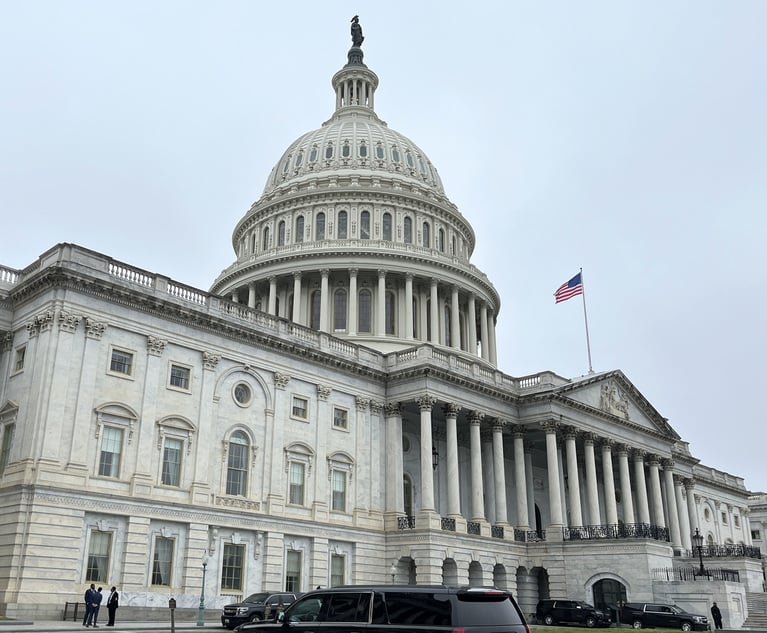
The United States Supreme Court

The United States Supreme Court
Photo: Stacey Cramp

Related Items

  • In the New Term, High Stakes for the High Court
  • High Court's Busy New Term Just Got Busier

The Supreme Court begins its fall term today on the verge of significant change -- in its caseload and among the lawyers who argue before it, and possibly even in its membership.

By the end of the term in June, the Court could have decided more cases than it has in a decade. More of those cases than ever will be handled by lawyers or professors affiliated with law school clinics -- unheard of just four years ago. And a new wave of lawyers and law firms will be joining Supreme Court veterans in jockeying for the increased caseload.

Finally, while predicting high court retirements is one of Washington's trickiest parlor games, three members of the Court -- Justices John Paul Stevens, David Souter and Ruth Bader Ginsburg -- are seen as the most likely candidates to step down. At a William & Mary Marshall-Wythe School of Law conference on the Court Sept. 26, former acting Solicitor General Walter Dellinger III flat-out predicted all three will go if Sen. Barack Obama is elected, and "no one will voluntarily step down" if Sen. John McCain is elected.

"The Court is at a tipping point," says Thomas Goldstein, head of litigation at Akin Gump Strauss Hauer & Feld, who launched the first Supreme Court legal clinic at Stanford Law School in 2004.

The Court's docket for the new term is dominated by business cases and more environmental disputes than usual, along with a quirky case that will have obscenities ringing throughout its majestic courtroom.

On Nov. 4, when the rest of the nation will be focused on the presidential election, the Court will hear arguments in FCC v. Fox Television Stations over the fleeting use of the "s-word" and "f-word" in television broadcasts by the likes of Nicole Richie, Cher, and Bono. Carter Phillips of Sidley Austin, representing Fox, says he won't use euphemisms for those words at argument.

The fact that the Court does not close for presidential elections also symbolizes its aloofness from the business of the other branches. But the election will no doubt have a major effect on the Court.

After nearly three years of stability since Chief Justice John Roberts Jr. and Justice Samuel Alito Jr. joined the Court, vacancies could bring significant change to the Court. Factors of health, age, and who is elected president next month will all play a role, though historians generally agree that most justices stay on the Court as long as they can, no matter who gets to nominate their replacement.

One possible sign that the justices are readying themselves for change came last week when it was confirmed that Alito has decided to take himself out of the "cert pool," the controversial pooling arrangement whereby each incoming petition is screened by a single law clerk for all the justices who participate.

The only other justice who has stood apart from the pool is Stevens, who, at 88, is talked about most often as the likeliest to leave the Court soon. The other justices appear to like it that at least one justice remains outside the pool as a check on the system.

Artemus Ward, co-author of a 2006 book on the power of Supreme Court law clerks, says Alito might have made the move now "at least partly due to the fact that Justice Stevens will likely soon depart, which could have left the Court in a bind." Ward adds, "By making this decision while Stevens is still on the bench, Alito and his clerks will be able to gain experience in checking the pool without having to go it alone."

The change in administration will also affect the Supreme Court bar, if indirectly, by putting some veterans of the solicitor general's office back on the job market.

"No matter how the election turns out, there will be a great deal of change in the Supreme Court bar in the coming months," says Kannon Shanmugam, a rising star and former clerk for Justice Antonin Scalia who jumped from the solicitor general's office to a partnership at Williams & Connolly last week.

By the end of the Bush administration, three other top lawyers in the solicitor general's office are expected to snag top-tier private firm jobs: former SG Paul Clement, former deputy Thomas Hungar, and current SG Gregory Garre. Only four of the 21 attorneys who were in the office five years ago -- deputies Edwin Kneedler, Michael Dreeben and Malcolm Stewart and associate Lisa Blatt -- are still there today. Most have left for firms that are adding Supreme Court practices, in spite of the fact that until this term, the Court has heard a record low number of cases.

The allure of the Supreme Court practice is updating the veteran Supreme Court bar, bringing new firms and new lawyers, many of them former Supreme Court clerks, into competition for cases.

Last week, in addition to Shanmugam's move, another newcomer to the Supreme Court field, Morgan, Lewis & Bockius, beefed up its high court practice by hiring Allyson Ho, a former clerk for retired Justice Sandra Day O'Connor. Ho joins R. Ted Cruz, the former Texas solicitor general, who came aboard Morgan, Lewis in May.

Also last week, Stephen Kinnaird, a former clerk for Justice Anthony Kennedy, left Sidley Austin to take Paul Hastings' appellate practice up a notch -- and into the Supreme Court more often.

"A startling percentage of the cases this term are being handled by the firms with the Supreme Court practices," Kinnaird says. By his count, 73 percent of the nongovernment briefs on the merits filed in granted cases so far this term had participation from either major corporate law firms or Supreme Court veterans. "Being at the Supreme Court establishes your presence as a leading appellate firm."

Law schools are also getting in on the Supreme Court action more than ever. Of the 53 cases already granted review for the fall term, parties in at least 14 cases are represented by lawyers or law professors affiliated with Supreme Court clinics -- three in October alone. Students in the clinics help prepare the briefs and arguments, as well as participating in dozens more petitions and oppositions to certiorari.

After Goldstein started Stanford's clinic in 2004, five other schools followed suit: Northwestern, working with Sidley Austin; Yale, paired with Mayer Brown; the University of Virginia, aided by Robbins, Russell, Englert, Orseck, Untereiner & Sauber; the University of Texas, working with Kellogg, Huber, Hansen, Todd, Evans & Figel; and New York University, with Jones Day.

"There's no question that the clinics have established themselves as a strong presence at the Court, not just as ad hoc visitors," says Steven Goldblatt, co-director of the Supreme Court Institute at Georgetown University Law Center. The clinics have helped especially with criminal cases, in which defendants have often been represented by less-experienced advocates before the Court.

The growth of the clinics working with veteran firms and the competition by new firms to recruit Court cognoscenti to add luster to their practices is understandable, in Goldblatt's view. "The Supreme Court is the ultimate venue," he says. "For a lot of firms, Supreme Court litigation is the jewel of the crown. All the cases, ultimately, are about something interesting."

That includes the new term -- though at one briefing on it, sponsored by the Washington Legal Foundation, former Attorney General Richard Thornburgh said the term is "a little light on blockbuster cases." He made that assessment even though he has signed on to a brief in a potentially major case: Ashcroft v. Iqbal. This case, which will be argued Dec. 10, was brought by Javaid Iqbal, a Pakistani citizen who was held in federal prison as a "high-interest" individual after the Sept. 11, 2001, terrorist attacks. Iqbal seeks to hold former Attorney General John Ashcroft personally liable for mistreatment in prison. Thornburgh, now of counsel at K&L Gates, and other former attorneys general are asking the Court for immunity from such suits.

Today, the first day of the term, the Court will hear Altria Group v. Good, one of two major pre-emption cases.

"For most businesses, pre-emption is the hot-button issue of the term," says Robin Conrad, executive vice president of the National Chamber Litigation Center.

Former Solicitor General Theodore Olson, arguing his 50th case, will represent Altria against David Frederick of Kellogg, Huber, who represents a group of Maine smokers claiming that advertisements for "light" cigarettes amount to fraud. Olson will argue that state tort actions are pre-empted by federal law.

Frederick also represents the plaintiff in the other major pre-emption case of the term, set for argument Nov. 3: Wyeth v. Levine, asking whether the Food and Drug Administration's drug labeling requirements preclude suits in state court for harm caused by a drug manufactured by Wyeth. Arguing for Wyeth: former SG Seth Waxman. The Bush administration is siding with the plaintiffs in the cigarette case, but favors Wyeth in the drug case.

The best-known of several environmental cases is Winter v. Natural Resources Defense Council, in which the 9th U.S. Circuit Court of Appeals said the government had not proven an emergency need to suspend the National Environmental Policy Act when the environmental group sought to halt Navy sonar tests that injured whales. But Georgetown law professor Lisa Heinzerling notes that environmental plaintiffs invoking NEPA "are zero for 15 in the Supreme Court" since the law was passed in 1969. "It's not looking good" for the resources council.

In the view of Akin Gump's Goldstein, two cases not yet granted review could become the Court's blockbusters this term. Northwest Austin Municipal Utility District v. Mukasey, filed Sept. 8, is a direct challenge to the Voting Rights Act, which Congress renewed in 2006. Also pending is Al-Marri v. Puciarelli, filed Sept. 28, which Goldstein calls "the fourth generation" of challenges to Bush administration detainee policies.

Says Georgetown professor Marty Lederman, "If the Court grants cert, it will be the most important case of the term." And if it is granted, it will be handled by the next administration, toward the end of this term of transition for the Supreme Court.


Subscribe to Legal Times

Find similar content

Firms mentioned

    
  • Akin Gump Strauss Hauer & Feld
  • Mayer Brown
  • Morgan, Lewis & Bockius
  • Paul, Hastings, Janofsky & Walker
  • Williams & Connolly
  • Jones Day
  • K&L Gates
  • Sidley Austin

Companies, agencies mentioned

    
  • Supreme Court
  • William & Mary
  • Marshall-Wythe School
  • FCC
  • Fox Television Stations
  • Kellogg
  • Morgan Lewis & Bockius
  • University of Virginia
  • Englert, Orseck, Untereiner & Sauber
  • University of Texas
  • Hansen, Todd, Evans & Figel
  • New York University
  • Georgetown University
  • Washington Legal Foundation
  • Altria Group
  • National Chamber Litigation Center
  • Natural Resources Defense Council
  • U.S. Circuit Court of Appeals

Key categories

    
  • Law Firm Administration

Most viewed stories

    
  1. Court Officials Seek to Reform Process of Naming Acting Justices
    •      
  2. Donovan Criticizes Secret Payoff to Lopez Victims
    •      
  3. The 2013 Am Law 100
    •      
  4. Harvard Law Opens Applications to Juniors
    •      
  5. Prolific ADA Plaintiff Faces Nemesis in Harassment Suit
    •      
lawjobs.com

TOP JOBS

MORE JOBS

POST A JOB

From the Law.com Network

The General Counsel and the Compensation Committee

Your Company's Been Hacked -- What Comes Next?

Simpson Helps Yahoo, Tumblr Connect for $1 Billion Deal

Kasowitz Benson Launches in Los Angeles

Contrite Companies Can Win Forgiveness in Bribery Cases
  •      
    • Subscription Required

Plaintiffs Want to See Toyota's 'Crown Jewels'
  •      
    • Subscription Required

Collaboration Is Key to Defending Cyberattacks

Stanford Law Builds on Role as Legal Tech Incubator

Prolific ADA Plaintiff Faces Nemesis in Harassment Suit

Ullyot Exit Closes Chapter for Facebook

South Florida Attorneys Lead Force-Placed Insurance Fight

Suit Names Missing Attorney Timothy McCabe For Alleged Fraud
  •      
    • Subscription Required

Circuit Voids $3 Million Judgment Against 'Girls Gone Wild' Producer

Judge Says Boston Bombings Had No Effect on Terrorist Sentences
  •      
    • Subscription Required

The Affordable State-Specific Practice Solution
Available in NY, NJ, PA and CT editions - research, draft and prepare even the most complex cases with ease.

Judge Declines to Block Act-of-War Defense in 9/11 Case
  •      
    • Subscription Required

Panel Finds 'Excessive' City Fine for Poaching Antenna From Trash
  •      
    • Subscription Required

Lawsuit Testing Federal Porn Regulation Allowed to Survive

Ex-College QB Can Press Claim Over EA's Video Game
  •      
    • Subscription Required

Law Schools Are Looking Beyond LSATs, Says Mich. Dean

Is Freezing Your Eggs the Solution?

Advising Clients on Weather and the Workplace
  •      
    • Subscription Required

Texas Sues BP, Transocean, Halliburton, Anadarko Entities
  •      
    • Subscription Required

Brooks Looks To Political Ally For Criminal Defense

Attorney Fee Hearing in Waffle House Sex Case Heats Up
  •      
    • Subscription Required

Corporate Bribery Case Part Of National Trend
  •      
    • Subscription Required

Court Continues To Grant Lawyers Fraud Immunity
  •      
    • Subscription Required

The Law.com Network
  • ADVERTISE

law.com

  • Tour the New Site
  • Newswire
  • Special Reports
  • International News
  • Lists, Surveys & Rankings
  • Legal Blogs
  • Contact Us
  • Advertise
  • Site Map

alm national

  • The American Lawyer
  • The Am Law Litigation Daily
  • Corporate Counsel
  • Law Technology News
  • The National Law Journal

alm regional

  • Connecticut Law Tribune
  • Daily Business Review (FL)
  • Delaware Law Weekly
  • Daily Report (GA)
  • The Legal Intelligencer (PA)
  • New Jersey Law Journal
  • New York Law Journal
  • GC New York
  • The Recorder (CA)
  • Texas Lawyer
  • The Asian Lawyer
  • Focus Europe

directories

  • ALM Experts
  • LegalTech® Directory
  • In-House Law Departments at the Top 500 Companies
  • Top Rated Lawyers
  • The American Lawyer Top Rated Lawyers
  • The American Lawyer Legal Recruiter's Directory
  • Corporate Counsel Top Rated Lawyers
  • The National Law Journal Leadership Profiles
  • National Directory of Minority Attorneys
  • Go-To Law firms of the Top 500 Companies

books & newsletters

  • Best-Selling Books
  • Publication E-Alerts
  • Law Journal Newsletters
  • LawCatalog Store
  • Law Journal Press Online

research

  • ALM Legal Intelligence
  • Court Reporters
  • MA 3000
  • Verdict Search
  • ALM Experts
  • Legal Dictionary
  • Smart Litigator

events & conferences

  • ALM Events
  • LegalTech®
  • Virtual LegalTech®
  • Virtual Events
  • Webinars & Online Events
  • Insight Information

reprints

  • Reprints

online cle

  • CLE Center

career

  • Lawjobs
About ALM  |  About Law.com  |  Customer Support  |  Reprints  |  Privacy Policy  |  Terms & Conditions |  ALM User License Agreement