Font Size:
![]()
FTC Proposes New Rules to Improve Enforcement Actions Before Administrative Law Judges
The National Law Journal
September 29, 2008
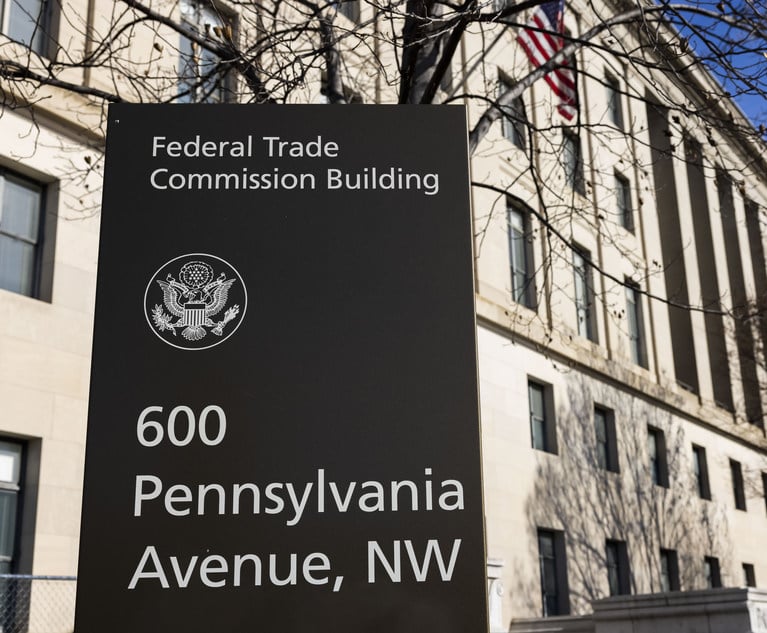
The Federal Trade Commission has proposed new rules to improve and streamline enforcement actions tried before administrative law judges.
The agency is seeking public comments on the revisions to what are known as Part 3 and sections of Part 4 of the commission's rules of practice.
While some FTC enforcement actions are brought in federal district courts, others are brought through the administrative process. In the latter cases, an ALJ issues an initial decision and that decision can be appealed to the full commission.
The Part 3 process, according to the commission, "has long been criticized" as too protracted and leading to three undesirable consequences: First, in merger cases, drawn-out proceedings may result in parties abandoning transactions before their merits can be adjudicated. Second, protracted Part 3 proceedings may lead to substantially increased litigation costs, both for the commission and for private parties. Third, protracted proceedings do not necessarily lead to decisions that are more just or fair.
The commission said the goal of the rulemaking is to address these concerns by making appropriate changes to streamline and otherwise improve the Part 3 process, while balancing three factors: the public interest in a high-quality decision-making process; the interests of justice in an expeditious review of litigated matters; and the very real interest of the parties in litigating matters economically without unnecessary expense.
The proposed revisions include setting tighter time limits on the adjudicative process; making the discovery and motion practice more efficient; expediting and streamlining evidentiary hearings; and making changes to the process for issuing initial decisions by the ALJ and subsequent commission review.
The proposed changes, for example, would impose word-count limits on all motions; would limit the scope of the search for discoverable materials for complaint counsel, respondents and third parties to minimize the burden of search costs; would expressly limit waivers resulting from the inadvertent disclosure of privileged materials; and would require the ALJ to issue a standard protective order designed to limit delays and ensure that privileged or confidential information is treated consistently.
Hearsay evidence at the hearings -- including prior testimony -- would be expressly permitted if deemed sufficiently reliable. The amendments would require that witness testimony be video-recorded and made part of the official record, and deadlines would be imposed for the simultaneous filing of proposed findings, conclusions and supporting briefs after the hearing.
The one-year initial decision filing deadline would be maintained, but with the requirement that the decision be issued within 70 days of the last proposed findings. The lengths of principal briefs on appeal to the commission would be limited to 14,000 words, and reply briefs to 7,000 words, unless otherwise allowed by the commission.
Other proposed amendments are in the official notice of proposed rulemaking.
The notice is available on the FTC's Web site and likely will be published in the Federal Register by Sept. 30.