Font Size:
![]()
Sizing Up the 2007-08 Supreme Court Term
Legal Times
July 30, 2008
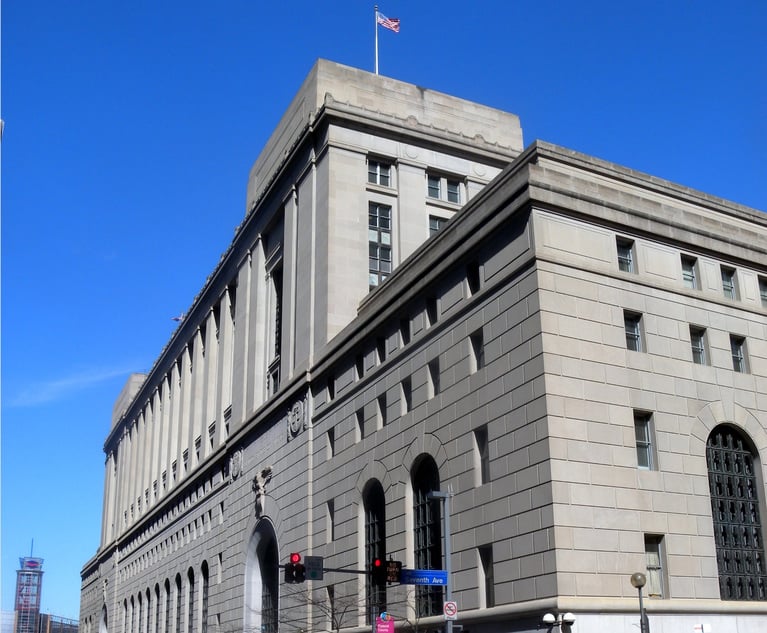
U.S. Supreme Court
Photo: Roberto Westbrook/Legal Times
The Supreme Court term that ended in late June was difficult to categorize. For much of the term, the justices seemed to be more harmonious and unanimous, with fewer closely divided decisions than during the previous term. But in the cases that won the most headlines, the Court's splits re-emerged, with Justice Anthony Kennedy playing the role of swing vote as he often has since the departure of Justice Sandra Day O'Connor in 2005.
At Legal Times' seventh annual Supreme Court review, four expert appellate advocates -- each of whom argued at least one case before the Court in the past term -- analyzed the decisions and the trends that emerged and forecast what to look for next term.
The following is the transcript of the discussion, edited for length and clarity.
Complete audio of the Supreme Court review 
TONY MAURO: I'm going to start with Ted because the death penalty cases this term were a big part of the news of the term, and one of the cases is still making news. The cases are Baze v. Rees, upholding the three-drug protocol for lethal injection, and then there was Kennedy v. Louisiana, which you argued in, striking down the death penalty for child rapists. I want to find out what your take is on these cases and also if you could address the latest wrinkle in the Kennedy v. Louisiana case concerning the missing information that was not presented to the Court that some people say was rather important.
R. TED CRUZ: At the end of last term, if you picked up any newspaper, if you read any commentary on the Court, the two themes you would be told about the new Roberts Court were, No. 1, every case that matters is 5-4 and, No. 2, the Court has turned dramatically to the right.
It was my judgment at the time that that consensus was wrong, and that the particular cases before the Court were driven more by the serendipity of the cases. ... They had all been cases in which, on the previous time the Court had addressed the issue, Justice [Anthony] Kennedy had been in dissent in narrow 5-4s. It so happened the series of issues that came up were all ones in which his four votes in dissent had become five. And so by accident of the case selection before the Court, it appeared both a lot more divisive than it is in reality and also a lot more conservative than it is in reality.
I think Baze and Kennedy illustrate that while there has been some change on the Court, there's also been an awful lot of consistency. In Baze, the question was: Is the method of execution that is used in virtually every state and used by the federal government across the country to carry out executions -- is lethal injection unconstitutional? It ended up affirming Kentucky by a vote of 7-2, which I think surprised a number of observers who had assumed: Well it's another death penalty case, it's going to be 5-4, it's going to be very contentious. And yet, by an overwhelming majority, the Court upheld the use of lethal injection as a method of carry out executions.
In my judgment, that was not a surprising outcome. ... This was an issue that was dividing the courts below, it was generating enormous confusion, it had resulted in stays of execution in a number of states, and it was generating more and more uncertainty. The Court had several times tangentially addressed the issue, but it never squarely addressed the merits of it and that was just fomenting more and more litigation.
So in my judgment the Court granted cert to say OK, let's address this on the merits, let's take it head on and let's answer it.
On the other side is the Kennedy case, the child rape case, which obviously got a great deal of attention. By a vote of 5-4, a closely contentious case, the Court struck down a Louisiana statute that provided that for the most egregious child rapist they would be eligible for capital punishment.
I think this case, along with the Boumediene case, both decided right at the very end of the term, were really a powerful refutation to the narrative last term that the Court has suddenly become markedly more conservative. I think neither the Boumediene case nor the Kennedy case could be characterized by much of anyone as decisions of an arch-conservative Court.
In Kennedy, the Court ruled 5-4 in a ... closely divided decision that laws providing for capital punishment of child rapists are inconsistent with what the Court describes as evolving standards of decency. The Court in particular perceived a national consensus against allowing capital punishment for child rapists, and the basis for this national consensus was primarily that only seven state legislatures had enacted laws allowing for such punishment.
Now a couple of things were striking about that opinion, the first of which is within an hour of the opinions being handed down it was loudly denounced on many fronts, including by both of the major candidates for president. To my mind, that is a really powerful refutation of the Court's premise that there is an objective consensus against this, because I think ... it would be difficult to claim that in this country there is objectively a national consensus to the left of Barack Obama. I think that may be stretching it a little bit.
There was then a subsequent development which Tony referred to, which is The New York Times reported that unbeknownst to everybody it was not just seven state legislatures that had voted to adopt this, but the United States Congress had also included in its amendments to the Uniform Code of Military Justice a provision providing for capital punishment for child rape. This was passed by Congress, it was put into force by an executive order by the president, this all occurred quite recently and, quite remarkably, both of the parties in the case -- the state of Louisiana and Patrick Kennedy, who was represented by a very talented law professor at Stanford Law School -- both of the parties in the case utterly missed the statute.
There were seven amici in the case, including the state of Texas. All seven amici missed the statute, and perhaps most remarkably the ... Department of Justice, which is obviously charged with defending laws passed by Congress, completely missed the statute. In fact, following the New York Times article, the Department of Justice put out a very unusual statement -- I'm not sure I've seen a statement like the one the DOJ put out -- in which it essentially confessed error and said it was unaware of the statute and it should have brought it to the Court's attention but it did not do so. I thought that was admirable for DOJ to do. It is hard to find a similar example of a federal statute in which everyone litigating the case, including some very able lawyers, most especially some of the very best lawyers in the country at the U.S. solicitor general's office, all of whom were apparently unaware of a federal statute.
Now I think it is likely the state of Louisiana will seek rehearing, and so there is a question: What is going to be the impact of the rehearing petition?
At the end of the day, I think you would have to say the chance of any case getting rehearing granted is awfully slim, although the combination of a federal statute and the almost uniform reaction after the decision decrying its outcome, I think, is reason to really doubt the operational premise of the majority. [Editor's Note: On July 21, the state of Louisiana petitioned the Court to rehear Kennedy v. Louisiana.]
MAURO: Some have suggested that it wasn't just the parties who missed this law, but the law clerks should have caught it. You're a former law clerk; are law clerks supposed to go outside the briefs and scout out laws that people ignored?
CRUZ: Absolutely, and I have no doubt that the day The New York Times hit the stand there was considerable unhappiness in more than one chamber at the Court, and a couple of law clerks in particular who I imagine were quite unhappy.
Now I think the clerks had reason to be unhappy with the lawyers. I mean the reason you have an adversarial process is the lawyers are supposed to bring relevant authorities to the Court's attention. It doesn't excuse the Court's or the clerks' obligation to do the research and find it. But in this case ... and [in] each of the seven states where these laws were introduced and passed, they were the subject of vigorous debates ... it was a major public policy decision and it was done in response to a perceived growing problem of an increased prevalence of predators targeting young children to commit really horrific sex crimes.
This particular congressional enactment had none of that attention. It was -- as best anyone can tell -- not subject to any debate, not subject to any press attention; I think everyone involved in the process could have found it and, in hindsight, all of us should have found it, but at the same time it is an unusual course of events that a statute such as this would pass without causing any ripples whatsoever.
WALTER DELLINGER: Congress passed a law that basically nobody in Congress knew had passed. I'm quite serious about that. This is in the middle of a 450-page omnibus appropriations act. My question is: Where was the Office of Legal Counsel? The Office of Legal Counsel's responsibility is to review every bill that goes to the president. The Office of Legal Counsel must have written a memorandum to the president. It's a serious question under Coker v. Georgia as to whether this provision that the president was going to sign was unconstitutional or not. You would think you would call it to the president's attention ... and if there had been an OLC memo, obviously they would have informed the solicitor general's office of the interest in the case.
I just think the fact that Congress could pass a law that nobody knew about is an impeachment of the legislative process. It does call into question the Court's methodology that a bill nobody knew about could change the consensus. It makes the whole methodology of the majority opinion in my view even more on thinner ice than it's on, of head counting among states.
But I do think that it doesn't add much to the national consensus to have a bill that nobody knew about.
MAURO: I do want to ask Malcolm about another category of cases, and he argued one of them, on employment discrimination. By and large these cases came out in favor of the employee, and the [U.S.] Chamber of Commerce at its final briefing was not happy about these.
So maybe you could talk about what happened here, and does it also go along with Ted's theme that this Court is not as lockstep conservative as people seem to think it is?
MALCOLM STEWART: I think I draw a couple of lessons from the group of cases as a whole.
The first was certainly the justices were not marching in lockstep either with the employees or with the employers; the employers probably lost more than they won but they won some and the lineups weren't conformed to some predictable 5-4 pattern.
The second thing I'd say, and you may well be thinking this already, is that some of those cases were pretty boring. People have an image of the Supreme Court that is drawn from the high-profile cases that come down during the last two weeks and that are reported on the front page of The New York Times and The Washington Post, and they think that's what the Supreme Court does -- the Supreme Court resolves disputes of national interest involving hot-button issues like the death penalty or the Second Amendment, or questions of that nature.
And a lot of what even in a field like employment discrimination, which as a field is one of a lot of emotional impact to a lot of people -- even within that field -- the bulk of the work that the Supreme Court does consists of very technical cases in which the outcome depends not on a justice's intuitive sympathies either with the employer or the employee but just with the technical nuances of the individual law in question.
So I would be hesitant to really draw any generalizations about the Court from the pattern of outcomes in these cases.
Now we have a Court which I think appropriately is much more attuned to the nuances of the text. What the Court is saying in CBOCS West v. Humphries is: Don't think that everything we decided 30 or 40 years ago is now up for grabs simply because it's now a more text-driven Court. We're still going to give stare decisis effect to our older decisions even if they relied on a methodology that is currently out of favor. I guess the last thing I would say is that CBOCS West is indicative of a division between some of the justices with respect to the importance of stare decisis that I think was replicated in other cases.
One of the things that was striking to me in reading through the opinions for the Court over the last term was the frequency with which Justice [Clarence] Thomas dissented in statutory interpretation cases on the avowed rationale that he disagreed with a prior decision of the Court that had set the parameters of the debate. I counted seven statutory cases in which Justice Thomas said, in so many words, I'm not going to apply the precedent that was decided earlier because I thought it was wrong at the time and I think it was wrong.
So I think even within the bloc of justices who are kind of colloquially considered conservative, there are real divergences between them as to the emphasis they place upon deciding each case as it would be decided as an original matter versus the importance as a Court of adhering to cases that have already been decided and then building on that foundation.
MAURO: Walter, I think we all want to hear about the D.C. v. Heller case, which was certainly the headline case of the year. I wonder if you can kind of bring us into your strategy for arguing this case going in and how it shaped your oral argument. At what point did you know things were going badly?
DELLINGER: Oh, I would say about two minutes into the argument when the first question came from Justice Kennedy, which wasn't surprising. There were a number of strategic choices because we were writing virtually on a blank slate, or so the world thought. There were fundamentally two different issues in the case, one is what kind of right the Second Amendment creates -- Does it create a right apart from service in the militia or militia relatedness? And the second issue was, if it does create a free-standing individual right to keep and bear arms, by what standard will the Court apply that to a regulation like that of the District of Columbia? ... Will it give it strict scrutiny, will it uphold reasonable regulation? And those were the two issues.
Now I think one of the things that hurt the case for a Second Amendment that has a narrower reading than a free-standing right to the possession of and use of guns is bad advocacy -- not bad advocacy in court, but bad theories on behalf of what I would call Second Amendment disparagers who somehow got caught over the last 25, 30 years in their talking about how the Second Amendment only creates a collective right; No. 1, that the right is only held by people who are in the militia and the militia was a very small group of people who are actually serving at the time and that it didn't create an individual right, all of which I think was actually wrong. The arguments one would actually make were so easily confused with the bad arguments.
I thought there were two debates that got mixed together here. The first was really a debate over the state militias. Madison bears some blame as to why this is a such a confusing issue. We think that the answer, if we all studied the Second Amendment long enough, if we pored over the language "well-regulated militia" [and] "the right [of the people] to keep and bear arms," we'd find the answer embedded in there. I think Madison was being intentionally ambiguous. He was a nationalist, he wanted national control over the state militias. He was very skeptical of what was going on in state government, which is why he wanted a national government. And two provisions of the original Constitution provided that Congress could organize and provide for the arming of the state militias as well as having the power to create a standing army. He didn't want to give up national authority over the militias. So he says the people's right to keep and bear arms being necessary to the maintenance of the militia is what is protected. You could debate it a lot.
There's another debate out there about a sort of free-standing natural law right to use a gun to protect yourself, your family, your home.
MAURO: So when Justice Kennedy asked about grizzlies and wolves, that's when you saw it was turning?
DELLINGER: Right off the bat I think Justice Kennedy saw this is about someone out in the hinterlands being protected. I thought before the opinion two things could happen. They could have said we have to decide whether this is unreasonable; neither lower court addressed really the question of whether it's a reasonable restriction and, to find out if it's reasonable, we should have a new proceeding where experts testify to whether the weapons that are permitted -- rifles and shotguns -- are about as effective for protecting your home as a handgun. And if they're not as effective, whether any shortcoming is more than outweighed by the terrible effect of concealable movable guns in a densely populated urban area. I knew there was one other way the Court could have gone, which I think we thought was 60/40 and was the way they went. Which is to say, we don't need any evidence; people have voted with their feet. It's the most popular weapon, and any ban on the single weapon that is the most popular cannot per se be reasonable.
Now one last comment on the opinion. I think that Justice [Antonin] Scalia's opinion has been misread or under-read, if you look at news accounts of the cast they'll say the Court did, however, allow reasonable regulation, reasonable restrictions, and there are indeed a list of existing long-standing laws that the Court says need not be called into question. But I don't think it's a reasonableness test at all. I think it's much stricter than that, that the Court doesn't address what level of scrutiny should apply, because it's an absolute ban within the confines of the right -- I think it's absolute. Now there's a somewhat narrow definition of what constitutes the right to keep and bear arms and, if something was outside the scope of that, if it was regulatable at the time of the Second Amendment, it can be defined outside the scope. But inside the scope of the amendment it's absolute. You don't need a standard of review. It's invalid. I don't believe that necessarily all five members of the majority signed on for that particular absolutist view of the Second Amendment.
I think in particular it seems inconsistent with Justice Kennedy's general approach and that may break down, but this was an opportunity for Justice Scalia to write on a blank slate. What fun it would be to have your own amendment that you get to define, and he does for the Second Amendment what Hugo Black did to the First Amendment. Hugo Black believed the First Amendment was an absolute and was absolutely protected and did not believe that even a compelling governmental interest would allow the abridgement of speech. Now that meant he had to define the edges of what is the freedom of speech to exclude things like flag burning. Why? Because if he would admit that flag burning was communicative activity protected by the First Amendment, it was absolutely protected, and so would be burning down the White House. But if you're within the freedom of speech, it's absolute. That is basically what I read Justice Scalia to do in his opinion. He says there are certain historical exceptions that were not included within the right, and that's why we can assume that those long-standing prohibitions are valid, but he says nothing that would indicate that anything that is within the Second Amendment is subject to any kind of balancing or scrutiny or even compelling governmental interest.
CRUZ: Walter, as always, did an exemplary job representing his client. I think he found himself in a very difficult position, because I think legally he had the much weaker position to defend ... At the end of the day, Justice Scalia's opinion for the majority I think is a spectacular opinion, and I think it's really the magnum opus of Justice Scalia's tenure on the Court. It's a very careful, meticulous analysis of what the Second Amendment means going back to the 1600s. ... That right ultimately was later described by William Blackstone, whom we all know was the pre-eminent scholar on English law at the time of the framing, as one of the five fundamental individual rights of all Englishmen. It's a position ultimately that the Second Amendment means what it says, that it in fact protects an individual right to keep and bear arms. It's a position that has enjoyed more and more support in the academy and including folks on the left of the aisle.
I think that's what the majority of the Court concluded and, on the particular standard, I think the Court's decision reflects a significant degree of minimalism. The D.C. ordinance at issue was the most extreme in the country. The state of Texas filed a brief for 31 states, which is a dramatically large number defending the individual right to keep and bear arms. D.C.'s, unlike the laws passed by the legislatures of all 50 states, banned all handguns and functionally banned all functional long guns because it required a trigger law with no exception. Those laws were out of the mainstream, and what the Court concluded was that a total ban is inconsistent with any standard that protects an individual right.
I don't agree with Walter's description that it was a Hugo Black interpretation of the Second Amendment. The Court listed a host of restrictions that the Court described as presumptively lawful -- prohibiting felons from possessing firearms, prohibiting the mentally ill from possessing firearms, restrictions on fully automatic machine guns and sawed off shotguns. And so I think what the Court did is define the two extremes -- those that I just listed are presumptively lawful and, the other end, blanket bans are unconstitutional, and it left for another day deciding the regulations that are in the middle.
A final point, which I would be remiss in not pointing out, is that actually the advocate on the other side, Alan Gura, is actually here in the audience and argued and won the Heller case. Alan took on this case amidst a storm of controversy and criticism, and he had an awful lot of people figuratively throwing rocks at him. It's a fairly extraordinary thing to bring a case that makes it to the Supreme Court and it prevails 5-4 giving for the first time in two centuries contours and real force to an individual right. Walter valiantly defended his position and he got four-fifths of the way where he needed to go. Ultimately, the Court concluded in an opinion that I commend to you all that the more faithful interpretation of the Second Amendment was one that gave it actual meaning, and protected a real right.
MAURO: Walter, how was Alan Gura as an adversary?
DELLINGER: He was outstanding; he was great. He did a superb job, as I told him after the argument. It was really great, and I really commend Bob Levy who helped sort of sponsor this case, for ignoring calls that someone with a lot more arguments under his belt than Al argue the case. He knew Alan and knew that he could really do the job as he did, and a number of people making their first and second argument in the Court are as good as you'll ever hear, if it's the right person.
I think Ted's main theme is wrong that this Court is minimalist, not active. ... If you look at the last eight major cases of the last 100, the Court either is overruling or setting aside the judgments of the political branches or overruling a prior case or doing both and also, doing it generally, I think, more sweetly than necessary. Overruling, I think rightly so, the campaign finance law, setting aside the judgment of Congress, setting aside the judgment of the state, setting aside the judgment of the District of Columbia, setting aside the judgment of Louisiana, setting aside the judgment of Congress; the result is sometimes on the liberal side, more often on the conservative side but very little of a John Marshall Harlan deference to the decision of other branches. I don't see the evidence of minimalism that other people see.
MAURO: I want to bring Patty in and talk about the Guantanamo cases and also her overall view of the term. We've heard now themes of stare decisis, we've heard about Justice Kennedy's role, Justice Scalia, what's your take?
PATRICIA MILLETT: Thanks for having me here and thanks for not making me talk about my export tax clause case. How many of you have even heard of the export tax clause? Before Heller it had been cited less often than the Second Amendment, and it's obviously going to retain that status. The one relevance of the export tax clause is that it's three clauses away from the clause you have heard of called the habeas corpus clause and that one got some play this term in the Court's now annual ritual of visiting Guantanamo and "enemy combatants." Off they went again, and this time they decided in a case called Boumediene, which was one of the 5-4 Justice Kennedy swing-vote decisions that looked like last term.
I think there's obviously a lot of interesting things about this case, not the least of which got a lot of play in the press. ... There was some very strong dissenting language from, surprise, Justice Scalia, who predicted that Americans were going to die as a result of this decision, so he obviously wasn't pulling his punches on that one and ended his opinion by saying the Court is going to live to regret this. This was a strong, very emotional case, and what was going on? One is: What kind of rights do enemy combatants have? They're not U.S. citizens, they're not held on U.S. territory but it was territory over which the United States exercises exclusive control and domination. What they decided was sort of very interesting -- I think extraordinary in a constitutional sense
-- that whether this habeas corpus constitutional right applies extraterritorially outside the United States is not going to be decided simply by rules about sovereignty. It's going to be decided through a judicial test of practical considerations, and so the Court sat and said how much control does the U.S. military have? How much of this is going to interfere with operations in Guantanamo? Because, you can imagine what the next question is, and in fact it was in another case that was up: What about people held in Iraq in an active war zone, or in Afghanistan? So they adopted a practical test that they will then get to apply to other cases to decide when people overseas, non-U.S. citizens, have a right to habeas corpus.
DELLINGER: What may really be driving and making Guantanamo different from everything else is that the detainees didn't just happen to be in Guantanamo. The purpose of Guantanamo was to evade review by Article III courts, and when that's the purpose of why they are there, that's got to be driving part of this.
MILLETT: Assessing the Supreme Court is kind of like about as reliable as predicting the weather, and the only good thing is that it will be a year from now before you all know whether I'm right or wrong, and if I'm right remember it was me and if I'm wrong remember Walter said it. ...
I think what we saw this term -- and there was some foreshadowing of it in prior terms -- was the conception of this as a four-on-the-right, four-on-the-left Court, with Justice Kennedy moving back and forth. Last term ... he was the fifth vote in 24 out of 24 5-4 decisions. It was down to two-thirds this time; his batting average slipped. But, I think this case shows, and this is one of them, that the four and four are not that monolithic.
For example, if I just call it for shorthand purposes the conservative side of the Court, there are real divisions on what conservatism means. Does it mean conservatism in the sense that the Court has a much more limited role to play? That is the Justice Scalia dissent in Boumediene, that the Court should not be stepping into that. This is war, this is outside U.S. territory. ...
Where Justice Kennedy commonly falls in here is that while many of his votes are cast where the outcomes look conservative, he is a much stronger believer in there being a role for courts. His opinion is very much that there's a role, a practical concerns analysis for when habeas corpus is going to apply. In Kennedy v. Louisiana, it was, well, look at what the states are doing, and if we find out we'll look at what the U.S. government is doing, too.
Justice [John Paul] Stevens was very often in the majority this term. Chief Justice [John] Roberts [Jr.] was in the majority the most times in this term, but Justice Stevens got the "Most Improved" award from last term, when he dissented in a very large number of cases. This time he was right there in the running, not far off from the chief.
I think a couple things are going on; one, there are a number of cases from this term where there are questions of stare decisis. And for the liberals, what is the role of litigation as a means of regulation? There are a number of pre-emption cases this term, which could be much more divisive issues, but the Court was unanimous in one case, 8-1 in another in favor of pre-emption. I know your eyes are rolling in your head; pre-emption is right up there with the export tax laws. But it's important in the sense that you had a coming together of justices who believe very strongly in deference to federal agencies and justices who don't want regulation by jury. They don't trust that as a system. They came together to be in favor of pre-emption.
The other thing that I think you see happening is that any of the justices at the end of last term say we can go into this and have hot 5-4 things all the time, and if you're one of those four, there's not a lot of prospect of this getting better, right? I mean, even if there's a Democratic president ... so what? Who's going to be replaced?
The conservative four and Justice Kennedy are young for the most part; you know, average age 12. And for liberal ones, the average age has got to be 70s, 80s. Those are the ones that are going to be replaced, and so not much is going to change.
So from them, they're thinking, do we want a Court that's activist, that's taking facial challenges to statutes, or do we want a Court that goes slow about facial challenges, that looks carefully at records? And so when the Court upheld voter ID and went against people who oppose lethal injection, it was because this record isn't enough. What you see is a coalescence there of people who want to go slow. There's good reasons for Justice Stevens to want to go slow. If you can't turn the Court, then having it go slow is better than having it go fast.
MAURO: An audience member is asking us to preview next term. Actually there is one very interesting case next term that Patty and Walter are on the opposite sides of. If they could just quickly summarize it, that would be one part of the preview.
MILLETT: The case that we're involved in is called Pleasant Grove City v. Summum. It sounds like a religion case, a Ten Commandments case. But what it involves is the question: What happens when a city, the City of Pleasant Grove [Utah], has a pioneer park and it has a number of historical monuments -- including a Ten Commandments monument -- and a religious group known as Summum wants to put up its seven aphorisms -- which is kind of like 10 commandments, its principles for its religious faith? They want to put that monument up, and the City of Pleasant Grove rejected it because there was no historic connection to its Pioneer Park and everything has to do with pioneer heritage or the community-civic heritage of the area. Summum had no history, no connection, and so it didn't fit its test.
But what's interesting about the case is that it's not an establishment clause case, although it involves the Commandments. It's not a religion case. It's all about free speech and whether or not in an area, a park, which is normally considered a public forum where people get to have vigorous First Amendment rights to speak, protest, carry your signs, whether public parks are also public in that sense for permanent monuments. You think about the National Mall. Everyone knows you can protest; Martin Luther King can give his speeches, you can have marches, you can have the right to say what you want on the Mall, but none of us looks at all the monuments there and says: Well, I have a right to put up my monument on the Mall. And so, that is the question in the case, and I think it's one of these things you think someone would have saw sometime in the 200-plus years since the Bill of Rights was written but it wasn't. There really is very little out there on the contours of the right, the intersection of government's right to control this land, the erection of monuments on this land, and the right of people to equivalent access for their views. I try to not be too biased about it.
DELLINGER: It's going to be argued by a couple of wonderful lawyers; it would be a wonderful argument to watch. Jay Sekulow [of the American Center for Law and Justice] is arguing on Patty Millett's side, and my colleague Pamela Harris at O'Melveny is going to argue for our side of the case. That'll be her first appearance in the Supreme Court, and I think this will be an excellent pair of arguments.
STEWART: I did want to just weigh in briefly on what people have been saying about predictions, and whether the Court is more or less contentious than it used to be. I think I have a little bit different perspective from being an assistant in the office, because I've always thought that in essence there are two Supreme Courts. There's one Supreme Court that does the day-to-day work of resolving technical legal disputes that have divided the lower courts. Mostly they are statutory interpretation cases. I think that Justice Scalia's great achievement during his tenure on the bench is that everybody is a textualist now. That is, when you do statutory interpretation cases, people can still disagree about the right outcome but nobody disagrees about the premise that we look first to the text and, if you can't make a plausible argument as to why the text goes your way, then you have no chance. So, I think when the Court is doing those sorts of cases they're more or less all doing the same thing. They may have somewhat different priorities, and so they're not always going to be unanimous, but they're applying the same methodology, and whatever personal views they have about wise policy are not going to come to the fore.
In the SG's office, we really regard that as the bulk of the Court's work. We participate in most of those cases. I argue almost exclusively cases that most people in this room would think of as too dull to read and so, I think of that as kind of bread and butter and everybody in the office does two moot courts. We participate in each other's moot courts; people spend just as much time preparing for the dry technical cases as they do for the other cases, the ones that wind up in The New York Times. I think people who regard that 10 or 20 percent of the Court's docket as kind of the defining feature of the Court's work will think of the Court as being highly contentious, as being very evenly divided. I think with respect to that bloc of cases it is an accurate assessment, but I think with respect to the work of the Court as a whole, it's really a different picture.
PARTICIPANTS:
Moderator: Tony Mauro, Supreme Court correspondent, Legal Times and Incisive Media.
R. Ted Cruz, partner, Morgan, Lewis & Bockius: Cruz has argued eight cases before the Supreme Court as solicitor general of Texas, including two of the top cases this term: Medellin v. Texas, on U.S. treaty obligations, and Kennedy v. Louisiana, on the death penalty for crimes that don't involve a homicide. He joined Morgan, Lewis in May.
Walter Dellinger, chairman of the appellate practice, O'Melveny & Myers: A former acting solicitor general, Dellinger is also a law professor at Duke University. He has argued 21 cases before the Supreme Court, including two of the most closely watched this term: D.C. v. Heller, on the Second Amendment and D.C.'s handgun ordinance, and Exxon Shipping Co. v. Baker, stemming from the 1989 Exxon Valdez oil spill.
Patricia Millett, co-head of the Supreme Court practice, Akin Gump Strauss Hauer & Feld: Millett joined Akin Gump in 2007 after serving for 11 years as an assistant to the solicitor general of the United States. In addition to the tax case she argued this term, U.S. v. Clintwood Elkhorn Mining Co., she has argued before the justices 25 other times, more than any other woman alive.
Malcolm Stewart, assistant to the solicitor general of the United States: Stewart has served as an assistant to the solicitor general since 1993. He has argued 43 cases before the Supreme Court, including this term Kentucky Retirement Systems v. EEOC, an age discrimination case.