Font Size:
![]()
New Questions Arise Over Chiquita's 2004 Search Warrant
Company lawyers and a DOJ official claim the warrant was never executed
Corporate Counsel
December 05, 2007
What happened to the search warrant that the government supposedly served on Chiquita Brands International three years ago? The lead prosecutor on the case -- in which Chiquita was accused of funding terrorism -- has always thought that the warrant was executed. But lawyers for the company and a U.S. Department of Justice official recently said that it wasn't. Their revelation has led to new questions: Was the warrant blocked, and if so, why?
Last year Chiquita pled guilty to making payments to a terrorist group in Colombia from September 2001 to January 2004. It is believed to be the first time a major American company has been charged for having financial dealings with terrorists.
The case against Chiquita was brought jointly by officials in the Justice Department's main headquarters and the office of the U.S. Attorney for the District of Columbia, Roscoe Howard Jr. He held the U.S. Attorney post until May 2004 and oversaw the investigation of the company. After Howard's resignation, Kenneth Wainstein replaced him as U.S. Attorney and took over the Chiquita probe. Wainstein continued to supervise the case after becoming head of Justice's national security division in 2006.
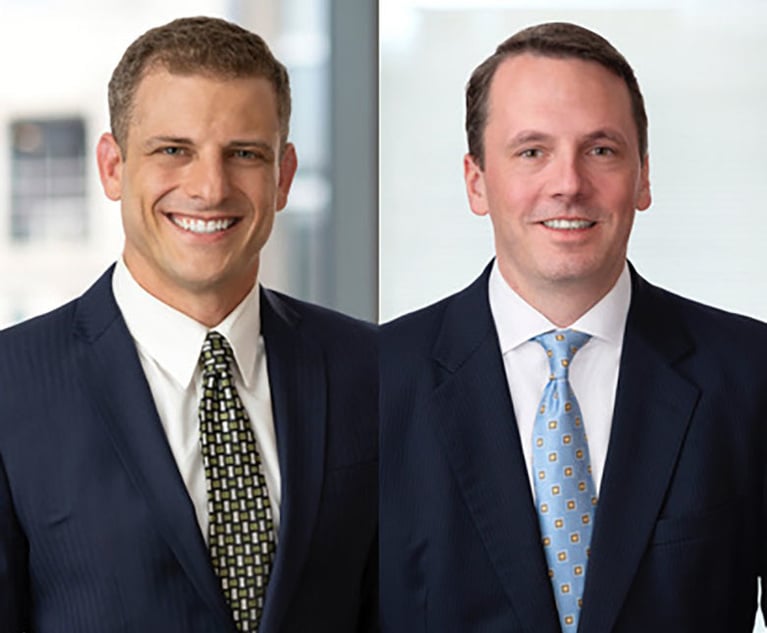
The controversy over the Chiquita warrant arose after Corporate Counsel published a story in its December 2007 issue about the case against the company ["Hard Choices"]. The article said that a warrant was served March 24, 2004, at Chiquita's corporate headquarters in Cincinnati. Corporate Counsel's information came from Howard and Daniel Seikaly, who headed the criminal division in Howard's office. (Both are now partners in the D.C. office of Troutman Sanders.) The two men said they asked for the warrant in order to search for enough evidence to charge certain executives at Chiquita.
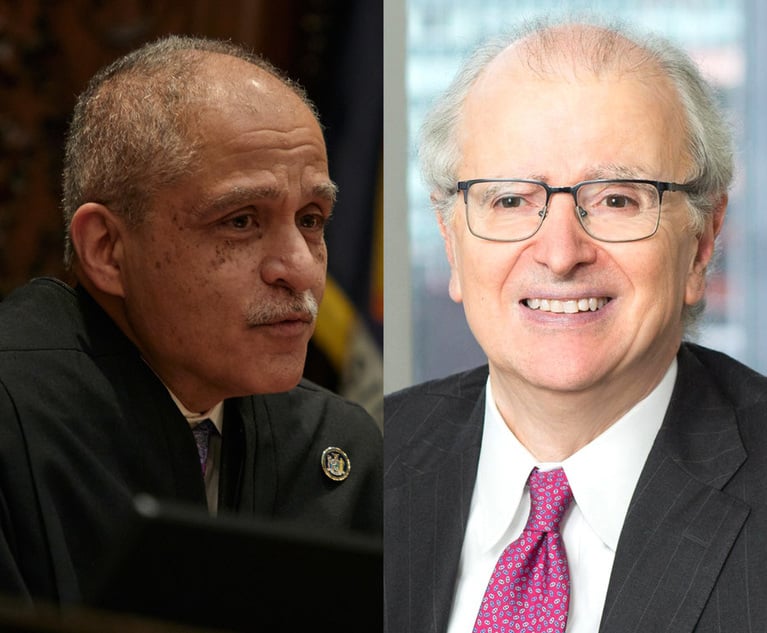
But shortly after the story was published, attorney Robert Litt contacted Corporate Counsel to say the article was in error because no search warrant was ever actually served on Chiquita. Litt, a partner at Arnold & Porter in Washington, D.C., represented Robert Olson, Chiquita's former general counsel, who retired in 2006. (Olson was one of the Chiquita executives targeted in the government's investigation; none was ever charged.) Outside lawyers for Chiquita agree that no warrant was served. (The company had a high-powered lineup of defense counsel that included Richard Thornburgh, the former attorney general who is now of counsel at Kirkpatrick & Lockhart Preston Gates Ellis.)
After Litt raised his objections, Corporate Counsel contacted several Justice officials to discuss the matter. They routed all inquiries to Dean Boyd, chief spokesman of Wainstein's national security division. Boyd declined to answer questions about the warrant, saying, "We never publicly discuss internal deliberations."
But one highly placed Justice official confirms that no warrant was executed. This official, who spoke on the condition he not be named, wouldn't elaborate.
In a postpublication interview, Howard says he still believes the warrant was obtained and executed, and that the Justice Department is "stonewalling" for reasons he doesn't understand. He adds, "I've got no doubt it was executed, but someone may be covering it up for some reason." Howard and Seikaly both say that their former colleagues in Justice won't discuss the warrant with them now, which puzzles them.
Justice officials were split from the start over whether to issue a warrant against Chiquita. When Howard first asked for one in early 2004, David Nahmias -- then the senior counsel to Christopher Wray, who headed Justice's criminal division at the time -- spent several days trying to talk Howard out of it. Nahmias reportedly argued that Chiquita had already self-disclosed its terrorist ties and was cooperating with the Justice Department. (Nahmias, now the U.S. Attorney for Atlanta, declined to comment for this story.)
Both Howard and Seikaly say the warrant was the responsibility of William Blier, then chief of the Justice Department's transnational and major crimes section. Blier, now with the Office of the Inspector General, didn't return calls for comment.
Wainstein also played a key role in the Chiquita probe. At the time of the Justice deliberations over the warrant, he was chief of staff to the director of the Federal Bureau of Investigation, which would have been responsible for serving the warrant. Boyd, Wainstein's current spokesman at the national security division, declined to comment on his boss's involvement with the Chiquita warrant.
One source close to the Chiquita investigation, who asked to remain anonymous, says he suspects that the warrant was cancelled either by someone at the Justice Department's main headquarters or at the FBI. If the warrant were sabotaged, it raises questions of favoritism, and even obstruction of justice.
Howard, for his part, still thinks that the warrant was served and doubts that it was blocked. "I'd be amazed if that happened," he says. Seikaly adds that he would be surprised if Wainstein or anyone else had stopped the warrant -- in part because it would look terrible from a PR standpoint. "The optics of stopping a search of corporate offices ... when the corporation is represented by a former attorney general is awful," Seikaly says. "And the optics of stopping a warrant is stupid, just like firing U.S. Attorneys for not being loyal to [President] Bush is stupid. It's not illegal, but it's stupid."
Speaking hypothetically, Jamie Gorelick, deputy attorney general during the Clinton administration, says it would be unusual for anyone in the Justice Department's main office to become involved "with investigative tools" like a search warrant. And she couldn't imagine anyone canceling a search warrant and not telling the prosecutor, she adds.
Asked about obstruction of justice, Gorelick says, "If someone commits an act that interferes with justice in a particular case, even if the act is legal, it can be obstruction of justice."