Incisive Media's Law.com
  • Law.com Network
  • Legal Web
Register for Law.com Newswire
Newsletters
RSS

Law.com Home > 2nd Circuit Offers Glimpse of Federal Courts' Recusal Process

Font Size: increase font decrease font

2nd Circuit Offers Glimpse of Federal Courts' Recusal Process

Howard J. Bashman

Special to Law.com

December 03, 2007

  • deliciousdel.icio.us
  • digg Digg
  • redditReddit
  • facebookFacebook
  • googleGoogle Bookmarks
  • newsvineNewsvine
  • linkedinLinkedIn
  • mixxMixx
  • stumbleuponStumbleupon
  • Print
  • Share
  • Email
  • Reprints & Permissions
  • Write to the Editor
Howard J. Bashman

Howard J. Bashman

Related: Bashman Archive

Last week, a three-judge panel of the 2nd U.S. Circuit Court of Appeals decided a challenge to the class action settlement of freelance authors' copyright infringement claims arising from the unauthorized electronic reproduction of their work. A majority on the three-judge panel held that the settlement had to be rejected, because the federal district court lacked subject-matter jurisdiction over claims alleging the infringement of unregistered copyrights, a category that constituted the vast majority of the claims covered by the settlement.

Shortly before the 2nd Circuit was to hear oral argument in the case, two of the three judges on the appellate panel realized that they likely were members of the plaintiff class whose copyright infringement claims the settlement sought to address. Those two judges requested the advice of the Committee on Codes of Conduct of the Judicial Conference of the United States concerning whether they had a duty to recuse.

The judges' inquiry to the committee, which consists of 15 federal judges, explained that apparently only two of the 2nd Circuit's judges -- an active judge who was already on this three-judge panel and a senior judge who was not -- were not members of the plaintiff class. The purpose of providing this information, presumably, was to alert the committee that it would be nearly impossible for the 2nd Circuit to assemble a panel whose judges did not labor under this recusal-related concern.

The judges' inquiry also explained that they had informed the parties at oral argument that they were waiving all rights to recovery based on their membership in the plaintiff class. After oral argument, those two judges also determined that they in fact had no right to recovery because they had failed to file a claim form within the required time frame.

The Codes of Conduct Committee, in a six-page letter whose reasoning struck me as less than convincing, responded to the judges' inquiry with the conclusion that they had the obligation to recuse. The committee concluded, in essence, that, due to the judges' substantial work on the case, they could not continue to serve as judges in the matter -- even though they had divested themselves of their interest as soon as it came to their attention.

Last week, on the same day that the three-judge panel issued its decision ordering the federal district court to throw out the settlement due to a lack of subject-matter jurisdiction over the bulk of the claims that the settlement intended to cover, the two judges who were concerned about their need to recuse issued a separate 16-page opinion explaining why they chose not to recuse, in disagreement with the Codes of Conduct Committee's recommendation. Attached to that 16-page opinion is the committee's six-page letter setting forth the basis for the committee's recommendation.

In reviewing the recusal opinion and the committee's written analysis, a disparity appears between the manner in which the two judges on the 2nd Circuit panel have described their divestment of any interest in the underlying case. The judges' own recusal-related opinion states that "[a]t oral argument on March 7, we publicly stated in open court that we would forego [sic] any financial interest in the settlement that we could possibly have now or in the future." By contrast, page 2 of the committee's letter quotes the judges as having renounced any recovery not only based on their membership in the class but also on their status as copyright holders.

The 2nd Circuit's holding on the merits was that federal law does not provide a cause of action for the holders of unregistered copyrights to sue for copyright infringement. Thus, if the two judges on the panel fell exclusively into that category of class membership, the 2nd Circuit's ruling would seem conclusively to establish that they possessed no right of recovery as copyright holders. However, if the two judges, because they had registered their copyrights, continued to possess actionable copyright claims in the aftermath of the panel's ruling, the ruling could have the effect of restoring to those judges claims that are no longer barred by the now overturned settlement's claim deadline.

CONCLUSION

I agree with the two 2nd Circuit judges who rejected as unpersuasive the Codes of Conduct Committee's recommendation that they had the duty to recuse -- and I applaud their approach in announcing publicly their recusal decision and providing a thoughtful and detailed analysis in support of that decision. Moreover, given that the parties on appeal were not actively objecting to the district court's jurisdiction, it seems possible that the ultimate result -- overturning of the settlement due to the district court's lack of subject-matter jurisdiction over the majority of class claims -- was not at the forefront of these judges' minds when they evaluated their need to recuse.

Nevertheless, once the 2nd Circuit decided that it had to overturn the settlement, the judges' recusal opinion would have been more persuasive if they had made absolutely explicit that they had renounced not only any interest in the settlement, but also any interest in their underlying claims that were purportedly covered by the settlement and in any compensation stemming from their status as copyright holders who possess a claim arising from the unauthorized electronic reproduction of their work.

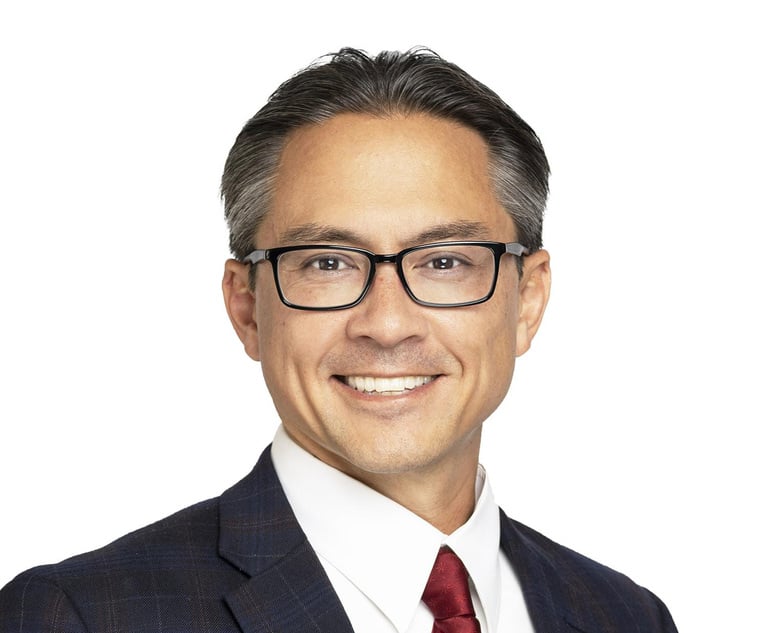
Howard J. Bashman operates his own appellate litigation boutique in Willow Grove, Pa., a suburb of Philadelphia. He can be reached via e-mail at hjb@hjbashman.com. You can access his appellate Web log at http://howappealing.law.com/.

  • Print
  • Share
  • Email
  • Reprints & Permissions
  • Write to the Editor

Related Items

  • 2nd Circuit Rejects Copyright Settlement Over Electronic Content

Advertisement

Top Stories From Law.com

Legal Technology

  • Public Performance in the Digital Age

Corporate Counsel

  • United Technologies Takes a Stand, Puts Billable Hour 'on Life Support'

Small Firm Business

  • Holiday Parties: Keeping Expenses Low and Deductibility High

Advertisement

lawjobs.com

TOP JOBS

MORE JOBS >>

POST A JOB >>

Advertisement

About ALM  |  About Law.com  |  Customer Support  |  Reprints  |  Privacy Policy  |  Terms & Conditions
Close [ X ]