Law.com
  • News
    • Newswire
    • Large Firm
    • Corporate Counsel
    • Technology
    • Washington
    • Supreme Court
    • International
    • Legal Blog Watch
    • Video
  • Publications
    • The American Lawyer
    • Corporate Counsel
    • Law Technology News
    • The National Law Journal
    • New York Law Journal
    • New Jersey Law Journal
    • Connecticut Law Tribune
    • The Legal Intelligencer (PA)
    • Daily Business Review (FL)
    • Delaware Law Weekly
    • Daily Report (GA)
    • The Recorder (CA)
    • Texas Lawyer
    • Publication E-Alerts
    • More Publication Sites
  • Legal Research & Directories
    • Books Online
    • Smart Litigator
    • ALM Experts
    • Verdict Search
    • Court Reporters
    • Legal Dictionary
    • LegalTech® Directory
    • Newsletters
    • More Directories
  • Surveys, Lists & Rankings
    • Amlaw 100
    • NLJ 250
    • Global 100
    • The A-List
    • ALM Legal Intelligence
    • Surveys
    • More Lists & Rankings
  • lawjobs.com
    • Post a Job
    • Find a Job
    • Post a Resume
    • The Careerist Blog
    • News & Views
  • LawCatalog Store
    • Books Online
    • Best-Selling Books
    • Books
    • Directories
    • E-Newsletters
    • Magazines
    • Newspapers
    • Newsletters
    • Surveys
    • Research Services
    • Webinars
    • Events
  • CLE & Events
    • CLE Center
    • ALM Events
    • LegalTech
    • Virtual LegalTech
    • Insight Legal Events
    • Webinars
Home
 
Article
  • email
  • twitter
  • LinkedIn
  • alert
  • rss

Law.com Home > Despite Docket Drop, Justices Face Packed Homestretch

Font Size: increase font decrease font

Despite Docket Drop, Justices Face Packed Homestretch

After 'B-movie' term, will Supreme Court make blockbuster rulings in final weeks?

By Marcia Coyle All Articles 

The National Law Journal

June 6, 2007

  •    
  •    
  •    
  •      


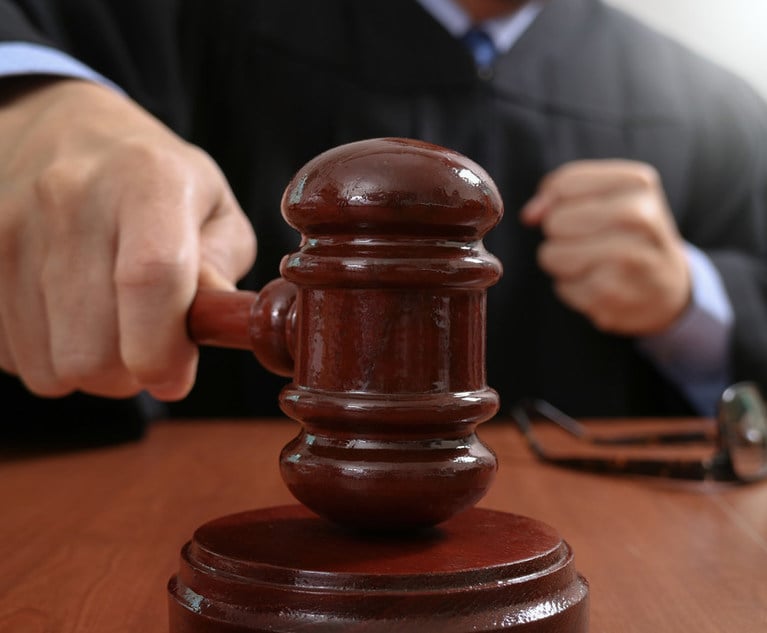
image: Eyewire

Seattle attorney Harry J.F. Korrell made his first argument in the U.S. Supreme Court last December. He and his opponent now hold the dubious distinction of having the oldest case awaiting decision in the current term, a decision that may well define the term itself.

As the justices enter the homestretch of the October 2006 term, neither Korrell nor his client -- an association of parents -- is biting fingernails or popping antacids. They knew in December that the question of a school district's use of race as a factor in assigning students to public schools would be complex and challenging for the high court.

And besides, said Korrell, they have been in this litigation for the long haul -- seven years and counting.

Korrell, a partner at Seattle's Davis Wright Tremaine, represents Parents Involved in Community Schools (PICS), in the case entitled PICS v. Seattle School District #1, No. 05-98. It was argued on Dec. 4 with another case raising similar issues, Meredith v. Jefferson County, Kt., Board of Education, No. 05-915.

The stakes are extremely high because the Court's most recent affirmative action precedents -- involving the University of Michigan and its law school -- are in play and the cases will test, for the first time, the views in this area of Chief Justice John G. Roberts Jr. and Justice Samuel A. Alito Jr.

"I don't think anyone is terribly surprised that this is one that will take a while to decide," Korrell said. "You obviously want to know the result, but we understand these are very big issues. The Court has not addressed them squarely before and there's probably a lot of work being done to get the largest possible majority for a decision."

CLOCK RUNNING

There is also a lot of work being done in what is traditionally the final month of the term simply because there is a lot of work to be done.

Ironically, the high court is on track to produce a modern record-low number of decisions in argued cases this term: 71. But decisions in 23 of those cases, counting consolidated cases as one, have yet to be issued.

"Going into June, I think that's disproportionately high," said veteran high court litigator Mark I. Levy, of counsel to the Washington office of Atlanta-based Kilpatrick Stockton. "The docket for next term also is disproportionately low. They've decided less for this year and taken less for next year."

In fact, the Court faces the same potential difficulty filling this fall's argument docket as it did this time last year. The justices have granted review in 17 cases. In contrast, the Court in May 2004 had granted review in 25 cases for the next term.

Filling the October, November and December argument calendars usually requires 34 cases, and because of briefing schedules, those cases need to be granted by the end of June.

The justices themselves in various speeches and comments seem mystified by the drop in the docket.

During a May speech at the Alaska Bar Association's annual convention, the chief justice suggested three "significant" reasons: the lack of major new laws enacted by Congress in recent years, fewer conflicts among the circuits and the ability of circuit judges to go online to find decisions from other circuits, thus offering more guidance on questions that otherwise might go to the Supreme Court.

But Lee Epstein, professor of law and political science at Northwestern University School of Law, thinks the drop in the caseload over time may reflect the increasing number of justices coming from the ranks of appellate court judges. Epstein, whose statistical studies and books on the Court are highly regarded, said she has begun examining the justices' certiorari votes to explore that thesis.

Judge Richard Posner of the 7th U.S. Circuit Court of Appeals, she noted, is finishing a book in which he makes an argument that appellate court judges who were district court judges tend to affirm more. Having been district court judges, she said, they think those judges know what they're doing.

"I think there's some of that at the U.S. Supreme Court level," she added. "They're viewing it through the eyes of appellate court judges. There's not so much concern about circuit splits because appellate courts know what they're doing."

B-MOVIE TERM?

But the term is what it is, a "very different term" than those under former Chief Justice William H. Rehnquist's hand, in the view of Court scholar Douglas Kmiec of Pepperdine University School of Law.

"It is not that the term lacks for a potential blockbuster," he said. "It's just that it's a little bit like the current fare at the movie house: B-movies -- good, just simply not great."

Somewhat tongue in cheek, he added that this may be part of the new chief justice's "clever design to make the Court the least dangerous branch by making it the far less interesting branch, and I think he is succeeding."

But even a B-movie year produces a few standout films. Kmiec and others had little trouble agreeing that the most significant rulings thus far have come in the areas of abortion, punitive damages, employment and civil procedure.

In Gonzales v. Carhart, the Court for the first time upheld a ban on an abortion procedure -- so-called "partial birth abortions" -- and suggested that facial challenges to abortion restrictions should be replaced with as-applied challenges. The latter aspect, said Kmiec, reflects Roberts' oft-stated view that "the less you decide the better."

In Philip Morris v. Williams, the justices ducked the question of the excessiveness of a jury's punitive damages award, but they did hold that juries may not punish a defendant for harm caused to individuals not directly involved in the lawsuit.

"The decision may have been somewhat narrower than business hoped for, but what they decided was extremely favorable and there is a lot in the decision that will have important application for years to come," said Kilpatrick's Levy.

In Ledbetter v. Goodyear Tire & Rubber Co., the Court took a strict view of the 180-day filing deadline for discrimination claims under Title VII of the Civil Rights Act of 1964, which is expected to make it more difficult for employees to bring pay discrimination suits.

And in Bell Atlantic v. Twombly, which involved the sufficiency of pleadings in an antitrust case, the Court overruled a bedrock, 50-year-old precedent of civil procedure -- Conley v. Gibson, 355 U.S. 41 (1957) -- which many scholars believe will affect pleadings well beyond the antitrust realm.

Levy and others actually see Carhart and Twombly as contrary to Roberts' expressed minimalist view of judging.

Twombly was a victory for the business community, said Levy, who follows the Court's business docket closely. But repudiating Conley v. Gibson, he added, was more than necessary to decide the case and was not sought by the parties.

So too with the abortion case and the announced shift to as-applied challenges. These technical doctrines, he said, make an enormous difference to the practical administration of the federal court system.

"By cutting back on facial challenges and directing them to as-applied challenges, that could, over time, significantly limit the role of federal courts in resolving these major constitutional questions," he said.

'HEADLINE' CASES

All of the above "headline" cases were decided by 5-4 votes and that reveals another significant aspect of the term thus far.

In the first term of the Roberts Court, the justices decided 16 cases by five-vote majorities, or 23 percent of the term's total decisions. With 23 cases still to be decided, the Court already has issued 17 decisions with five-vote majorities -- 35 percent of the decided cases.

Thomas Goldstein, head of the Supreme Court practice at Akin Gump Strauss Hauer & Feld, believes the ideological division on the Court has grown more stark, despite last term's experience and Roberts' professed goal of greater unanimity on the Court.

That is due, he has explained on his Scotusblog Web site, to the replacement of Justice Sandra Day O'Connor, who in the Court's most divisive cases could move in either direction, with the more reliably conservative vote of Alito.

Justice Anthony M. Kennedy has been in the majority in all 17 5-4 decisions, giving the Court's more liberal wing its greatest victory in the global warming challenge, Massachusetts v. EPA.

"The two Bush appointees are doing what was expected," said Epstein.

"At least for the moment and probably for the next couple of years, these justices are not going to act in ways that would surprise anyone," she said.

For people who thought Kennedy would become a liberal someday, she added, "That's not going to happen. He's actually been one of the more consistent justices in terms of his voting over the long haul. People had talked themselves into the idea he might vote to strike down the partial-birth abortion ban. His language about women was a bit of a shock, but not his vote."

FINAL WEEKS

As the term comes to an end, there undoubtedly will be more "headline" cases and more revelations of the views of the Court's newest justices.

Besides the school race cases, there are about six potentially significant business cases to be decided, noted Levy, including:

  • Credit Suisse v. Billing, No. 05-1157: the standard for applying antitrust immunity, here, in a class action against 16 of the nation's largest underwriters and institutional investors.

  • Tellabs v. Makor, No. 06-484: how to establish a "strong inference" of scienter under the Private Securities Litigation Reform Act.

  • U.S. v. Atlantic Research, No. 06-562: ability to sue for contribution under Section 107(a) of the Superfund law.

    Also, three First Amendment cases may break new ground:

  • Hein v. Freedom from Religion Foundation, No. 06-157: taxpayer standing to bring an establishment clause challenge to a Bush administration "faith-based" program, which may involve reconsideration of the Court's landmark precedent, Flast v. Cohen, 392 U.S. 83 (1968).

  • FEC v. Wisconsin Right to Life, No. 06-969: an as-applied challenge to three broadcast ads under the Bipartisan Campaign Reform Act.

  • Morse v. Frederick, No. 06-278: challenging the constitutionality of a student's suspension for waving a "Bong Hits 4 Jesus" banner.

    And the Court's criminal sentencing revolution continues with a case asking whether a sentence within the range of the Federal Sentencing Guidelines is presumed to be "reasonable." Rita v. U.S., No. 06-407.

    "In every sense, this is still a closely divided Court jurisprudentially," noted Kmiec.

    But more important than unanimity to the practicing bar, he added, is a "comprehensive rulebook, clear statements of the law."

    The coming weeks will tell.


  • Subscribe to The National Law Journal

    Find similar content

    Companies, agencies mentioned

        
    • U.S. Supreme Court
    • Community Schools
    • Board of Education
    • University of Michigan
    • Kilpatrick Stockton
    • Alaska Bar Association
    • U.S. Circuit Court of Appeals
    • Philip Morris
    • Goodyear Tire & Rubber Co.
    • Bell Atlantic
    • Roberts Court
    • Akin Gump Strauss Hauer & Feld
    • Credit Suisse
    • Atlantic Research
    • Religion Foundation
    • Federal Sentencing Guidelines

    Key categories

        
    • judiciary (system of justice)
    • university
    • laws

    Most viewed stories

        
    1. Donovan Criticizes Secret Payoff to Lopez Victims
      •      
    2. Largest New York Firms Show Steady Growth
      •      
    3. The 2013 Am Law 100
      •      
    4. Real Estate Lawyers Target Closing Vendors
      •      
    5. Bernstein Upholds $78.4 Mil. Verdict in Phila. Med Mal Case
      •      
    lawjobs.com

    TOP JOBS

    MORE JOBS

    POST A JOB

    From the Law.com Network

    3-D Printing: The Next Big Thing in IP Law?

    Best Legal Departments 2013

    News Corp. Hires Ex-Skadden Communications Chief Bush

    Law Firm Leaders' Confidence Slipping, Says Survey

    Contrite Companies Can Win Forgiveness in Bribery Cases
    •      
      • Subscription Required

    Plaintiffs Want to See Toyota's 'Crown Jewels'
    •      
      • Subscription Required

    CEIC: the Destination for Digital Investigation

    Using Computer Forensics to Investigate IP Theft

    Prolific ADA Plaintiff Faces Nemesis in Harassment Suit

    Ullyot Exit Closes Chapter for Facebook
    •      
      • Subscription Required

    Rothstein Bankruptcy Trustee Files New Reorganization Plan
    •      
      • Subscription Required

    Fla. Bar Wants Disbarment for Former Judge
    •      
      • Subscription Required

    Bar Candidate Quits N.Y. Job To Satisfy N.J. Practice Bylaw

    Pro Bono Work Proposed as Condition for Bar Admission
    •      
      • Subscription Required

    The Affordable State-Specific Practice Solution
    Available in NY, NJ, PA and CT editions - research, draft and prepare even the most complex cases with ease.

    Judge in Stop-and-Frisk Case Relishes Her Independence

    Ground Is Shifting in 14-Year Litigation

    High Court Names Evers as the FJD's Court Administrator

    Third Circuit Rules Against Citgo in Case Over Oil Spill
    •      
      • Subscription Required

    Law Schools Are Looking Beyond LSATs, Says Mich. Dean

    Is Freezing Your Eggs the Solution?

    Litigator of the Week: Who Needs a Jury Consultant?
    •      
      • Subscription Required

    Sanction Reversed; Filing of Sexually Explicit Chat OKd
    •      
      • Subscription Required

    DeKalb Judge Dismisses, Then Recuses

    Jury Finds For Attorney In Legal-Mal Case
    •      
      • Subscription Required

    Corporate Bribery Case Part Of National Trend
    •      
      • Subscription Required

    Court Continues To Grant Lawyers Fraud Immunity
    •      
      • Subscription Required

    The Law.com Network
    • ADVERTISE

    law.com

    • Tour the New Site
    • Newswire
    • Special Reports
    • International News
    • Lists, Surveys & Rankings
    • Legal Blogs
    • Contact Us
    • Advertise
    • Site Map

    alm national

    • The American Lawyer
    • The Am Law Litigation Daily
    • Corporate Counsel
    • Law Technology News
    • The National Law Journal

    alm regional

    • Connecticut Law Tribune
    • Daily Business Review (FL)
    • Delaware Law Weekly
    • Daily Report (GA)
    • The Legal Intelligencer (PA)
    • New Jersey Law Journal
    • New York Law Journal
    • GC New York
    • The Recorder (CA)
    • Texas Lawyer
    • The Asian Lawyer
    • Focus Europe

    directories

    • ALM Experts
    • LegalTech® Directory
    • In-House Law Departments at the Top 500 Companies
    • Top Rated Lawyers
    • The American Lawyer Top Rated Lawyers
    • The American Lawyer Legal Recruiter's Directory
    • Corporate Counsel Top Rated Lawyers
    • The National Law Journal Leadership Profiles
    • National Directory of Minority Attorneys
    • Go-To Law firms of the Top 500 Companies

    books & newsletters

    • Best-Selling Books
    • Publication E-Alerts
    • Law Journal Newsletters
    • LawCatalog Store
    • Law Journal Press Online

    research

    • ALM Legal Intelligence
    • Court Reporters
    • MA 3000
    • Verdict Search
    • ALM Experts
    • Legal Dictionary
    • Smart Litigator

    events & conferences

    • ALM Events
    • LegalTech®
    • Virtual LegalTech®
    • Virtual Events
    • Webinars & Online Events
    • Insight Information

    reprints

    • Reprints

    online cle

    • CLE Center

    career

    • Lawjobs
    About ALM  |  About Law.com  |  Customer Support  |  Reprints  |  Privacy Policy  |  Terms & Conditions |  ALM User License Agreement