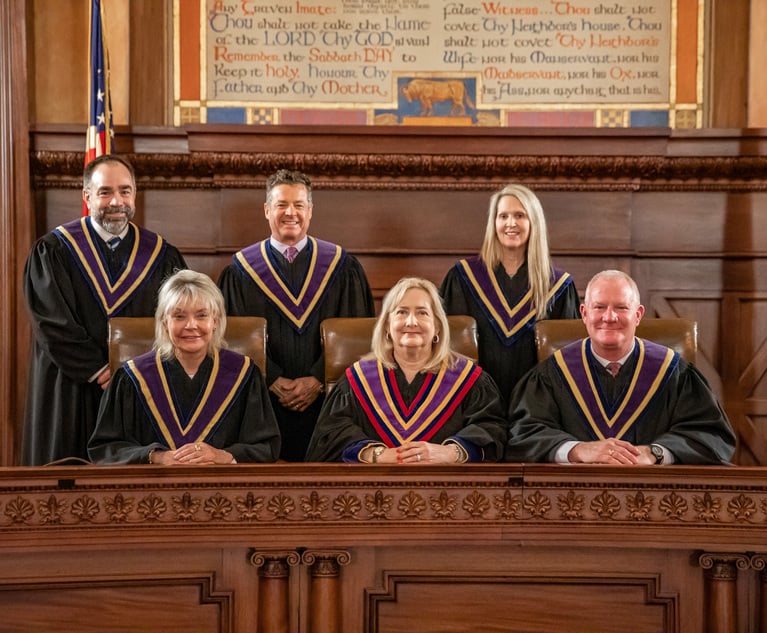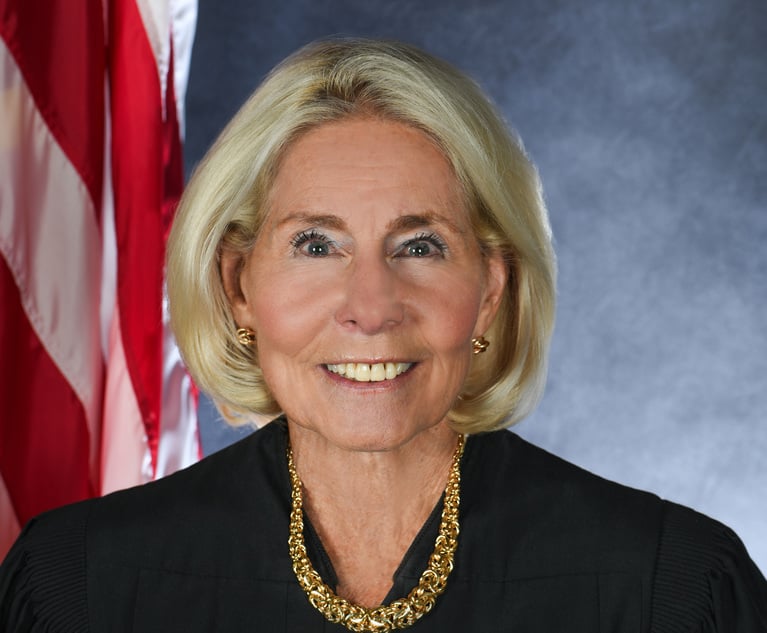
Supreme Court Justice Debra M. Todd
1. What makes a good judge?
I believe an outstanding judge should possess the following qualities: Intellect, common sense, commitment, dedication, a strong sense of fairness, impartiality, self assurance, diligence, patience, even temperament, tenacity, integrity and courage.
I have been "Highly Recommended" to serve on the Supreme Court by both the Allegheny County Bar Association and the Pennsylvania Bar Association. The Pennsylvania Bar Association said that I have "the intellectual ability, personal integrity, strong sense of fairness, and diverse practical and academic experience to serve with distinction on the highest court."
If elected, I will strive to bring these qualities to the Pennsylvania Supreme Court.
2. What is the biggest trap or mistake a judge can make?
I believe judges should avoid isolating themselves from the legal community and the community in general. The public needs to know that the judiciary is visible.
3. How would you describe your judicial philosophy?
As an appellate judge, I decide each case on its own merits. I follow the rule of law and accord proper respect to stare decisis. Finally, I take very seriously the role of the judiciary as "guardian of the constitution." I defer to the legislature when it is appropriate to do so.
4. Which opinion do you think represents your best work?
Many cases are significant in one way or another, particularly to the parties. Opinions which Superior Court judges designate for publication are generally those which the panel members have determined meet the Court's criteria for publication, e.g., establishing, modifying or criticizing a new rule of law; resolving an apparent conflict of authority; or involving a legal issue of continuing public interest. (Internal Operating Procedures of the Superior Court of Pennsylvania, No. 443).
Of the more than 1600 decisions I have authored, and, in particular, of the 160 decisions I have filed as published opinions, I believe the following opinions represent some of my best work, and each represents an important opinion in a particular area of substantive law.
Commonwealth v. McIntosh, 911 A.2d 871 (Pa. Super. 2006)
In this recent criminal case, I wrote the majority opinion ordering the resentencing of a University of Pennsylvania professor convicted of sexually assaulting a young graduate student. The trial judge, in effect, sentenced the defendant to house arrest by paroling him immediately after issuing his sentence. The Commonwealth appealed and the Superior Court reversed and remanded.
Donegal v. Baumhammers, 893 A.2d 797 (Pa. Super 2006)
In this en banc insurance coverage case, I wrote for the majority, holding that the alleged negligence of the parents of a mentally-disturbed adult son, who had murdered five people in a shooting spree, constituted an occurrence under the parents' insurance policy, and that the individual shootings committed by Richard Baumhammers during the rampage amounted to separate occurrences under the policy.
This case is now pending before the Pennsylvania Supreme Court.
O'Hare v. UPMC, 869 A.2d 976 (Pa. Super. 2005)
In this commercial case, I wrote for the unanimous panel that UPMC Health Plan, Inc. had a right to recover mistaken overpayments to pharmacies amounting to $1.8 million.
Commonwealth v. Bennett, 842 A.2d 953 (Pa. Super. 2004)
In an en banc opinion of the Superior Court, I wrote for the majority on the timely and troubling question of the unfair and unjust result inuring to the severe detriment of convicted defendants caught in the tangled web of counsel's ineffectiveness.
This case is now pending before the Pennsylvania Supreme Court.
In Re: R.B.F. and R.C.F., 762 A.2d 739 (Pa. Super. 2000) and In Re: C.C.G. and Z.C.G., 762 A.2d 724 (Pa. Super. 2000). In these consolidated cases, an en banc panel of the Superior Court was asked to address the important question of second parent adoption in families with same-sex parents. The majority reached the conclusion that such adoptions were not permitted under Pennsylvania law. I dissented, as did Judge Justin Johnson and Judge John Kelly.
In a unanimous opinion, the Pennsylvania Supreme Court agreed with the dissenting opinions and reversed the Superior Court's en banc opinion at 803 A.2d 1195 (Pa. 2002).
5. If you could, which opinion would you take back or revise? Why?
I give a great deal of thought to each opinion I author. I cannot think of any opinion I would take back or revise.
6. What in your background has prepared you best for being a judge?
I am a 1979 Honors graduate of Chatham College (B.A.) and a 1982 Law Review graduate of the University of Pittsburgh School of Law (J.D.). In 2004, I was awarded the LL.M. Degree in the Judicial Process by the University of Virginia School of Law. I am one of only four judges in Pennsylvania to hold this post-doctoral degree.
I maintained an active litigation practice throughout my career as an attorney and enjoyed a wide variety of cases. I successfully handled hundreds of cases which were resolved through dispositive pretrial motions or settlement. I took approximately thirty-five cases to verdict, several of which involved trials lasting several weeks. Many of my cases were complex commercial matters which, after extensive discovery, pretrial preparation, and negotiation, settled prior to trial.
My law practice was concentrated in the area of civil litigation. Over the years, I represented many corporate and business clients as well as a number of individual litigants. My practice was both defense and plaintiff oriented. In earlier years, I focused my practice primarily in the corporate and commercial litigation area, handling breach of contract, product liability, personal injury, employment discharge and discrimination cases, and environmental litigation matters concerning significant claims (tens of millions of dollars) for environmental clean-up costs. In later years, my practice became more expansive. In managing my own law firm from 1993 through 1999, I was able to undertake a wider variety of matters and, in particular, undertook many more cases on behalf of plaintiffs. Such cases included employment discrimination, shareholder derivative actions, breach of contract, wrongful termination of disability benefits, bad faith, and wrongful death actions.
I appeared in court regularly throughout my career. I tried cases in Federal Courts (Western District of Pennsylvania, Eastern District of New York) and in Common Pleas Courts (Allegheny, Butler, Washington, Cambria and Philadelphia Counties). I handled over fifteen appeals in the Pennsylvania Superior and Supreme Courts, as well as the Third Circuit and Second Circuit Courts of Appeals.
As a Superior Court judge, I hear appeals from all sixty-seven Courts of Common Pleas in the areas of family law, such as child custody, visitation, adoption, divorce, support, and termination of parental rights; criminal law, including cases ranging from summary offenses up to and including homicide cases, except those involving the death penalty; and civil law, including wills and estates, property disputes, breach of contract, product liability, medical malpractice, and personal injury.
7. How would your personal views and experiences influence you as a justice?
I am a product of my upbringing, my family, my Church, my community, my education, and my experience as a trial lawyer and appellate judge. I believe that my background in its entirety has instilled me with integrity, and has enabled me to be honest, fair and capable of judging each and every case that comes before me on its own merits.
Additionally, I believe that the bench should reflect the diversity of our community. The court can only benefit by the election of competent men and women whose backgrounds and endeavors reflect the breadth of experience of American society. My particular background has afforded me a wide variety of experiences from which I may draw. I grew up in a blue-collar neighborhood of a Western Pennsylvania steel town, Ellwood City. My father was a steelworker and thirty-year member of the USWA. My mother was a homemaker and "full-time mom." I know what it is like to grow up without much money and to have to work hard to achieve. Mine was the first generation of my family to obtain a college education. I worked my way through college and law school and received academic scholarships and educational loans to assist with my education.
8. What separates you from the other candidates and why would you be a better addition to the Supreme Court?
First of all, I have tremendous respect for all of the judges who are candidates in this race, particularly for my colleagues on the Pennsylvania Superior Court with whom I have worked closely. It requires tremendous commitment to take on the rigors of a state-wide race while fulfilling the duties of our judicial offices.
I do believe I have a contribution to make to the Pennsylvania Supreme Court. After twenty-five years in the law, both as an attorney and as an appellate judge, I have learned much, and I am prepared to learn more. I place my integrity above all else, and I am dedicated to the rule of law and to the principles embodied in our Constitution. There is no more important public service than that of a state Supreme Court Justice. My career has prepared me for this challenge, and my life experiences have enlightened me for the journey. It is not for the power or the glory that I seek this position - this is not a decision driven by ego. I embark on this path with humility, and I am willing to take on the rigors of a state-wide campaign to accomplish this goal.
My legal career has required me to be hard-working, tough-minded and receptive to new challenges. I believe I have continued to demonstrate those abilities on the bench. Moreover, I view myself as an open-minded, fair and honest person, experienced in representing both plaintiffs and defendants, and able to reconcile competing viewpoints and cut to the heart of the issue. As an attorney, I demonstrated an ability to administer a large case load and to manage a team of co-workers. As a judge, I likewise have demonstrated an aptitude for administration, a quality I believe is important in a Supreme Court Justice.
Throughout my life, I have been driven to excel. I met with success at a private women's college, two large university law schools, a major steel corporation and a large law firm. I have been successful in owning and managing my own business. I have consistently attempted to be of service to my community through pro bono work and volunteer activities, and have made a concerted effort to share my good fortune with others. I believe I have the requisite legal background, the solid experience of a successful trial lawyer, an accomplished tenure on the appellate bench, and the temperament and personal integrity to make a real contribution to the administration of justice as a member of the Pennsylvania Supreme Court.
Additionally, I have conducted extensive research on the subject of child abuse, and published an article in the Penn State (Dickinson School of Law) Law Review: "Sentencing of Adult Offenders in Cases Involving Sexual Abuse of Children: Too Little, Too Late? A View from the Pennsylvania Bench," 109 Penn State L. Rev. 487 (2004).
Finally, I am the only candidate in this race who has earned a post-doctoral LL.M. degree (Masters in the Judicial Process) from the University of Virginia School of Law. By devoting two summers (in addition to a full court docket) to completing this intense and academically rigorous program in Charlottesville, Virginia, I believe I have demonstrated in a tangible way my commitment to the people of Pennsylvania to serve them as the best judge I can be.
9. If elected, what would be your biggest priority on the court?
As a justice on the Pennsylvania Supreme Court, I would seek to enhance the image of the Court in the public eye and to improve the Court's efficiency.
Questions about the law and legal practice:
10. Is there any area of the law that you think needs a closer look or guidance from the Supreme Court?
Yes. See my majority opinion in Commonwealth v. Bennett, 842 A.2d 953 (Pa. Super. 2004). In this en banc opinion of the Superior Court, I wrote for the majority on the timely and troubling question of the unfair and unjust result inuring to the severe detriment of convicted defendants caught in the tangled web of counsel's ineffectiveness.
This case is now pending before the Pennsylvania Supreme Court.
11. When deciding a case, how do you frame the issue and conduct your analysis to reach a conclusion?
I initially review the trial court opinion and the briefs of the parties to examine how the issue was framed by them. I then determine whether, in my legal judgment, the issue has been properly identified, framed and preserved for appeal. It is at that point that I begin my analysis. While I review the legal analysis offered by the trial court and the parties, I always direct my law clerks to re-examine the pertinent caselaw and statutory authority prior to rendering my decision.
12. Do you think there is a dilemma in how Rule 1925(b) is applied? And if so, what needs to be done to fix it?
Yes, I do believe that Rule 1925(b) is, at times, harsh in its application, given that the Supreme Court has ruled out equitable considerations as exceptions.
According to the Supreme Court's construction of Rule 1925(b), in order to preserve their claims for appellate review, Appellants must comply whenever the trial court orders them to file a Statement of Matters Complained of. Any issues not raised in a 1925(b) Statement will be deemed waived. The Supreme Court has reaffirmed this "bright-line rule" and deemed issues waived even if the trial court has addressed those issues in its opinion. The Court specifically voiced its disapproval of opinions by the Superior Court which created equitable exceptions.
The Appellate Rules Committee is in the process of recommending changes to this Rule.
13. Is the court threatening to make the practice of law too burdensome for solo and small-firm practitioners by increasing requirements for CLE, maintaining certain types of bank accounts, moving toward effective requirements for malpractice insurance, etc.?
It is the Supreme Court's duty to administer our justice system in Pennsylvania. All of these steps, particularly increased CLE requirements, are designed to enhance the capabilities of the Commonwealth's lawyers and, thus, improve the quality of legal services provided to the public. I likewise support CLE for the Commonwealth's judges.
14. Conversely, are clients adequately protected by the aforementioned requirements?
These requirements do not provide the complete answer. Ineffective assistance of counsel is a real problem, particularly in the criminal justice system, but also, at times, in the civil arena. Our bar is comprised of thousands of attorneys, many of whom are outstanding practitioners. Those accomplished lawyers need to accept some responsibility for mentoring the less experienced members of the bar. Also, attorneys who are committing malpractice to the detriment of their clients need to be reported and held accountable.
15. What is the greatest threat to the practice of law or problem the profession faces?
The legal profession, like the judiciary, needs to take affirmative steps to improve its image in the eye of the public, thus restoring trust in the bench and bar.
Just as education is the answer to the challenges facing our Commonwealth's children, it is the answer for many of the challenges facing the Pennsylvania bench and bar. By that, I mean not only educating the members of the judiciary regarding establishing or maintaining a real connection and presence with the public (within the boundaries of the Judicial Code) but also re-educating the public in the fundamental lessons of civics and the roles and limitations of the separate branches of government.
16. How important is consensus - particularly unanimous consensus - in high court opinions and are there limits when a justice should only concur, or should they do it any time they feel like it?
Consensus is important. This is one of the reasons why judicial temperament is a critical characteristic in an appellate judge. However, there are times when a judge must stand up and say, "I dissent." Judges should concur only when absolutely necessary and when it is not possible to persuade the majority opinion writer to incorporate his or her views in the opinion of the court.
17. How important is stare decisis and when should a court depart from it?
Stare decisis is the foundation of our legal system and should be accorded the greatest degree of respect.
Openness of the courts:
18. Does the court need to improve efforts to make the courts and what they do more open and accessible to the press and public?
Yes. I favor televising Pennsylvania Supreme Court proceedings much as we televise our Superior Court En Banc proceedings on PCN. I believe this is a genuine public service which helps to educate the public and enhance the public image of both lawyers and judges.
19. Do you favor cameras in the courtroom, particularly for oral arguments before the Supreme Court?
Yes, if they do not disrupt or diminish the dignity of the proceedings.
20. Once litigants have chosen to enter the arena of the public courts, should confidential settlements be discouraged? Or should they be encouraged as a way for the system to reach swifter resolutions?
This is a question that pertains quite specifically to the case at hand, and the answer depends entirely on the nature of each particular case.
21. Under what circumstances should judges seal the records in a case? In general, should the practice of sealing records be encouraged for discouraged?
This is a question that pertains quite specifically to the case at hand, and the answer depends entirely on the nature of each particular case.
22. Should the court make more of its dealings - including meetings with other elected officials and reasons for recusal - open to the public?
Yes. I believe transparency is important, particularly with respect to the administrative functions of the Court and its dealings with the legislature.
Politics and public perceptions:
23. What should be the nature of the relationship between the court and the members of the other branches of government and how should the justices, particularly the chief justice, interact with them?
We need to remind and re-educate the public regarding the roles of the three co-equal branches of government. In order to administer Pennsylvania's unified judicial system, proper and transparent communication between and among the three branches is required and indeed necessary.
24. The pay raise decision: who do you think got it right, Justice Castille or Justice Saylor? Explain your answer.
The majority opinion of the Pennsylvania Supreme Court constitutes the law of the land and expresses a sound constitutional analysis. That said, I personally found the legislative process to be tainted due to the manner in which the pay-raise was enacted. The public likewise believed it was tainted. For that reason, I returned my pay raise to the Commonwealth Department of Treasury in 2006 and asked that it be used for the humanitarian and educational needs of the Commonwealth of Pennsylvania.
25. Since judges are elected and you are running as a member of a political party, what does your party membership say about you and how big a role does it play in your outlook on legal matters?
As a life-long Democrat, I have embraced the values I grew up with. These would include hard work, integrity and inclusiveness. I do not, however, believe those values are necessarily defined by political party affiliation.
26. Should party membership/loyalty play any role in getting a party's nomination?
Yes.
27. Would you recuse yourself if a campaign contributor were involved in litigation as a party or attorney before you?
I recuse if I am aware that a party participated in or contributed to my campaign. I do not recuse if an attorney did so, because as a practical matter, there are simply too many attorneys who participate in some way in all of the judicial campaigns, and that fact certainly does not impact my ability to be fair and impartial.
28. In general, under what circumstances would you recuse yourself from a case?
I recuse if I believe there is any possibility of personal bias or an appearance of impropriety.
29. To whom or what are judges accountable?
Judges are accountable to the law and to the Constitutions of the United States and Pennsylvania.
30. What does "independence of the judiciary" mean to you?
An independent judiciary acts according to the Rule of Law, stare decisis, the Constitutions of the United States and Commonwealth of Pennsylvania and without outside influence.
31. How would you define a "threat to judicial independence?" And where are these threats coming from?
Any outside influence seeking to impact judicial decision-making is a threat to the judiciary.
32. What is the biggest misunderstanding between judges and the general public?
Judges are often not recognized as the committed public servants most judges are.