Michael Harrington sued after getting snookered out of $44.63 in overtime pay. He later settled for $10,500 and sought about $46,000 in attorney fees.
Doesn't everything seem out of proportion here? If you said yes, Los Angeles' 2nd District Court of Appeal agrees with you. The court reduced the fee award to $500.
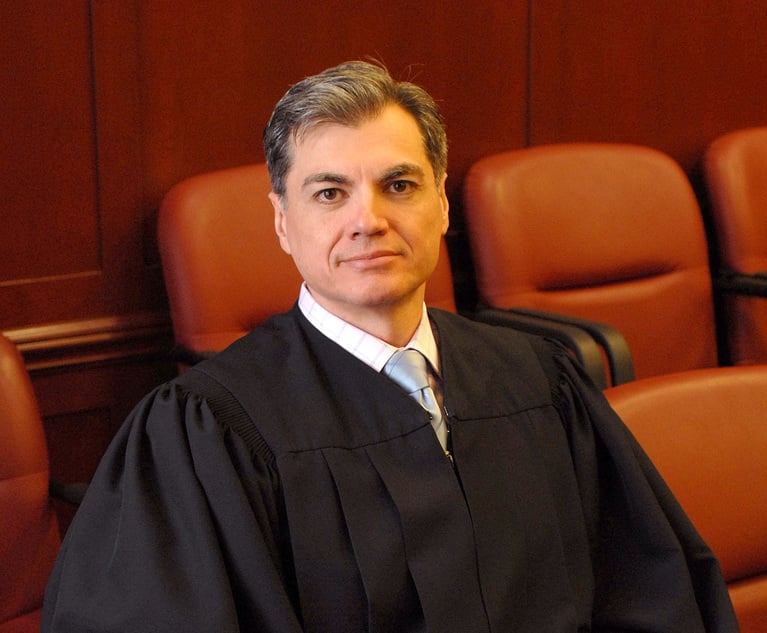
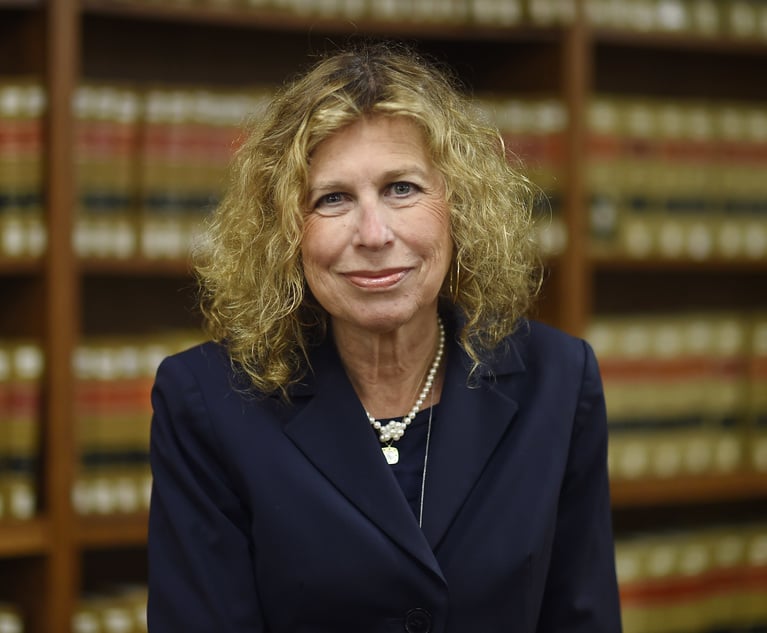
"At the risk of understatement," Justice Miriam Vogel wrote last week, "there is no way on Earth this case justified the hours purportedly billed by Harrington's lawyers." He was represented by Los Angeles' Harris & Ruble.
Justice Robert Mallano and Los Angeles County Superior Court Judge Frank Jackson, sitting by designation, concurred in the published opinion.
"It is as plain to us as it was to the trial court that, from the outset, this was a dispute about $44.63 and that it was not viable as a class action," Vogel wrote. "It is equally plain that Harrington was underpaid as the result of an honest mistake."
Harrington, a Los Angeles police officer, filed his suit against Payroll Entertainment Services Inc. after getting paid $758.37, instead of $803, for a 14-hour, off-duty day providing traffic and crowd control for a movie production. He sought class certification for himself and 15 other officers.
Much of the appellate ruling quotes verbatim from the decision by L.A. County Superior Court Judge William Fahey, who denied the class certification motion and rejected the $46,000 fee request.
Fahey noted that five lawyers and one paralegal from Harris & Ruble worked on Harrington's case -- at a low rate of $200 per hour for one person and a high of $525 per hour billed by partner Alan Harris. The court noted that Harris billed about 38 percent of all hours.
"Much time is billed for 'drafting' and/or 'reviewing' documents by the multiple attorneys on the case," Fahey wrote. "Additional and unexplained hours are billed for meetings among the attorneys and reviewing the records of a non-party, 'Cine-Com Payroll.' Many more hours were billed for preparing the motion for class certification which was not very persuasive."
In the end, the judge ruled, fees in excess of four times the amount Harrington received in the settlement were unreasonable.
"While [Harrington] and his attorneys no doubt had hopes of turning this case into a major class action," Fahey wrote, "that did not occur because neither the facts nor law supported such a result. ... [Harrington] has been paid a windfall of $10,500 which can and should be shared with his many attorneys."
The appeal court didn't agree with that last point and declined Harrington's invitation to remand the matter so the trial court could set a proper fee.
"Given the nature of the dispute, the amount of the settlement and the record on appeal," Vogel wrote in Harrington v. Payroll Entertainment Services Inc., "we are satisfied that the trial court could not reasonably award an amount in excess of $500, and thus fix the fee at that amount."
Harris, Harrington's lead lawyer in the trial court and on appeal, said last week that he doesn't comment to the press. But he certainly sounded frustrated.