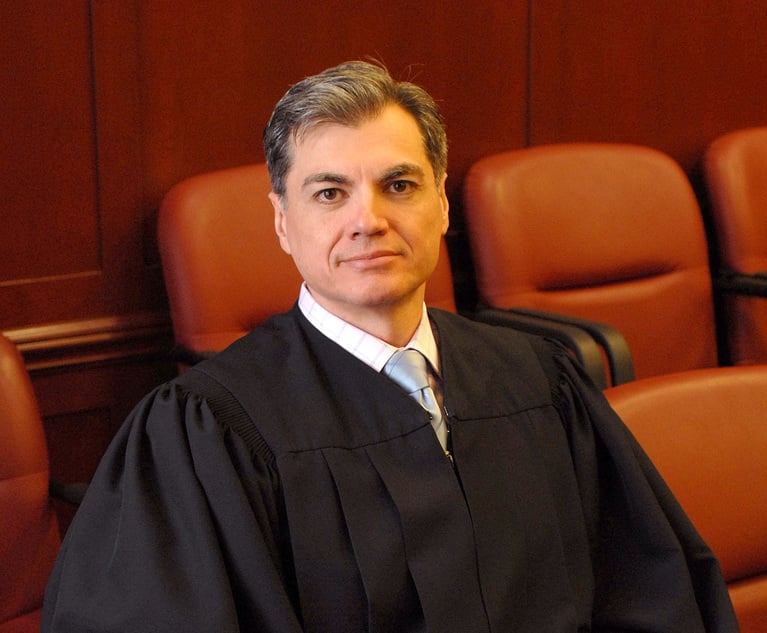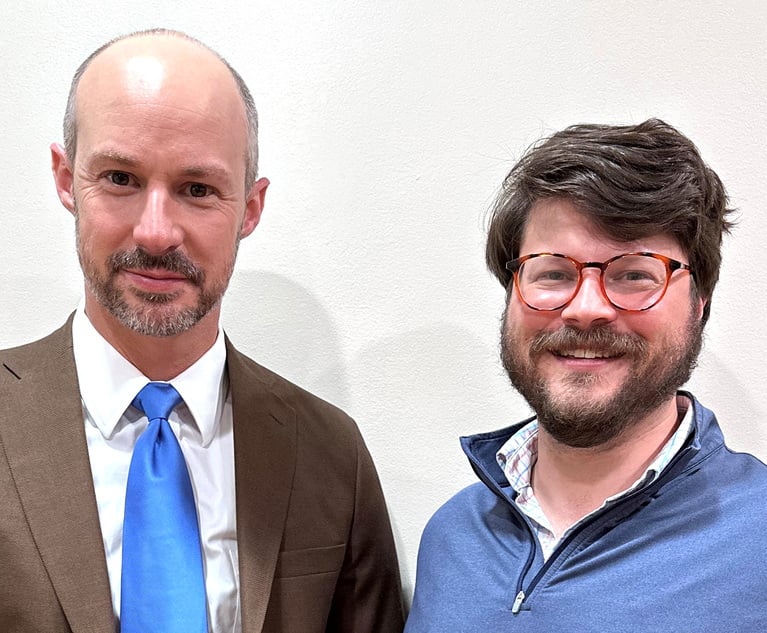
James Otteson litigated patent cases at Wilson Sonsini Goodrich & Rosati for 20 years before he got so fed up with conflict problems he left to start his own IP boutique.
"It became a huge problem for us," said Otteson, who launched Agility IP Law last year. "Conservatively in the last three or four years I was at Wilson, we lost about $30 million in business."
Wilson's long and much-envied list of tech clients may keep patent litigators there busy. But branching out beyond those mostly small and midsize companies creates conflict issues that they say sideline them on major patent battles.
And that loss of potential revenue, and potential compensation, explains in large part why so many Wilson patent litigators are leaving the firm, including six recently, former partners say.
In February, James DiBoise and Michael Berta left to join Arnold & Porter's San Francisco office. They had helped Wilson open its San Francisco office in 2002.
Now, in what observers call the end of an era, six more patent partners are leaving for Latham & Watkins.
Ron Shulman, Michael Ladra, Terrence Kearney and Richard Frenkel will join Latham's Silicon Valley office. Roger Chin and Julie Holloway are going to Latham's San Francisco office.
The loss of Shulman in particular is a blow to Wilson, lawyers said. He's built a strong practice since arriving from Fish & Neave in 1995. In a recent win last December, Shulman, along with Berta and Chin, helped genetic-testing instrument maker Affymetrix Inc. beat patent infringement lawsuits brought by rival Illumina Inc. in federal court.
Ladra was one of the firm's original patent litigators, joining the firm in 1980. Over the years he's handled cases for the likes of Broadcom Corp. and Monolithic Power Systems Inc.
The departing partners, whose move to Latham hasn't yet been publicly announced, declined to comment last week.
"Every firm with either success or size has conflicts and the challenge is to manage them correctly," said Robert Feldman, a partner at Quinn Emanuel Urquhart & Sullivan who chaired Wilson's litigation department from 2000 to 2004 before leaving in 2007. "And Ron and those guys disagree with how Wilson resolved its conflicts."
Wilson says it takes conflicts of interest seriously, and has "a solid process in place to think through legal and business considerations," spokeswoman Courtney Dorman said in an email statement. "We have to balance the needs of our client base and our practice areas and are comfortable with our protocols."
Berta, who joined Wilson in 2000, said he was content for many years handling the steady stream of patent and other IP work he got from Wilson's small to midsize tech and other corporate clients. Over time though, he wanted to broaden his practice, and making that happen was a challenge.
"Wilson has a very good platform with a lot of very good opportunities," Berta said. "But it has a cost. It can be harder to grow a practice outside the corporate client base because of conflicts of interest."
And as Wilson expanded its patent prosecution work in recent years, things have gotten messier. With patents constantly being sold and resold, conflicts often crop up for litigators.
Conflicts in corporate transactions can usually be waived. But for the most part, that's not an option for patent litigation, especially when it comes to big-ticket lawsuits, partners say.
"Unlike a business transaction, there are winners and losers," Otteson said. "And most clients will not waive conflicts of interests in that situation."
Otteson's experience at Wilson working for Tessera Inc. is a good example. In the early 2000s, he handled a large patent infringement case in the International Trade Commission for the San Jose-based company, which licenses a patent portfolio for semiconductor packaging technologies.
He got good results. The ITC ruled that Tessera's patents were valid and had been infringed, and later the company wanted to hire Otteson again for other patent cases. But by that time, Otteson says, he couldn't take the cases because Wilson represented too many other semiconductor companies that Tessera wanted to sue.
"I couldn't do any more work for Tessera after that first big win," Otteson said. "And that was very disappointing."
Although Wilson would not comment specifically about Otteson's statements, Dorman said that "Tessera remains an important IP litigation client, one where we have been retained to handle a variety of matters over the past several years."
The recent departures may be painful. But Wilson still has a solid team of patent litigators, lawyers said, such as David Kramer, who represents Google Inc. and RealNetworks Inc.
And the firm will rebuild its patent litigation practice, lawyers predict. In June, Wilson hired Larry Shatzer in its Washington, D.C., office. Shatzer had chaired Foley & Lardner's intellectual property litigation practice.
There's still plenty of patent litigation work for Wilson's long list of tech clients. "For Wilson, this is plainly a high-class problem," Feldman said.