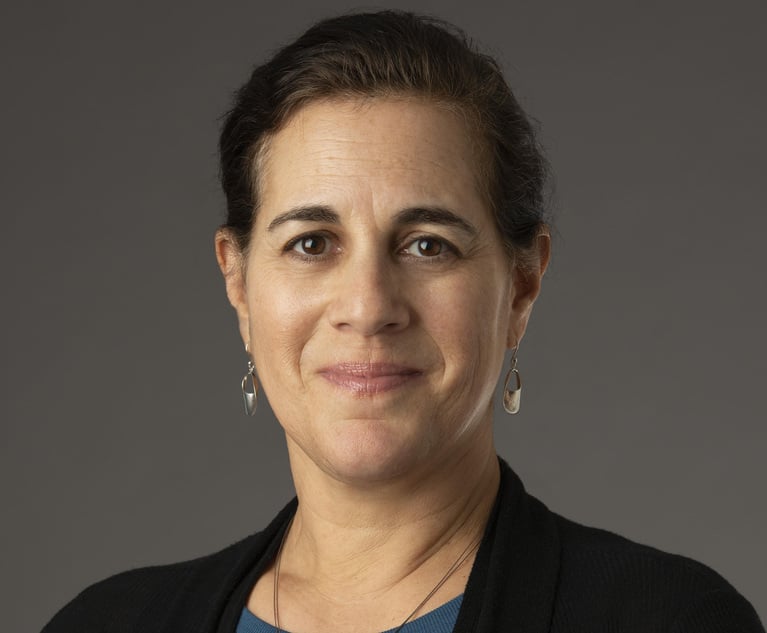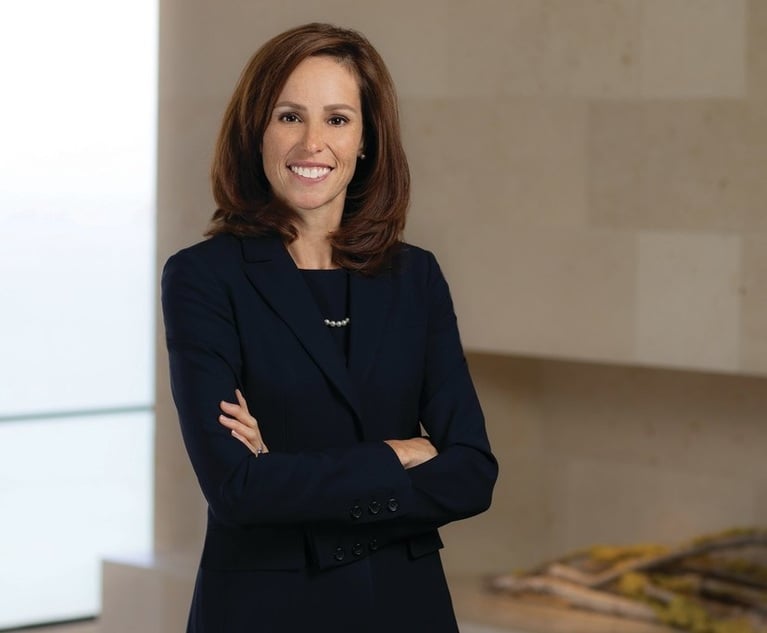
Wanda Flowers
Photo: Nanette Kardaszeski
As a student employee at UCLA's law library, Wanda Flowers filed books in the stacks, riffling pages to scan for loose papers, rips and pencil marks. The young woman from Jacksonville, Fla., who as a child would race to her community bookmobile to return her well-thumbed but lovingly cared-for borrowed volumes, was horrified to find that students were slicing pages out of the law books.
Now 61, with three decades of experience as an attorney and legal counsel for nonprofits and corporations, Flowers is glad she looked past such ignominies to focus on her purpose of studying law to help others. Her self-assurance and values ingrained by parents who above all stressed honesty ("My mother would say a liar will cheat and steal and kill,") have buoyed her in a profession that has given her immeasurable satisfaction.
But to the young, idealistic woman dreaming of changing the world, those book-defiling acts exemplified her growing concern over a decision to leave behind four years of teaching English at Florida Community College to pursue a legal career. Her credentials were there: high school National Merit semifinalist; number one in her Bethune-Cookman College class in English; fellowship for her masters in English at Florida State University; applied to and accepted at five law schools (she saw UCLA play in the Rose Bowl and thought it looked like a nice place); articles editor for UCLA's Black Law Journal.
Her concern was in compromising her values.
"I thought from the very beginning, 'What have you gotten yourself into?'" Flowers recalled. "I thought law school was a place where when you get out, you help people." Instead, she said, too many young lawyers graduate "feeling damned" in their profession.
"My philosophy is that in this profession, the only things that matter are your reputation and integrity," Flowers said. "Humans need to feel respected; I try to bring that to every position. I decided a long time ago that if I couldn't, it would mean job dissatisfaction."
The same conscience that whispered in Flowers' ear in the library's musty stacks counseled her through a long and gratifying career. It accompanied her on her journey back to Jacksonville, armed with a law degree and a determination to make a difference.
In Jacksonville in 1979, she said, "Everyone needed money. I was only making $15,000 a year as a legal aide. People had problems I couldn't stop. I was poor, they were poor -- it all seemed hopeless."
At one point, Flowers went to trial to defend clients who were being evicted. "No one thought I would win," she said. "But I believed in myself, and I won."
That belief in her abilities and her refusal to compromise her integrity guided Flowers through the next 20 years while working at nonprofits. From 1981 to 1983, she advocated for working women as a counsel to 9to5 National Association of Working Women in Philadelphia, then for 17 years she litigated (and supervised other lawyers litigating) employment discrimination cases as an attorney with the Equal Employment Opportunity Commission's Philadelphia office. She educated Congress members on issues faced by working women, and as the EEOC's regional attorney she managed the office's litigation program responsible for enforcing federal anti-discrimination laws. She gained a reputation in the Philadelphia area for her work on alternative dispute resolution processes.
"I was good at troubleshooting and strategizing," Flowers said. "As a regional attorney in a policy-making position, I would strategize about what to do at the nationwide level."
In 2000, after 17 years with the EEOC, Flowers faced a move to Washington, D.C., for a promotion. But her family and life were established in Philadelphia and New Jersey. Around that time, Flowers was contacted by acquaintance Teresa Gavigan, now vice president of human resources and administration for Sunoco Logistics in Philadelphia, inviting her to interview for the chief employment counsel position.
"Well, I was prosecuting corporations, and I thought, 'They are evil, and they mistreat people,'" Flowers recalled. Gavigan convinced her otherwise, knowing that Flowers would apply her integrity to the corporate setting.
"Wanda has a passion for social justice," said Gavigan. "She's a practicing Buddhist and that whole idea of understanding and valuing people comes through. I never saw her get riled or upset, but she can be a warrior, and fierce in litigation. If someone had been wronged, she would go to the mat for them."
"When I took the job at Sunoco," Flowers said, "I thought about how to incorporate my values and my integrity. I used preventative measures, and made sure there was clarity about how the law said you should treat employees and that Sunoco was in compliance. I never compromised my values, and continued to speak in my own voice."
Flowers' philosophy did not fail her.
"She's very trusted by the managers and employees," Gavigan said, citing Sunoco's "open door" alternative dispute resolution process that Flowers instituted.
"Some managers and employees would come back and say they could now see things from the others' side," Flowers agreed, noting that after Sunoco instituted its ADR program, very few cases went to litigation, and most were resolved pre-arbitration. At most, three cases a year would be filed, and were usually non-meritorious.
Flowers says her gifts as a strategizer, her knack for understanding and her respect for all people contribute to her success.
"I get people to a place where they are comfortable to come together and resolve issues. You won't get 100 percent if someone feels you don't view them as a person. They have to know that they bring great value."
Just as the glow of retirement began to appear on Flowers' horizon, new opportunities presented. In July, she became executive vice president of her daughter's three-year-old business, Biz Virtuoso, a boutique business development agency that offers expert solutions in human resources, sales and strategic innovation for small to midsize companies and nonprofits. Flowers provides human resources, employment and labor expertise. At the same time, Sunoco generously afforded her the opportunity to support the nonprofit Urban Affairs Coalition as a full-time consultant.
"Sunoco has always had a representative on our board and has been a major contributor," said Sharmain Matlock-Turner, president and CEO of the UAC. "When they said Wanda was in transition and there was an opportunity to work with her, I started asking people about her. And they said, 'Oh, my goodness! You have an opportunity to work with Wanda? You'd better take full advantage.'"
After six months of benefiting from Flowers' HR expertise, Matlock-Turner said, "I only wonder how the heck we survived without her!"
Like any nonprofit in the economic downturn, Matlock-Turner said, "They want you to still deliver the meals and deal with young people who are struggling. But just like your house, you have to keep the lights on and make sure the people doing those jobs are doing them well."
In a "roll-up-your-sleeves-and-get-it-done-yourself" environment, Flowers is always at least elbow-deep.
"She does not stand on ceremony. She focuses on very important efforts," Matlock-Turner explained, noting that Flowers updated and completed in about four months an important employee handbook that had been stalled for a couple of years. "She's a sea of calm."
Flowers also lent her expertise to the UAC's two-year, $11.8 million project to help low-income Philadelphia families gain Internet access to take classes and apply for jobs. The UAC won a grant for the project, and Flowers navigated the organization through a maze of requirements, even finding a pro bono legal counsel for the project.
Flowers could easily breeze into retirement, resting on her laurels, but breezing and resting have never been her style. An involved mother of four grown children (two sons, two daughters) and grandmother of six, Flowers nurtures her passions by serving on several nonprofit boards, including Living Beyond Breast Cancer (which provides support for survivors), the Interfaith Center of Greater Philadelphia (she was raised Baptist but now belongs to the Soka Gakkai International (SGI) USA Buddhist organization), the Homeless Advocacy Project, and the Center for Literacy. She loves to read, write, travel and do yoga, and recently rode a motorcycle for the first time.
"The feeling of being free is amazing. I can't wait for my next ride," Flowers said. "There is always something new to learn in life."
Biz Virtuoso allows Flowers to fulfill a long-time dream of having a family business. Her daughters Cynthia and Ingrid, niece Najwa, and sister Brenda are all integral players, and their philosophy is that any family member who has an idea or a dream can be part of Flowers Peacock LLC.
"It's great to have the experience of the older people with the fresh perspective of the young," she said. "They're the future."
The business, she says, is not about making money; it's about helping people believe in themselves, much as she believes in herself.
"My mother died at age 40. She had five daughters, but couldn't work because she was too ill. I was driven to anything to support myself," Flowers said.
Her father was illiterate, and her mother didn't graduate from high school, but they expected their daughters to do well academically. Her grandmother, however, who grew up under harsh conditions in the racially segregated Deep South of the early 1900s, "was always trying to protect us." She advised the girls to skip college and make money, and when Flowers got her fellowship to Florida State, "she told me I'd better not go to school anymore, or my brain would explode!"
Young law school graduates today, Flowers mused, often think that to be satisfied they need power, prestige and money, "which they're not necessarily going to get in today's environment." Flowers' generation, she pointed out, "was just coming off Vietnam and we were into the women's movement. We all felt we had a mission, and a lot of times we were 'first' to do something."
On the contrary, this generation wants balance, said Flowers. "They have so many competing issues. For example, men would like to go to the soccer game, spend more time with their family. It's changing, and people have all these parts of their lives that need to be balanced."
With 32 years of legal success (and uncompromised values) behind her, Flowers could wax melancholy, but chooses to concentrate on years of entrepreneurial opportunities ahead. Her daughter, Cynthia, would like to see Biz Virtuoso become a billion-dollar business, and the women hope to use the business to create health clinics for women in Africa.
"Several of my female in-laws died because they did not have access to adequate health care," Flowers explained, noting that Biz Virtuoso will likely expand the goal to opening health clinics for all people in Sierra Leone.
Lofty ambitions perhaps, but ambitions keep Flowers motivated and satisfied.
"I enjoy learning new things. That's what keeps you going -- not to dwell on past accomplishments but to keep moving forward," Flowers said. "I don't want to live a bitter life. I want to live a life of fulfillment."
Jennifer Gill Kissel is a freelance writer and editor in Pittsburgh. She is also assistant editor of Western Pennsylvania History magazine.