Image: Photodisc Green
It's been five years since sweeping changes in court funding in Florida left public law libraries strapped for cash. And although many have adapted to shrunken budgets and operations, fresh demand for research assistance has increased, largely from homeowners fighting foreclosures.
Pro se litigants, who often can't afford attorneys and instead choose to represent themselves, are quickly becoming the largest share of users of public law libraries, according to a statewide law library nonprofit. As lawyers more frequently choose to study case law from their desktop computers, common folk are shuffling into brick-and-mortar institutions.
With that switch, a few overwhelmed librarians find themselves spending more time teaching research tips to novices as opposed to pointing experienced attorneys in the right direction, said Linda Sims, director of the Palm Beach County Law Library.
"We used to spend more time filing and updating materials. Now we're spending a lot more time with non-attorneys, having to walk them through the process and teach them how to do research. It's a lot more difficult and time-consuming," she said. "The people making decisions for funding of law libraries aren't realizing we're spending more time helping those people."
Miami-Dade County's newest mini-division, a foreclosure-only court, coincidentally is adjacent to the county's only public law library, where distressed homeowners can walk in and do legal research for themselves.
The library once served about 800 pro se litigants every month. That number has ballooned to more than 1,100. Broward County's law library director, Jeanne Underhill, said her library is seeing an unprecedented 50 a day.
But their increasing demands follow five years of financial instability. Fundraising efforts largely among lawyers have helped keep the law libraries functioning.
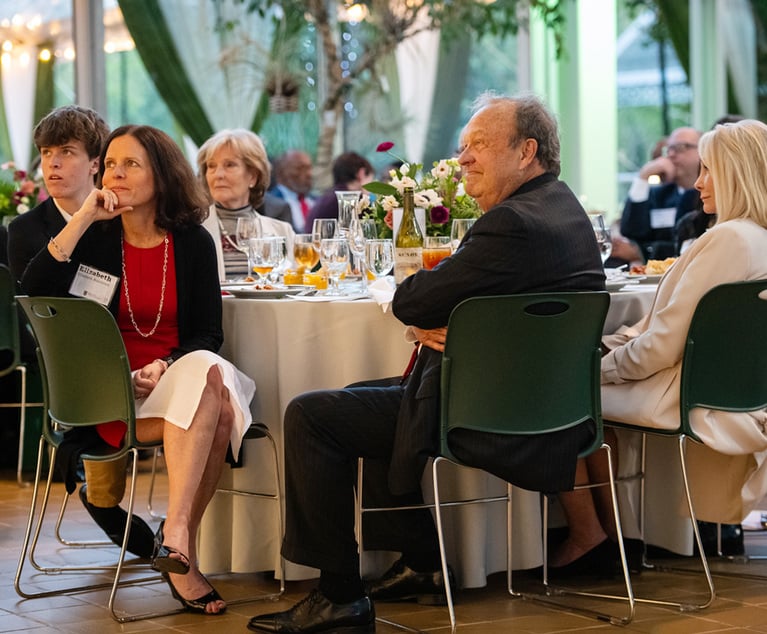
In October, the Miami-Dade library held its fourth annual fundraiser, with more than 200 judges and attorneys joining together last week to raise an estimated $60,000. Their participation in silent auctions for gift baskets and hotel stays means the library can remain open -- for now.
It wasn't always this difficult.
Public law libraries sprouted in the state's most populous counties after 1937, when legislators created a tax on attorneys to fund their creation. At the end of the century, libraries received a portion of circuit filing fees. But in 2005, when court funding shifted from counties to the state, legislators forced libraries to largely fend for themselves.
Those, like Miami-Dade's law library, now rely on state-mandated criminal and traffic fines from convicted felons, supplementing the rest through a fraction of lawyer occupational fees from The Florida Bar, donations and copying fees.
The library, which once employed 14 people on a $2 million budget, is now staffed by six with less than $1 million. To cut costs in recent years, the library has cut back its online services.
Palm Beach County's library has seen similar cuts, going from $600,000 annually to about $300,000 -- barely enough to keep its books updated and pay for its staff of two full-time librarians and one part-time employee. The library now supplements funding from criminal fines with its own fees. It charges attorneys a $120 annual fee in return for discounts on renting continuing legal education video courses.
The only South Florida law library not claiming 2005 dealt a severe blow is in Broward, where efforts to increase efficiency led to a reduction of employees 20 years ago. Since then, only four employees have managed a collection of 30,000 books. Still, it has cut back on online research available at six public computers.
ONLINE RESOURCES
An overwhelming number of library directors agree the current funding scheme -- one that replaced a reliable system drawing on a portion of circuit filing fees -- is inadequate, according to a survey conducted last year by the nonprofit Florida State Court and County Law Libraries.
The organization held a three-day meeting last month in Jacksonville, where directors addressed what they consider a two-pronged threat to their institutions: a lack of funding coupled with the perception that online resources serve as an adequate replacement for books.
Anyone with computer access can tap into free resources like FindLaw or public encyclopedias like Wikipedia to learn about courtroom procedures, historical cases and legal tools. But unlike paid subscription programs like Westlaw and LexisNexis, free online content is not always updated.
Paying for those services is rarely an option for pro se litigants and sometimes even out of reach for solo attorneys, said Fort Lauderdale commercial litigator and land use attorney Brian Seymour. The Gunster shareholder said lawyers like himself benefit from in-house law libraries.
"While I have them in my law library in my firm, a smaller firm can't necessarily afford that," he said.
Although Seymour does most of his research by computer, sometimes he still prefers to use books -- "especially if you're working on a novel issue and want to start on a treatise," he said. "I don't think the availability of the Web access has taken over the need for law libraries, but it certainly has diminished it."
Miami-Dade law library director Johanna Porpiglia points to two books she's sure can't be found online. One is "Gould on Waters," a legal treatise published in 1900 that explains navigation and boundaries on ponds, lakes and oceans. Another is 1887's "The Law of Husband and Wife," which explores British and American doctrines marriage law.
Both are decrepit, and the library doesn't have enough money to properly restore them. But she said they can't be found easily elsewhere and could serve an important role in litigation, as do many other books in the library's collection of 80,000 volumes. Miami-Dade Circuit Judge Gill Freeman, who chairs the library's board of trustees, said lawyers have taken note.
"In the last few years, the legal community has recognized what they consider an essential part of the legal system," Freeman said. "It's unthinkable that a courthouse not have a law library."
'COMMON MISCONCEPTION'
About 28 percent of the Miami-Dade library's 2009-10 revenue came from donations. Fines paid by convicted felons provided 62 percent of funds. The rest came through portions of The Bar's occupational licensing fees. Palm Beach and Seminole counties rely strongly on donations. The Miami-Dade library also has joined with Legal Services of Greater Miami to offer seminars on foreclosure, eviction and consumer issues.
"It's a common misconception that law libraries are only for lawyers. We're the only public law library for people here in Miami-Dade County to use. Every person deals with legal issues in their life, whether it's how to do your will or who gets your estate when you die," Porpiglia said.
Underhill said publicly accessible information "levels the playing field" for litigants without attorneys.
"If you don't have the resources for a lay person, how are they ever going to conduct their defense? They don't know where to go or begin. The public library doesn't have this," she said.
Lawyers and Miami Dade College have stepped forward with hefty donations, which have increased every year since 2007. Meanwhile, the Miami-Dade library budget has fallen for five years.
The general public stands to lose the most if the library disappears.
"If you have no way to figure out how to represent yourself, you might as well not have a right to represent yourself," Freeman said.
Public law libraries across the state are on life support five years after a drastic change in their funding, and a new wave of pro se litigants is straining the institutions. South Florida's library directors say lawyers have done a commendable job of donating hundreds of thousands to help them stay open and operate largely free of charge.
Some attorneys find little need to make use of a public venue. But free access to legal road maps for solo attorneys and pro se litigants has become more essential in the distressed economy.