A federal judge's ruling striking down the policy that prohibits openly homosexual members from serving in the U.S. military could stand, particularly if the Obama administration chooses not to appeal, but would not necessarily carry weight in other circuits.
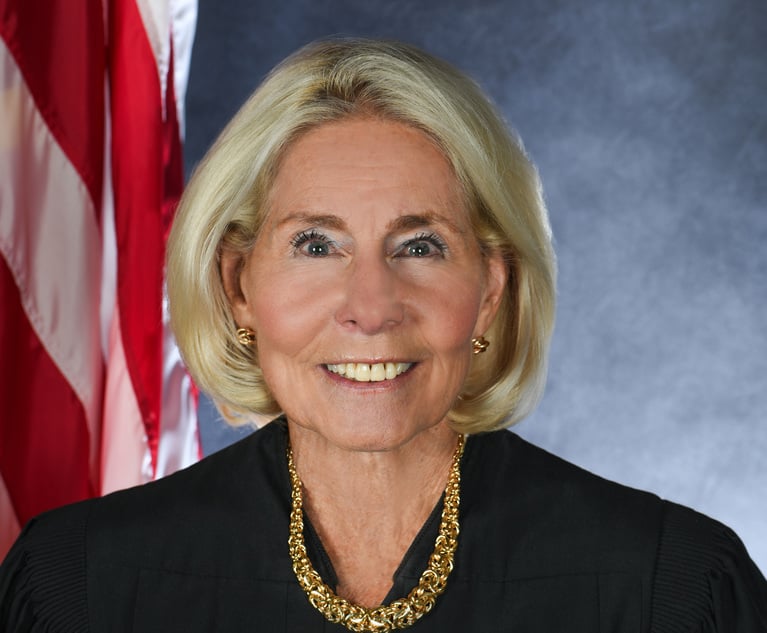
U.S. District Judge Virginia Phillips in Riverside, Calif., ruled on Thursday that the law behind the "Don't Ask, Don't Tell" policy is unconstitutional because it violates gays' and lesbians' rights under the due process clause of the Fifth Amendment and the First Amendment's freedom of speech.
The ruling was announced two months after Log Cabin Republicans, a gay rights group, went to trial against the U.S. government to repeal the 1993 statute.
"The Don't Ask, Don't Tell Act infringes the fundamental rights of United States servicemembers in many ways," Phillips wrote in an 86-page opinion. "In order to justify the encroachment of these rights, Defendants faced the burden at trial of showing that Don't Ask, Don't Tell Act was necessary to significantly further the Government's important interests in military readiness and unit cohesion. Defendants failed to meet that burden."
Phillips issued a permanent injunction barring enforcement of the law.
Lawyers for the U.S. government, who have questioned whether Phillips had the authority to issue a nationwide injunction, have an opportunity to appeal her decision to the 9th U.S. Circuit Court of Appeals. A call to a Justice Department spokesman was not returned.
Given that President Obama has sought to repeal the policy through legislation before Congress, it's possible the government could opt not to appeal, said Erwin Chemerinsky, dean of the University of California, Irvine School of Law, a constitutional law expert.
"Given the position of the Obama administration, there's a great likelihood he will not appeal the ruling," Chemerinsky said. "If it isn't appealed to the 9th Circuit, it has an excellent chance of standing."
At the same time, he said, the ruling carries no precedential value outside the 9th Circuit's jurisdiction. As a result, the government could argue that enforcement of the policy is allowed, as long as servicemembers live or are stationed outside the 9th Circuit's West Coast region.
Moreover, judges in other circuits are not required to follow the order and could rule differently if deciding a challenge to the law, he said.
"She can't bind other districts or other circuits," Chemerinsky said.
It would be very unlikely that a third party would have standing to pursue an appeal, he noted, since the case was defended by the actual defendant, the U.S. government.
In a statement released on Friday, Dan Woods, a partner at White & Case who represents the Log Cabin Republicans, also noted that the ball appears to be in Obama's court.
"It will be interesting to see whether President Obama decides to appeal this case to stay the judge's injunction barring enforcement of the policy," Wood said. "If an appeal is made, we will vigorously oppose it, as a stay of the injunction would mean gays and lesbians would be denied their constitutional rights while they are fighting and dying for our country."
In the meantime, the Log Cabin Republicans are pushing Congress to repeal the law. The House of Representatives has approved repeal, but in the Senate the effort has stalled. The legislation in both chambers would require repeal only after a Defense Department review of the policy is completed in December and Obama and Secretary of Defense Robert Gates certify that the military is prepared for the change.
"Log Cabin Republicans and our allies have stood firm in supporting legislative action in support of repeal as part of our three-front campaign to strike 'Don't Ask, Don't Tell,'" Log Cabin Executive Director R. Clarke Cooper said in a written statement. "Servicemembers cannot wait any longer; it is time for the Obama Justice Department to drop its defense of this unconstitutional law."
Phillips' ruling came about one month after U.S. District Judge Vaughn Walker in San Francisco struck down Proposition 8, California's ban on same-sex marriage. Both rulings bear some resemblance to each other: Both judges recited in detail a long list of evidence presented during trial.
But unlike the proponents of Proposition 8, the government, which relied on the legislative history of "Don't Ask, Don't Tell" as a defense, presented no witnesses or evidence of its own.
"The government's decision not to present evidence meant all the evidence. was on one side, and that's what she had to decide on," Chemerinsky said. "A judge has to decide based on the evidence presented."