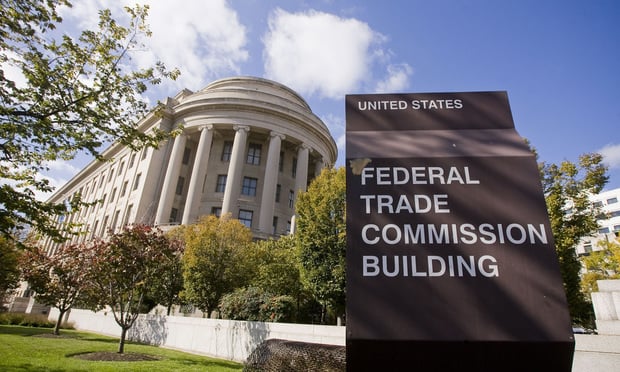
The U.S. Department of Justice's broad investigation into price-fixing by the LCD screen industry has netted more than $860 million in fines and resulted in criminal charges against nearly a dozen executives.
But DOJ's effort to go after additional screen makers, including Toshiba Corp., has resulted in a showdown with White & Case, Nossaman and other law firms over company documents.
The information the government says it wants to show a criminal grand jury is in the U.S. law offices of plaintiffs' and defense firms embroiled in civil litigation involving the targeted companies. Rather than negotiate the release of the documents through foreign court systems, including Japan and Taiwan, prosecutors subpoenaed law firms representing the companies.
The firms claim prosecutors are unfairly trying to piggyback on civil discovery and shirking long-standing DOJ procedure on acquiring foreign documents. In February, a federal judge in San Francisco ruled against the department, saying the grand jury's reach does not extend to the foreign evidence -- even though the documents are in the United States. The Justice Department is now seeking help from the 9th U.S. Circuit Court of Appeals.
Although the appellate case remains under seal, the dispute -- portions of which have been made public in the civil litigation -- has drawn the attention of the white-collar defense and antitrust bars. "This is the first time where DOJ is really going after information that came into this country that it otherwise wouldn't ordinarily be able to get," said Kelley Drye & Warren partner Richard Donovan, who co-chairs the firm's antitrust and trade regulation practice group.
NO COPIES
The grand jury investigation of the thin-film transistor liquid crystal display market began in 2006. Federal prosecutors allege a group of companies participated in a decade-long conspiracy -- including meetings in Japan, South Korea and the United States -- to fix the prices of screens used in mobile phones, televisions, computer monitors and other products.
Plaintiffs attorneys -- representing companies who buy LCD panels to use in their products, as well as individual buyers -- filed suits within a year against Toshiba, Sharp Corp., LG Display Co. Ltd., Hitachi Displays Ltd. and others, claiming that the conspiracy bumped up prices. In April 2007, more than a dozen civil actions from across the country were consolidated in the U.S. District Court for the Northern District of California. (Six companies have pleaded guilty, including Korean LCD manufacturer LG, which agreed to pay a $400 million fine, and Japanese manufacturer Sharp, which agreed to a $120 million fine.)
The Justice Department in 2007 intervened in the civil cases to limit discovery amid concern that targets of the criminal investigation would learn sensitive information about the grand jury proceedings. An order entered that year allowed prosecutors to review -- but not copy -- documents turned over in the civil litigation. Last year, the department stepped into the case again, this time seeking the ability to copy all documents produced in the civil cases -- including some 700,000 from Toshiba that include transactional data. (A December 2007 protective order in the civil case to which the plaintiffs and defendants agreed blocks the ability of the plaintiffs lawyers to just hand over the documents to the government.)
Antitrust Division attorney Niall Lynch said in court papers last year that the Justice Department, as a courtesy to foreign governments, has generally refrained from issuing subpoenas to foreign companies and individuals in order to obtain foreign-based documents. Department guidelines in the Criminal Resource Manual say mutual legal assistance treaties and letters from a U.S. judge to a foreign judge are the common ways the department can obtain documents located overseas. The U.S. Attorneys' Manual says prosecutors should make "all reasonable attempts" to obtain information from alternative sources before serving a subpoena on an attorney. But DOJ attorneys said in court papers that DOJ's internal guidance does not prohibit the issuance of a subpoena for documents located overseas.
At a hearing last June, Judge Susan Illston of federal district court in San Francisco questioned whether the government was trying to "dodge" its usual procedures for acquiring foreign evidence. "This is not a dodge, your honor," said Lynch, assistant chief of the San Francisco office of the Antitrust Division, according to a transcript. "We are not using civil discovery to aid our criminal investigation." Lynch argued that the government should be allowed to copy documents "instead of forcing the government to go to the law offices of all the different parties to review their discovery."
"We're only asking that we be entitled to evidence that makes its way to the United States, well within our jurisdictional reach," Lynch added.
At that same hearing, Wayne Cross of White & Case, which represents Toshiba, told the judge that his ability to defend the company will be hampered if the Justice Department is allowed to subpoena foreign civil discovery. Witnesses may be reluctant to sit for depositions knowing that the information could end up in the hands of a prosecutor, said Cross, a partner in the firm's New York office. He called the government's effort to obtain foreign evidence an "inappropriate intrusion on sovereignty."
MOVING FORWARD
In October, Illston ruled that the Justice Department would not be allowed to copy materials from civil discovery. Prosecutors then moved forward with grand jury subpoenas to law firms representing companies under investigation.
Court papers do not identify the law firms that received subpoenas, but the court record identifies White & Case and Nossaman as representing companies being investigated for price-fixing. Nossaman represents AU Optronics Corp., a Taiwanese company that makes TV and laptop panels, among other products. Cross did not return calls seeking comment. Nossaman partner Christopher Nedeau in San Francisco declined to comment. DOJ officials also declined to talk about the dispute.
Illston's ruling in February quashing the subpoenas remains under seal. On March 29, the judge issued a four-page statement of reasoning that explained her decision.
"The Court did not find precedent in the case law, and was dubious about establishing such precedent, to permit grand juries to obtain foreign discovery for criminal grand jury proceedings when that evidence is present in the United States only as a result of related civil actions," she wrote.
The white-collar criminal defense bar is drawing attention to the dispute. At a March forum in Washington exploring prosecutorial decisions and their impact on businesses, White & Case partner Eric Grannon, who is not involved in the LCD case, called the tactic of serving subpoenas to law firms "questionable." "The basis for the DOJ policy is international comity and reciprocity: We don't want foreign governments doing this to U.S. companies," said Grannon, whose practice focuses on antitrust matters. "Recently, however, DOJ has sought to sidestep this policy by issuing subpoenas to law firms defending foreign targets of antitrust grand jury investigations."
A lead attorney for plaintiffs in the civil cases, Bruce Simon, said his side wants to cooperate with DOJ as much as possible. The government "is trying to leave no stone unturned," said Simon of San Francisco's Pearson, Simon, Warshaw & Penny.
Simon said had the defendants' law firms "cooperated and allowed the Justice Department to gain access to the documents, so that they have everything we have, DOJ would not have resorted to this."