Law.com
  • News
    • Newswire
    • Supreme Court
    • International
    • Legal Blog Watch
    • The Hot Seat
    • Video
  • Publications
    • The American Lawyer
    • Corporate Counsel
    • Law Technology News
    • The National Law Journal
    • New York Law Journal
    • New Jersey Law Journal
    • Connecticut Law Tribune
    • The Legal Intelligencer (PA)
    • Daily Business Review (FL)
    • Delaware Law Weekly
    • Daily Report (GA)
    • The Recorder (CA)
    • Texas Lawyer
    • Publication E-Alerts
    • More Publication Sites
  • Legal Research & Directories
    • Books Online
    • Smart Litigator
    • ALM Experts
    • Verdict Search
    • Court Reporters
    • Legal Dictionary
    • LegalTech® Directory
    • Newsletters
    • More Directories
  • Surveys, Lists & Rankings
    • Amlaw 100
    • NLJ 250
    • Global 100
    • The A-List
    • ALM Legal Intelligence
    • Surveys
    • Top Rated Lawyers
    • More Lists & Rankings
  • Special Reports
  • lawjobs.com
  • LawCatalog Store
  • CLE & Events
    • CLE Center
    • ALM Events
    • LegalTech
    • Virtual LegalTech
    • Insight Legal Events
    • Webinars
Home
 
Article
Twitter LinkedIn RSS
Sign Up for Newsletters

Law.com Home > 5th Circuit Hears Suit Over Elementary School Students' Religious Gifts

Font Size: increase font decrease font

5th Circuit Hears Suit Over Elementary School Students' Religious Gifts

By John Council All Articles 

Texas Lawyer

April 12, 2010

  •    
  •    
  •    
  •      
 

The 5th U.S. Circuit Court of Appeals ventured into the "culture war" on Wednesday, hearing an interlocutory appeal by two public school principals who say they are immune from liability in a civil suit that alleges they prevented the distribution of religious gifts by students in public elementary schools.

Doug Morgan, et al. v. Lynn Swanson, et al. involves an issue of first impression for the 5th Circuit: Does the free-speech clause of the First Amendment protect student-to-student distribution of religious, noncurricular materials in public elementary schools?

According to both sides' briefs, the background in the case is as follows: In 2004, three elementary schoolchildren and their parents filed a complaint in the U.S. District Court for the Eastern District of Texas against two Plano Independent School District officials: Lynn Swanson, principal of Thomas Elementary School, and Jackie Bomchill, principal of Rasor Elementary School. The plaintiffs allege the principals engaged in religious viewpoint discrimination when they prevented students from distributing religious-themed gifts to their classmates in the schools.

Specifically, Swanson allegedly prevented a third-grader from distributing candy cane-shaped pens at an on-campus winter party. Attached to the pens were laminated cards titled "Legend of the Candy Cane" and text discussing the "Christian origin of candy canes," according to the plaintiffs' brief.

According to both sides' briefs, Swanson also allegedly prevented a first-grader from distributing candy canes and pencils inscribed with "Jesus is the reason for the season."

Bomchill allegedly prevented a fifth-grader from distributing at school free tickets to a Christian drama and from distributing brownies that had pencils tied to them that read "Jesus loves me this I know for the Bible tells me so."

In June 2008, Swanson and Bomchill filed a motion to dismiss with the Eastern District based on qualified immunity. Swanson and Bomchill argued that the First Amendment does not apply to restrictions on the distribution of noncurricular materials by elementary school students to their classmates during the school day. In the alternative, Swanson and Bomchill argued that First Amendment law is not clearly established when applied to elementary school students and therefore they should be immune from suit.

In their July 2008 response to the motion to dismiss, the plaintiffs noted that the principals were not entitled to qualified immunity because Swanson and Bomchill had fair warning that their conduct was unlawful. The plaintiffs argued that for more than 60 years, U.S. Supreme Court precedent has recognized that the U.S. Constitution and the free-speech clause of the First Amendment protect the speech rights of public school students and their parents while at school, regardless of the age of the students.

In February 2009, U.S. Magistrate Judge Don Bush denied the principals' qualified immunity motion, ruling that "a child's right to freedom of expression is not forfeited simply because of her age." U.S. District Judge Richard Schell later adopted Bush's ruling, and the defendants appealed to the 5th Circuit.

STUDENTS IN ATTENDANCE

The 5th Circuit held eight arguments over the course of three days at Southern Methodist University Dedman School of Law at the invitation of Dean John B. Attanasio. The 5th Circuit occasionally sits outside its home base of New Orleans; last week's arguments marked the first time the court has sat at SMU in more than 20 years.

With dozens of teenagers who were bused in for a field trip sitting in the audience, 5th Circuit Judges Jennifer Elrod and Catharina Haynes and Senior Judge Harold DeMoss wasted no time digging deep into the First Amendment question.

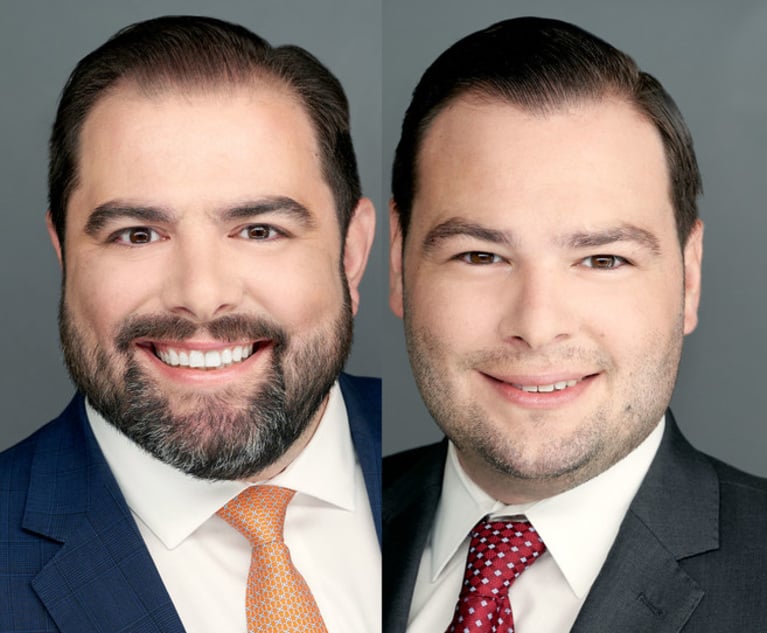
Fanning Harper Martinson Brandt & Kutchin partner Tom Brandt of Dallas, who represents Swanson and Bomchill, began his argument by stating that his clients deny "engaging in any viewpoint discrimination against Christians."

Elrod then cited numerous opinions in which sister circuits have extended First Amendment rights to elementary schoolchildren.

"You have teed up whether there are First Amendment rights for elementary schoolchildren, right?" Elrod asked Brandt.

"Yes, your honor," Brandt replied.

Brandt also told the panel that there are others to be concerned about in the free-speech case. "There are other children who will be obtaining these materials. And their parents haven't given consent for their children to receive those materials."

Haynes later told Brandt, "I understand that you don't want children proselytizing in school ... but I also understand you don't want children to be ashamed of their religion."

Brandt pointed out that most federal appellate court decisions dealing with free speech in schools involve high school students. Applying the analysis in those cases involving older children is inappropriate "in elementary school cases where they are learning how to get through the lunch line."

Charles Bundren of Frisco's Charles Bundren & Associates, who represents the parents and the children, repeatedly told the judges that the principals' alleged actions amounted to "viewpoint discrimination," which is not allowed under the First Amendment.

"They have argued that they are entitled to engage in viewpoint discrimination because of the age of the child," Bundren told the judges.

Haynes asked Bundren about so-called "gotcha" instances in which parents send their children to school with religious materials and then call lawyers when school officials prevent the distribution of those materials.

"There is nothing in the record to support that," Bundren answered.

In an amicus brief filed in the case, the Texas Association of School Boards Legal Assistance Fund alleges there is a "deliberate advocacy movement" to create litigation through "gotcha moments."

Elrod asked Bundren: "Should we be at all concerned that with all of this litigation ... schools won't allow anything" to be distributed by children?

"That's not your job," Bundren argued. "But schools are subject to the Bill of Rights."

"I'm still concerned that it's not permissible -- that it's not curriculum," Elrod told Bundren.

OLD-SCHOOL AMICI

Bundren split his 20-minute argument time with former U.S. Solicitor General Paul Clement, who represents two elderly sisters who were lead plaintiffs in an influential freedom of religion case. The sisters, Gathie Barnett Edmonds and Marie Barnett Snodgrass, who filed an amici brief in the 5th Circuit case, prevailed in West Virginia State Board of Education v. Barnette, a 1943 opinion in which the U.S. Supreme Court held that school officials could not compel elementary schoolchildren who were Jehovah's Witnesses to pledge allegiance to the U.S. flag. (Barnett is misspelled in the high court's opinion.)

In their brief, the sisters state that they became interested in the case after learning that the defendants were trying to roll back the First Amendment protections they won six decades earlier.

Clement, who was solicitor general for three years during the administration of President George W. Bush, cited numerous federal court rulings with similar holdings that were decided after Barnette.

"The one thing that is clear in all of these decisions is viewpoint discrimination is absolutely verboten," said Clement, now a partner in King & Spalding in Washington, D.C.

After the argument, Bundren said he believes the 5th Circuit panel "clearly understands the issues" in the appeal.

"It was a hot panel, and it was a lot of fun," Brandt says of the argument. "But this is a very hot area of the law. It's a hot-button issue, and it's part of the culture war."


Subscribe to Texas Lawyer

You must be signed in to comment on an article

Find similar content

Firms mentioned

    
  • King & Spalding
  • King & Spalding

Companies, agencies mentioned

    
  • 5th Circuit
  • U.S. Circuit Court of Appeals
  • US District Court
  • Thomas Elementary School
  • Rasor Elementary School
  • U.S. Supreme Court
  • Southern Methodist University
  • Dedman School
  • Charles Bundren & Associates
  • Texas Association of School Boards Legal Assistance Fund
  • West Virginia State Board of Education
  • Jehovah's Witnesses
  • 5th Circuit
  • U.S. Circuit Court of Appeals
  • US District Court
  • Thomas Elementary School
  • Rasor Elementary School
  • U.S. Supreme Court
  • Southern Methodist University
  • Dedman School
  • Charles Bundren & Associates
  • Texas Association of School Boards Legal Assistance Fund
  • West Virginia State Board of Education
  • Jehovah's Witnesses

Key categories

    
  • Education Law
  • Education Law

Most viewed stories

    
  1. Proskauer, Former CFO Settle Bias Suit
    •      
  2. Largest State Poised to Require Practical Skills Training
    •      
  3. Budget Plan Contains Funds to Reassign 26,000 18-B Cases
    •      
  4. The 2013 Am Law 100
    •      
  5. Judge Strikes Law Banning Demonstrations at Supreme Court
    •      
lawjobs.com

TOP JOBS

MORE JOBS

POST A JOB

From the Law.com Network

SEC Issues Whistleblower Award; More on the Horizon

Fixing Outside Counsel Budget Forecasting With Data

Proskauer, Former CFO Settle Bias Suit

Global Firms Cope With Istanbul Unrest

D.C. Circuit Nominations a Defining Moment

D.C. Circuit Nominees Widely Respected Within the Bar

iPad Competition Heats Up

Discovery on Discovery Demands Cost-Shifting

The Recorder 25: California Golden Again for Many Firms
  •      
    • Subscription Required

Capital Accounts: Judicial Branch's Brothers Don't See Eye to Eye
  •      
    • Subscription Required

Miami Photographer Sues Pop Star Justin Bieber
  •      
    • Subscription Required

Jeremy Alters Settles With Argentinian Firm For $1 Million
  •      
    • Subscription Required

Alcotest Should Be Discontinued Right Away, DWI Lawyers Say

Lawyer's Fudging of HUD Forms Draws Supreme Court Censure
  •      
    • Subscription Required

The Affordable State-Specific Practice Solution
Available in NY, NJ, PA and CT editions - research, draft and prepare even the most complex cases with ease.

Restaurant in Union Square Park Ruled Permissible
  •      
    • Subscription Required

Magistrate Judge Finds Few Benefits to Class in Settlement
  •      
    • Subscription Required

3rd Circuit Could See Rise in Pay-for-Delay Litigation

Cozen Debt Forgiveness Is Campaign Contribution, Court Says
  •      
    • Subscription Required

Sorry, Charlie, Your Wife Won't Support You

Top Reasons to Take Your Husband's Name

Texas DA Faces Removal Suits Over DWI, Alleged Misconduct
  •      
    • Subscription Required

Court Upholds Disqualification of Bickel & Brewer
  •      
    • Subscription Required

Fighting Over The Fifth
  •      
    • Subscription Required

Atlanta School Defendants Rely On New Jersey Officers' Case
  •      
    • Subscription Required

Chimp Attack Victim Is Denied $150M State Lawsuit

Auto Body Case May Lead To CUTPA Reassessment
  •      
    • Subscription Required

  • About |
  • ALM Properties |
  • ALM Reprints |
  • Customer Support |
  • Privacy Policy (updated 6/14/13) |
  • Terms & Conditions |
  • ALM User License Agreement
ALM Media