Font Size:
![]()
MySpace Entry Admitted as Murder Evidence
The National Law Journal
October 19, 2009
MySpace.com
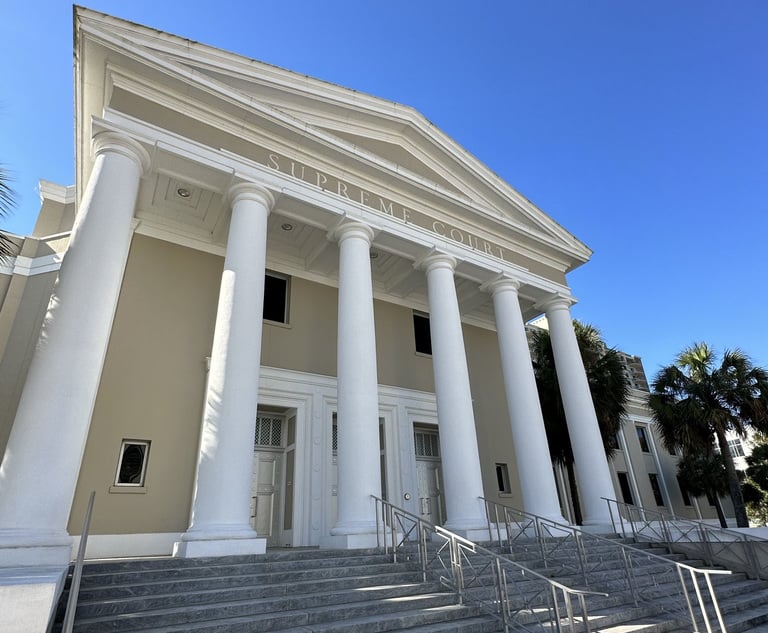
The Indiana Supreme Court, addressing a "novel question," ruled that prosecutors properly introduced electronic evidence from an accused murderer's MySpace page.
In so doing, the court upheld the conviction of Ian Clark, who was found guilty of murdering his fiancee's 2-year-old daughter. Clark objected to his conviction on various grounds, including whether comments he made on his MySpace page were permissible evidence under Indiana law.
The court found that they were.
The case addressed a "novel question: should the trial court have permitted the State to offer into evidence Clark's entry from the social networking website MySpace?" Indiana Supreme Court Chief Justice Randall Shepard wrote in the Oct. 15 opinion. "Clark's posting contained only statements about himself and in reference to himself. Thus, the State is right to observe that this is solely evidence of his own statements, not of prior criminal acts."
The court said that the MySpace statements addressed an issue Clark already introduced at trial: his own character as a reckless drunk.
In recent years, law enforcement authorities have increasingly used social networking sites and Internet service providers to introduce evidence in more common cases, such as assault, battery and murder, said Marc Zwillinger, head of the Internet, Communications and Data Protection Group at Sonnenschein Nath & Rosenthal.
"The evidence usually does come in," he said, although not all judges believe it to be relevant to the issues in the case.
In the Indiana case, Clark's fiancee came home on May 25, 2007, to find her daughter unconscious. Clark had been watching the girl while his fiancée was at work. Following a 911 call, law enforcement authorities arrived to find the girl limp, her jaw crushed and bruises all over her body. She was declared dead, having suffered "twenty separate injuries, more than one of which would be lethal," the court said.
Clark's lawyer, J. Brad Voelz of the Law Offices of J. Brad Voelz, declined to comment.
"The decision affirming Clark's conviction and sentence speaks for itself, and we agree with the Indiana Supreme Court that Clark's MySpace entries were admissible at his murder trial," said Bryan Corbin, a spokesman for the Indiana attorney general's office. "The result appeared clear from the simple application of long-standing Indiana law that has been applied to letters, diaries, phone and personal conversations, etc. In our view, there was really no reason to treat a MySpace page differently.