On "a quiet night" at the U.S. Supreme Court, Chief Justice John Roberts Jr. said recently that he sometimes steals into the Court's wood-paneled conference rooms to contemplate the work of his predecessors whose portraits adorn the walls. "They're probably looking down at me with either bemusement or amazement," he laughed.
For Justice Clarence Thomas, a walk out to the Court's front plaza will sometimes re-energize him when he is tired and asking himself "Why am I doing this?" Looking back at the Court from that vantage point, he said, "It's hard not to get goose bumps, or it's hard not to realize that this is much larger than me."
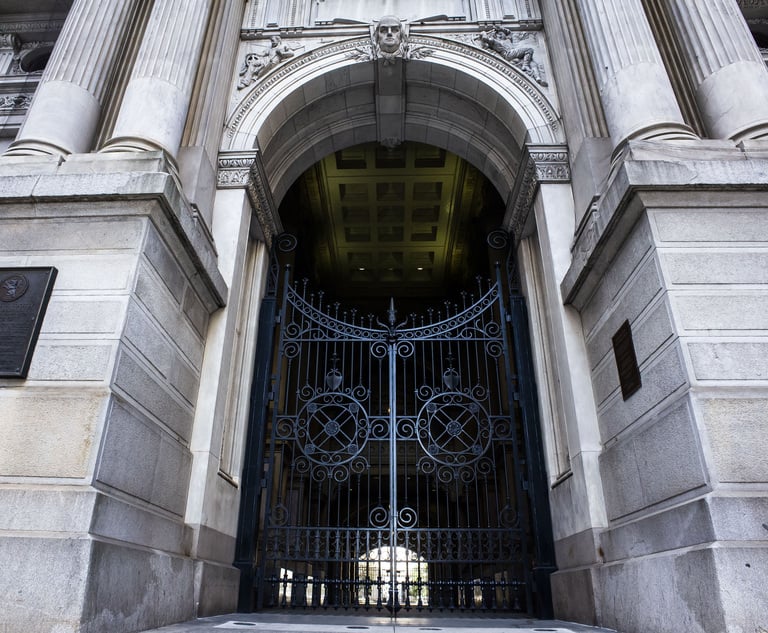
Justice Samuel Alito Jr. communes with the Court building when he is leaving at night and walks through the Great Hall on his way to the elevator. "I look around at the pillars and ... the building really impresses upon me the importance of the work that we're doing."
These revealing vignettes from justices on a court that is congenitally private were all included in a week's worth of documentaries produced and aired by C-SPAN, the cable channel that hopes one day to broadcast Supreme Court oral arguments. That day still seems far off, but until then the assembled interviews of all nine sitting justices -- and the two retired ones -- conducted in recent months may stand as the fullest visual portrait ever of the modern-day Supreme Court. C-SPAN producer Mark Farkas said in an interview, "I came away understanding the personalities, which are so important to how the Court works. This is a human institution."
IN CAMERA
The interviews offered a barrelful of behind-the-scene anecdotes about things the justices rarely talk about in detail. Some were from as recently as last month, when Justice Sonia Sotomayor for the first time exercised her duties as a junior justice -- duties that include opening the door at private conferences. The Court conferred arguments in Citizens United v. Federal Election Commission on Sept. 9. Sotomayor had brought cookies from an Italian bakery in Brooklyn, N.Y., to the conference, she said, and Court personnel came in to assist with coffee. As the session broke up, one of the Court employees moved to open the door for the justices. "I said to him, 'no, you can't take my job, I just got here.' And so I jumped ahead to open the door."
During oral argument that day, as she listened to her colleagues asking questions, Sotomayor said she felt "absolute fear" and found the experience "somewhat completely humbling."
Justice John Paul Stevens offered his own anecdote about sitting on the bench, as he talked freely about how he spends some of his year working at his condo in Florida, sometimes reading briefs on the beach. "I can remember getting a kick out of the fact that I had the briefs on the bench one day and I shook the sand out of the briefs," he said mischievously. "It made my neighbors a little jealous of the way I prepare."
Alito offered a little-known detail about himself to C-SPAN's Brian Lamb: that he had first been interviewed as a possible Supreme Court candidate by the Bush White House in 2001, long before there was a vacancy. Until then, Alito said, the prospect of becoming a justice "was a dream that I never thought I would come close to realizing."
Nearly every justice was asked about the long-standing tradition of joining each other for lunch at the Court as often as possible when the Court is sitting and even when it is not. But until seeing the responses of several justices, it would have been hard to grasp how important the ritual turns out to be.
Thomas described how Justice Sandra Day O'Connor would tell him, "Now, Clarence, you should come to lunch." He finally did, and said, "It was one of the best things I did. It's hard to be angry or bitter at someone and break bread and look them in the eye." Roberts also talked about the lunches as an occasion for justices to talk about books, movies, family -- but not work. "It is the rule there that we don't talk about the cases."
If that's the rule, no one has told Justice Ruth Bader Ginsburg about it. "I try not to miss a post-argument lunch, because you never know what my colleagues will be talking about. They may be talking about the case that we just heard, and I wouldn't want to be absent from that discussion."
Also described in detail by most, if not all, justices was the Court's conferences, where they meet in private to decide whether to grant or deny review in pending petitions.
"It's not an occasion on which we try to persuade one another," said Justice Antonin Scalia, who has expressed disappointment in the past at how little debate about the issues really occurs at conference.
But Thomas said conferences have changed under Roberts, chief justice since 2005. His predecessor, William Rehnquist, was a "let's keep the trains running" leader, while Roberts allows more "back and forth, more discussion."
In one revealing segment, Justice Anthony Kennedy, in extolling the Court building, may also have inadvertently cast a vote in an ongoing discussion within the Court about whether the front steps should be closed permanently as an entrance. During the current renovation, plans were made to make the public enter at the ground level at the side of the steps, for security reasons.
The soaring front steps and entrance are symbolic, Kennedy said. "We like to think of the law and the Constitution ... as something that you have to respect so that you should frequently be inspired and have elevated thoughts." He added, "It's important for the justices. It's important for the attorneys. It's important for the public to make sure that people always want to come up these steps because we're doing the job the right way."


Reader Comments