The estate of author James Joyce has agreed to pay $240,000 in legal costs incurred by a Stanford University scholar following a fair use legal battle over a book about Joyce's daughter.
The settlement ends more than a decade of wrangling over Carol Shloss' book "Lucia Joyce: To Dance in the Wake," which was to include copyrighted material from the celebrated author. Shloss was represented by attorneys from Stanford Law School's Fair Use Project; Keker & Van Nest; and Howard Rice Nemerovski Canady Falk & Rabkin.
Anthony Falzone, executive director of the Fair Use Project, said the latest settlement brings to a close one of the more prominent academic fair use cases in recent years, which garnered interest in part because of the Joyce estate's aggressive approach to protecting copyrighted material. Other Joyce scholars for years have clashed with the estate -- controlled by the author's grandson Stephen James Joyce and trustee Sean Sweeney -- while attempting to excerpt his writing. Falzone said Shloss' legal success should give others the confidence to pursue their fair use rights.
"It really sends a message to people in Carol's position," Falzone said of the settlement. "Often what happens is that the mere threat of legal action is enough to scare [academics] off, and it leads to self-sensorship."
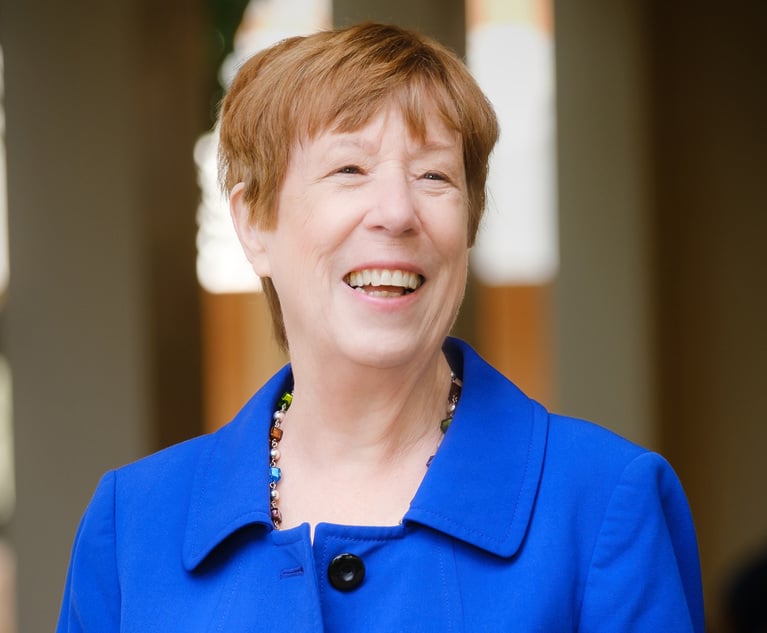
In a written statement, Shloss said that literary estates need to be cautious. "If they don't pay attention to the rights of scholars, authors and researchers, they may end up paying just as the Joyce estate did," she said.
Shloss' success won't create a legal precedent, however, since her ability to publish excepts of Joyce's letters and published works and her collection of legal fees from the Joyce estate were reached through settlements.
Jones Day partner Greg Castanias, who represented the Joyce estate in the appeal of the attorney fee award, said the decision to settle was strictly a financial one. "We settled for substantially less than the district court award, and for less than an appeal would have cost," he said.
Castanias said he doesn't see any larger message for those looking to protect copyrights. "If our opponents wanted to send a message, then they should have gone ahead and not settled."
Shloss, a consulting professor of English at Stanford University, began researching her book on Lucia Joyce in 1988. In 1994, according to her lawsuit, Stephen James Joyce became aware of her research and in 1996 began to interfere. He denied permission to include a James Joyce poem, among other materials. The lawsuit also claimed the estate threatened to sue Shloss and her publisher if the copyrighted material was included in her book.
"It was a tense relationship," Falzone said. "Stephen James Joyce made it clear that he didn't want the book to happen."
Under the suggestion of her publisher, more than 30 pages were cut from Shloss' manuscript when it was published in 2003. Two years later, Shloss created an electronic supplement to her book on a secure Web site that included the copyrighted Joyce material that had been removed from the published book in the belief that it was protected under the fair use doctrine. The Joyce estate again denied Shloss permission to use the copyrighted material, according to the lawsuit.
In 2006, Shloss filed a lawsuit in federal district court against the Joyce estate to establish her right to publish the copyrighted material. After an unsuccessful bid to have the lawsuit dismissed, the Joyce estate settled in 2007 and agreed not to sue Shloss for including the copyrighted material on her Web site or in print. Shloss then sought to recover more than $400,000 in legal fees from the Joyce estate. A district court judge ordered the estate to pay approximately $326,000, and the estate appealed that award to the 9th U.S. Circuit Court of Appeals. However, Shloss later agreed to settle for $240,000 in order for the estate to drop its appeal.
"This is a breakthrough for all scholars," Shloss said in the written statement. "In the past we haven't had easy access to the legal system, or the means to vindicate our rights in the face of legal threats. Now it turns out maybe we do."