Lawyers representing two in-house IP counsel who got the boot after alleging securities fraud at their slot machine company netted a big jackpot Thursday from the 9th U.S. Circuit Court of Appeals, which allowed them to continue their wrongful termination suit.
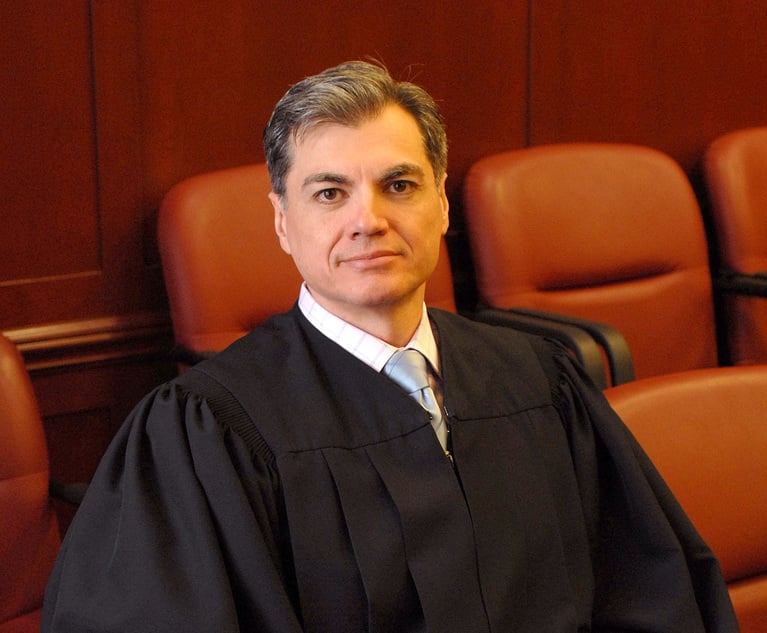
That it was Judge Jay Bybee, a pro-business conservative, who handed out their winnings made plaintiffs all the giddier.
In what is the first 9th Circuit analysis of whistleblower protections under Sarbanes-Oxley corporate governance laws, Bybee found that the plaintiffs did not have to prove actual fraud at the company to sue. Rather, they merely had to demonstrate that they believed fraud had occurred.
"Requiring an employee to essentially prove the existence of fraud before suggesting the need for an investigation would hardly be consistent with Congress's goal of encouraging disclosure," Bybee wrote.
Judge Sidney Thomas, often an ideological opposite, joined Bybee, as did Senior Judge J. Clifford Wallace.
Plaintiffs Shawn and Lena Van Asdale, who are married, went to work for International Game Technology in Nevada as IP lawyers. IGT soon absorbed another company, Anchor Gaming, which held patents for a particular slot machine featuring a "bonus wheel."
As IGT prepared to litigate against Bally Technologies Inc. for infringing the wheel patent, however, Shawn Van Asdale concluded that his company didn't have a case because the patent was actually worthless, according to plaintiffs' version of the facts, which Bybee assumed to be true for purposes of the appeal.
"Potentially, if Anchor's wheel patent was invalid, the benefits of the merger may have been overvalued," Bybee wrote.
The new general counsel at IGT -- Van Asdale's boss -- had been the top lawyer at Anchor before the merger. And that GC, David Johnson, decided to fire Van Asdale three days after meeting about the patents, according to the opinion. Van Asdale and his wife were each let go within months.
Their lawyer, Margo Piscevich of Piscevich & Fenner in Reno, said Bybee's holding about not having to prove actual fraud is what the disclosure protections of Sarbanes-Oxley are all about.
"How do you say, if you're in a management meeting, I think the CEO is a crook? I mean, you can't do that," Piscevich said.
Reno-based lawyers with Armstrong Teasdale argued the case at the 9th Circuit for IGT; the company also retained Gordon Krischer, an O'Melveny & Myers of counsel in Los Angeles. A company spokesman said IGT still believes the plaintiffs' claims are "without merit."
Though the spokesman said the company would continue to defend the suit "vigorously," he demurred about whether IGT would pursue en banc review at the 9th Circuit or petition the U.S. Supreme Court. To Piscevich, Bybee's name on the opinion lends significant protection against conservative attack.
Bybee additionally rejected the company's attempt to dodge the lawsuit by arguing that some of the conduct at issue would be privileged. The district judge should fashion targeted remedies for that evidence, Bybee wrote, instead of tossing the entire claim.
Nothing in Sarbanes-Oxley "indicates that inhouse attorneys are not also protected from retaliation ... even though Congress plainly considered the role attorneys might play in reporting possible securities fraud," Bybee wrote.
And even though the plaintiffs did not proffer any direct evidence that their firing was related to blowing the whistle about the patents, Bybee held that the timing -- a firing decision three days after the confrontation and 17 days after a stellar performance review for Shawn Van Asdale -- is sufficient to make out a prima facie case of wrongful termination.
The case is Van Asdale v. International Game Technology.