Incisive Media's Law.com
  • Law.com Network
  • Legal Web
Register for Law.com Newswire
Newsletters
RSS

Law.com Home > Violent Terms Are Often Used in Defense Work, Attorneys Say

Font Size: increase font decrease font

Violent Terms Are Often Used in Defense Work, Attorneys Say

Mark Fass

New York Law Journal

August 10, 2009

  • deliciousdel.icio.us
  • digg Digg
  • redditReddit
  • facebookFacebook
  • googleGoogle Bookmarks
  • newsvineNewsvine
  • linkedinLinkedIn
  • mixxMixx
  • stumbleuponStumbleupon
  • Print
  • Share
  • Email
  • Reprints & Permissions
  • Post a Comment

The most striking, if not necessarily the strongest, evidence against Robert Simels, the Manhattan criminal defense attorney on trial for witness tampering and obstruction of justice, has been the recordings made by an undercover witness in which Simels repeatedly talks of the need to "neutralize," "eliminate" or even "kill" witnesses.

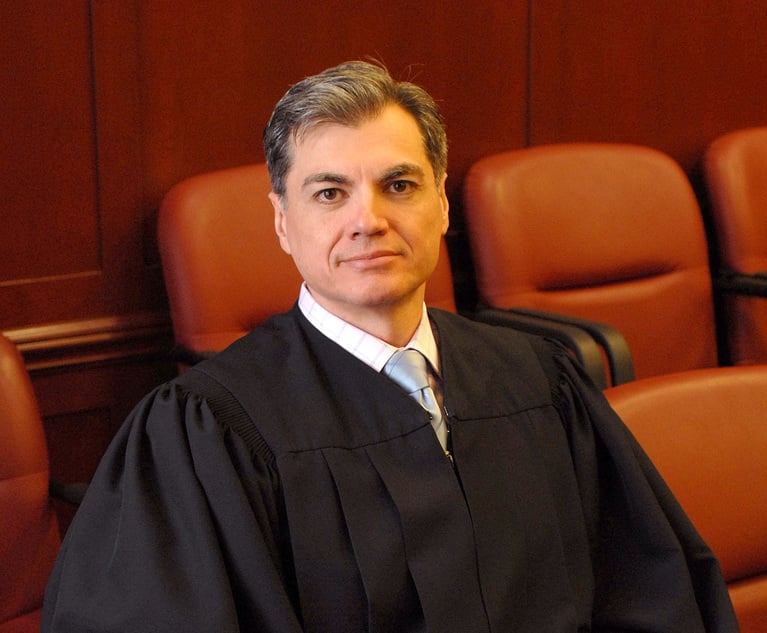
The case, in which Simels is accused of colluding with his client, Guyanese drug kingpin Shaheed Khan, to bribe and threaten witnesses, is being heard by Eastern District of New York Judge John Gleeson. If convicted, Simels faces disbarment and the possibility of life in prison.

On direct examination by his attorney Gerald Shargel last week, Simels explained that the use of violent imagery is simply how defense attorneys speak.

"I use [these terms] all the time, and lawyers use them all the time," Simels told the jury. "It's part of the vernacular of being a lawyer."

While much of the other evidence against Simels, such as recorded conversations in which he appears to be making plans to bribe one witness or counseling another to change his testimony, may be more damning, his talk of "neutralizing" and "eliminating" witnesses has received extended attention by the prosecutors, Assistant U.S. Attorneys Steven D'Alessandro, Morris Fodeman and Daniel Brownell, as well as by the media.

In discussions last week with about a dozen defense attorneys -- ones who, like Simels, have represented gang leaders and accused murderers -- Simels' colleagues unanimously agreed that the use of violent language is not only an unavoidable aspect of their work, it is often necessary or intentional.

"We do try to talk our client's language, to some extent, as a bonding thing," said veteran Brooklyn solo practitioner Joyce David, whose recent high-profile clients include Darryl Littlejohn, the bouncer sentenced to life without parole for the murder of graduate student Imette St. Guillen.

"I [can't] sound like I'm from Mars and that I don't have empathy with the people I'm dealing with. So I do use some language that might sound a little odd to someone who's not a member of our group," David said.

As Daniel N. Arshack, a past president of the New York State Association of Criminal Defense Lawyers, put it, "It is unlikely that any lawyer would suggest to an uneducated client who is charged with a street crime that a particularly damaging witness would be 'dealt with on cross-examination by an intensive examination of the inconsistencies present in his prior testimony.'"

Indeed, when asked for a non-violent synonym for "discredit," the defense attorneys were generally at a loss.

Charles Ross, whose clients include the comedian Katt Williams and who was interviewed as a potential attorney by Khan, suggested "undermine." No one else could quickly name another.

Lawrence S. Goldman, a former president of several criminal defense lawyers' groups, said "destroying a witness" is a particularly popular defense-bar metaphor.

"A lot of clients like the macho, aggressive approach," Goldman said. "And they want an aggressive, mean lawyer."

'CONTEXT IS EVERYTHING'

But the defense attorneys repeatedly noted an obvious point: "Context is everything."

All agreed, for example, that when Simels spoke of "killing a witness on cross-examination," he did not mean to suggest that he would actually shoot the witness when she took the stand.

In other instances, the context of Simels' statements appears more difficult to explain.

Take, for example, the June 11, 2008, exchange between Simels and the cooperating witness, Selwyn Vaughn, about a key witness against Khan, David Clarke.

Vaughn: "I think the only option that [Khan] has here now is, you know is, well ..."

Simels: "Neutralize Clarke."

Vaughn: "Neutralize Clarke. We either try to buy them or we gotta drive fear in them, is the only option."

Simels: "I agree with you. I agree with you."

Judging the context of the conversations, several lawyers suggested, should also include looking at the background of the client. Violent inferences take on a different meaning when said to men who have built their careers on violence -- such as Khan, who, according to Guyanese newspaper accounts, may have ordered the murders of nearly 200 men -- as opposed to, say, the typical white-collar criminal.

Goldman said he doubted that Ira Sorkin talked of "killing" or "eliminating" witnesses when counseling Bernard Madoff. If he had, Goldman said, "Madoff probably would have been scared."

All this attention on "neutralizing" and "eliminating" witnesses is misplaced according to Bronx veteran defense attorney Murray Richman, who was contacted by Simels' team about appearing as an expert witness, but was not called.

"People have been watching movies too much. 'We've got to neutralize the enemy agent,'" said Richman. In real life, "neutralize" simply means "make him no longer dangerous," he added.

"What if you say, 'We need to compromise this witness?'" Richman asked. "It's easy to jump to conclusions. It becomes a chilling effect on all of us. You've got to watch every word you say."

For the most part, the defense attorneys declined to comment on the record on the strength of Simels' "parlance" defense.

Ross called the defense a "legitimate" one, given the facts of the case.

"I think it's a defense that is suggested by the context," Ross said. "And I think it's a strong one, a powerful one."

"It doesn't matter if I buy it," Arshack said. "That's up to a jury."

Closing arguments are set to begin this morning at 9 a.m.


Subscribe to New York Law Journal

  • Print
  • Share
  • Email
  • Reprints & Permissions
  • Post a Comment

Related Items

  • Prominent Attorney Charged With Witness Tampering Faces Heated Cross-Examination

Advertisement

Top Stories From Law.com

Legal Technology

  • Public Performance in the Digital Age

Corporate Counsel

  • United Technologies Takes a Stand, Puts Billable Hour 'on Life Support'

Small Firm Business

  • Holiday Parties: Keeping Expenses Low and Deductibility High

Advertisement

lawjobs.com

TOP JOBS

MORE JOBS >>

POST A JOB >>

Advertisement

About ALM  |  About Law.com  |  Customer Support  |  Reprints  |  Privacy Policy  |  Terms & Conditions
Close [ X ]