Alameda County, Calif.'s public defenders on Monday stopped taking many out-of-custody misdemeanor and probation violation cases, citing the expected loss of 14 attorneys through layoffs on Sept. 4.
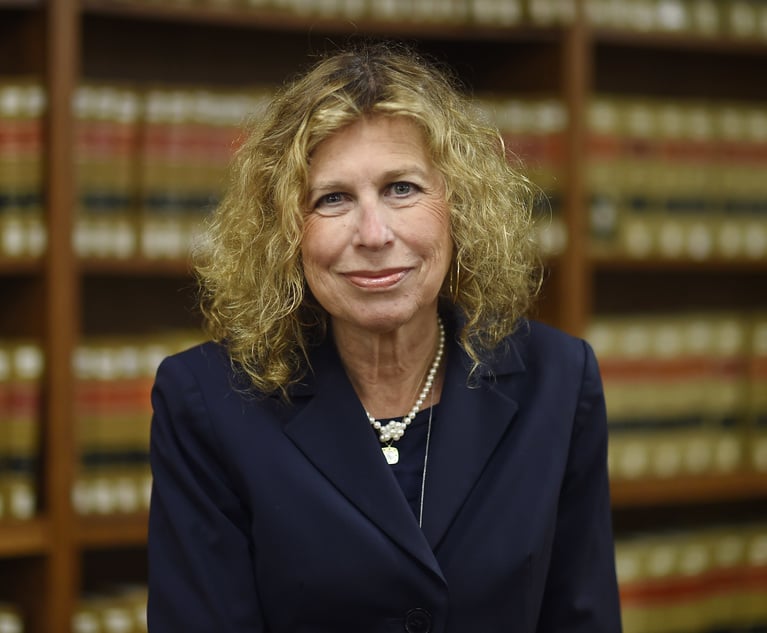
Public Defender Diane Bellas confirmed in an e-mail that her attorneys have started declaring conflicts of interest "based on overload." The move is part of a "transition plan," she said. Bellas told county leaders that could shift more than 10,000 cases to a panel of private attorneys over the next year.
" ... The public defender is barred from undertaking representation in cases when it knows it has neither the necessary resources nor capacity," Bellas wrote. "And ... the public defender will not abandon existing clients. Accepting new referrals through Sept. 4, 2009, when attorney staff will drop from 102 to 88, would result in a violation of both of these recognized canons and, operationally, give rise to an unmanageable caseload on Sept. 8, 2009."
Bellas informed Alameda County leaders of the plan in a July 13 memo. County Administrator Susan Muranishi was in meetings and unavailable to talk about the public defender's office Monday, a spokeswoman said.
Bellas' actions reflect the dire choices public defenders around the nation are facing as government budgets shrink. Across the bay in San Francisco, Public Defender Jeff Adachi said his office started declining complex, time-intensive cases in March and has since referred about 20 defendants to private counsel. And even though the Board of Supervisors restored $950,000 of the proposed cuts his office was slated to take, Adachi said he's certain he'll have to refuse representation "in an even greater number of cases."
"When your staff is already working beyond capacity, there is no way to absorb those cases," he said.
In refusing to take new cases, attorneys are citing a March decision by California's 1st District Court of Appeal, In re E.S., 09 C.D.O.S. 3042, that said public defenders who can't effectively assist their clients because of overwhelming caseloads should do everything they can, including declining new cases, to ease their burden.
"That really was the first case to acknowledge that, not only does the chief defender have a moral and professional obligation to declare unavailability" but they must do so or risk being held responsible "for failure to represent clients," Adachi said.
How or even if the existing panel of private attorneys in Alameda County will be able to handle the shifted caseload is unclear. Susan Kleebauer, managing attorney of the Alameda County Bar Association's Criminal Court Appointed Attorneys Program, said the panel had only received an extra two cases as of mid-afternoon Monday.
"It's hard to predict," she said. The program has 165 attorneys handling cases ranging from misdemeanors to capital crimes. Kleebauer said she didn't know yet if the program would receive additional funding or staffing.
Attorneys in the public defender's office insist that the county will end up paying more for the private lawyers than it would if the 14 layoffs were rescinded. Bellas' memo to county leaders estimated that they will pay panel attorneys at least $4.7 million to handle the cases the defender's office can no longer take. By comparison, Deputy Public Defender Robert Mertens said, the county is only saving about $1.4 million by laying off his 14 colleagues.
"It's the kind of thing where people don't realize what you have 'til you lose it," said Mertens, president of the union that represents the county's public defenders.
According to Bellas' plan, the office's Oakland branch at the Wiley W. Manuel Courthouse will lose six attorneys. The remaining staff there will not take newly referred misdemeanor defendants who are not in custody.
The Hayward, Calif., office will lose four attorneys. Their staff, too, will not take new out-of-custody misdemeanor cases.
Four attorneys will be let go at the Lakeside Main Office at the Rene C. Davidson Courthouse. Remaining staff members will not take new cases where only probation violations have been alleged.
Attorneys in California's Fremont, Pleasanton and juvenile branch offices will continue accepting all types of cases, as usual.