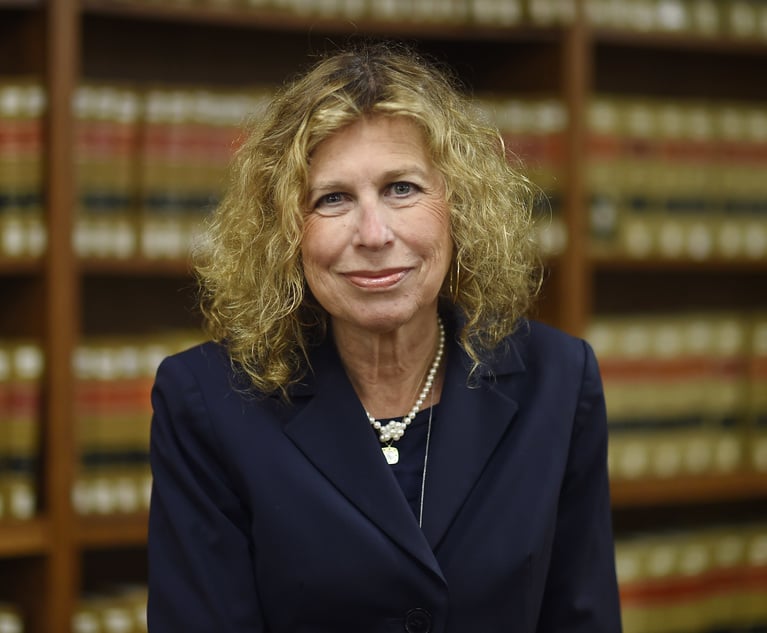
Katherine A. Helm
Stroock & Stroock's Joel Cohen
An anonymous jury is a highly loaded concept. Yet, nearly every federal and state jurisdiction confronted with the concept has blessed it in practice. At first blush, it might seem like fire and brimstone for a defendant. But an anonymous jury has its up sides, if used effectively and without prejudicing rights. Let's review the basics.
An anonymous jury is, typically, a nameless jury. A fully anonymous jury is created when selected venirepersons reveal little identifying information; not their names, addresses, businesses, and religious, political or social backgrounds, to counsel, the press or even the judge during voir dire or any other part of the trial. The seated jury simply consists of "Juror No. 1," "Juror No. 2," etc.
The first fully anonymous jury in U.S. history was empanelled some 30 years ago in federal court in New York City. In United States v. Barnes, 604 F.2d 121 (2d Cir. 1979), a 2nd Circuit panel upheld the unprecedented measure, instigated by the trial judge to protect the jurors and the integrity of their deliberations. Even there, in a high-profile narcotics case involving organized crime, some judges derided the criminal prosecution of "Nicky" Barnes before an anonymous jury as "bizarre, almost Kafka-esque." Id. at 175 (Oakes, J., dissenting from denial of petition for rehearing en banc).
For some time, the anonymous jury practice was generally confined to drug or organized crime, and later, terrorism cases in the Southern and Eastern Districts of New York. As an exemplary tale, in 1982, one of the authors prosecuted a consigliere of a New York mafia family in the Eastern District. The charge was a conspiracy to "fix" certain federal criminal cases -- including efforts to spring the family boss, Carmine Persico, from a jail sentence -- by conspiring to bribe a federal agent, the prosecutor and even the presiding judge. Small wonder, given the defendant's evident willingness to corrupt literally everyone in his path, the prosecutors moved for an anonymous jury to ensure the jurors in the upcoming bribery trial would be shielded from mafia intimidation.
The defense objected strenuously, arguing that imposed anonymity would improperly bar them from learning as much about the potential jurors as they feel they needed, and were entitled to, to meaningfully exercise both peremptory challenges and challenges for cause. These were extremely legitimate and worthy concerns, particularly given that many great trial lawyers believe that virtually every trial can be won at jury selection, by skillfully learning the biases and prejudices that lurk deep or just below the surface. With a jury selection shrouded in secrecy, lawyers are left to shadowbox in the dark. Nonetheless, the judge held that, given the defendant's past, the need for an anonymous jury was too great.
But another problem, which would become emblematic of anonymous juries, weighed heavily on the judge's mind. By employing this unorthodox protocol, an intelligent jury pool would quickly conclude that the judge himself had determined the defendant was capable of trying to intimidate and bribe them -- ergo he himself was persuaded that the defendant was dangerous and "likely" guilty of the charges for which he was standing trial. And if a jury concludes that the judge believes that the defendant is guilty, they will probably follow in lockstep.