Font Size:
![]()
David Carradine Post-Mortem Raises Privacy Issues
The American Lawyer
June 15, 2009
We're not exactly sure what caused the death of actor David Carradine -- secret societies, ninjas and autoerotic asphyxiation have been bandied about -- but now we do know that it almost certainly wasn't an accident.
A forensics expert hired by Carradine's family, HBO's "Autopsy" star Michael Baden, recently found that Carradine did not commit suicide and that further analysis was needed to deduce a more definitive cause of death.
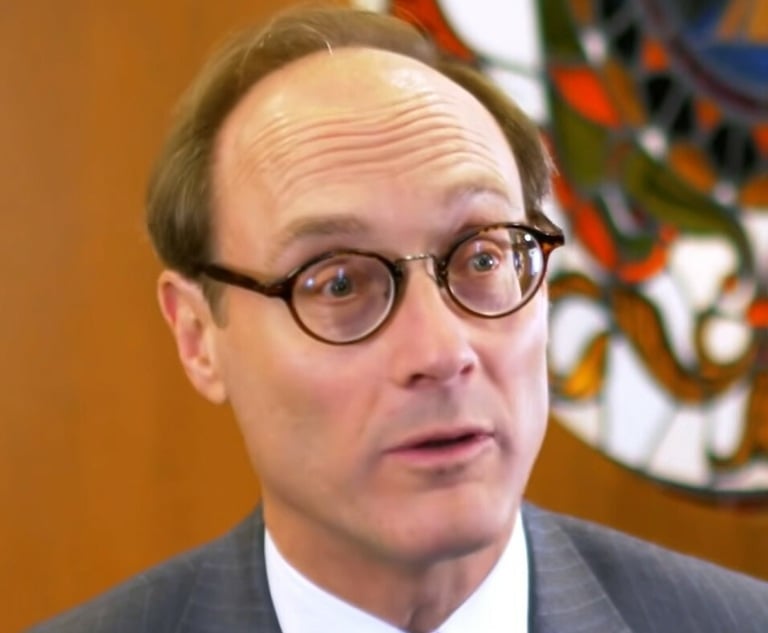
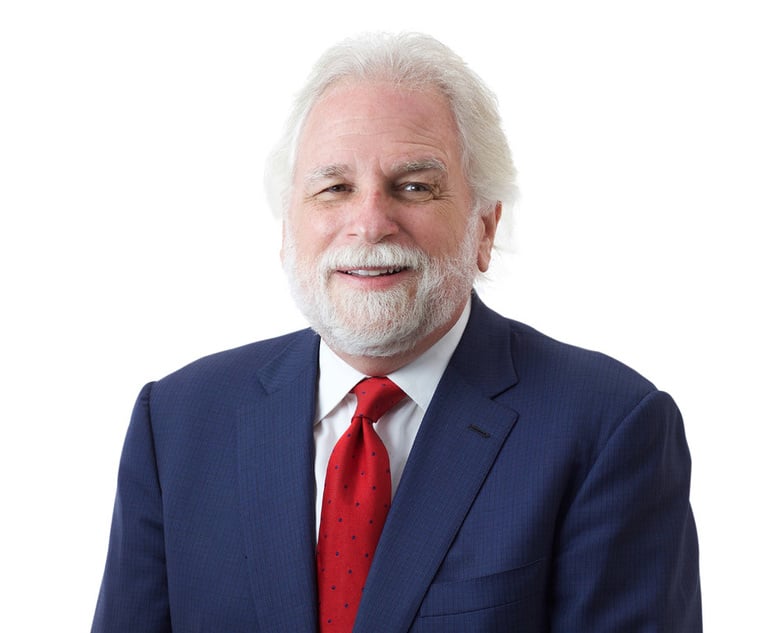
The publication by a Thai tabloid of grisly crime scene photos has set off a furor, with Carradine's family hiring Los Angeles lawyer-to-the-stars Mark Geragos to threaten a civil suit against anyone publishing the photos in the U.S. It's all raised plenty of questions about privacy issues, which we presented to University of Florida law school professor Jon Mills.
Mills advised the families of Gianni Versace and Dale Earnhardt in their attempts to keep graphic photos of the two private in the aftermath's of their deaths. We spoke with Mills by phone on Friday.
Hello Jon, thanks for taking the time. Well, this Carradine case certainly has people talking.
It brings up a bunch of complex questions. The first is whether the photographs have been released illegally. If so then they're going to be really hard to retrieve.
I understand you have some experience with this.
I worked for the Earnhardt family on trying to prevent the autopsy photos from being distributed. And we were successful at that because the courts and policymakers saw a privacy interest in [not releasing] the photos. I also worked for the Versace family in that murder case to keep the photos from being released. The police had possession of the photos in both those cases and the courts ordered them to be closed. (Note: The Earnhardt photo fracas actually led to the passage of a Florida law credited with preventing autopsy images of the late Anna Nicole Smith from being published.)
Is the privacy issue something that affects only celebrities?
Not at all. [Many people] don't know about the Nicole Catsouras case in California. Two years ago a young woman borrowed her father's Porsche and drove into a toll both at 100 miles per hour and was killed. The accident scene photos of her, which were particularly grotesque, were leaked by members of the California Highway Patrol and turned up on 2,500 Web sites. And this is not a celebrity, but the harm to her parents was quite real.
What causes of action can individuals bring to prevent the release of such photos?
In the Earnhardt and Versace cases the leak hadn't occurred yet. In California, the Catsouras family sued two years ago claiming that the photos were illegally released and that there was actual harm. That's still in litigation. In the Carradine case, who knows? Some have said the Thai police leaked the photos, but that's going to have to be proven. And then you have to find a way to keep someone from posting those photos when they might be newsworthy, the definition of which has become increasingly broad in the U.S.
It seems that the key in these cases is to target those with the photos before they're actually released.
You got it. In the Catsouras case the photos were on 2,500 Web sites. What are you going to do? You can ask all of them to take [the photos] down and maybe threaten [others] with intentional infliction of emotional distress. But you've got to find them. As for the people that wrongfully release those photos, we'll have to see how the action against public officials plays out.
How do U.S. privacy laws compare to ones overseas, in the U.K. or the EU?
U.K. and EU privacy laws are stronger. The EU focuses more on individual dignity and the U.S. focuses more on free expression. We're willing to discount some negative impact for free expression.
Could the Carradine family sue outside of Thailand?
The Carradine family could sue somewhere else, but [the photos] would need to be distributed somewhere else and I don't know if they have [been].
Is that why we've seen some of these 'libel tourism' cases being brought?
Yes, but it's important to note that the Carradine case isn't libel or slander since this is a truthful thing. It's just intrusive. But there are cases where folks in the U.S., like Britney Spears, sue in the EU or Great Britain because their laws on privacy and the press are different. The State of New York actually just adopted a libel tourism statute that tries to protect writers and publishers. And I think New York has been the only state to do so. (Note: A similar bill is before the House Judiciary Committee.)
Do you see that balance in the U.S. shifting towards privacy in the future?
Only with regard to certain cases. If the harm is great enough, some judges and juries may allow action. But freedom of the press is sweeping and ingrained in our society and most Americans would agree that it is critical. The issue is at what point does that freedom become abused.
Jon Mills is the author of "Privacy: The Lost Right," published by Oxford University Press.
All interviews are condensed and edited for style and grammar.
This article first appeared on The Am Law Daily blog on AmericanLawyer.com.