Former U.S. District Judge Samuel B. Kent was sentenced Monday to 33 months in prison after earlier pleading guilty to one count of obstruction of justice. U.S. District Judge Roger Vinson of the Northern District of Florida told Kent he must surrender himself by June 15.
The sentencing Monday came after Kent pleaded guilty in February to one count of obstruction of justice as part of a plea bargain, which also called for dismissal of five other charges against him.
Kent, a former judge in Galveston, Texas, who was working in Houston prior to his guilty plea, has been out on bond pending sentencing.
The sentencing hearing included testimony from two former courthouse employees who alleged Kent had assaulted them.
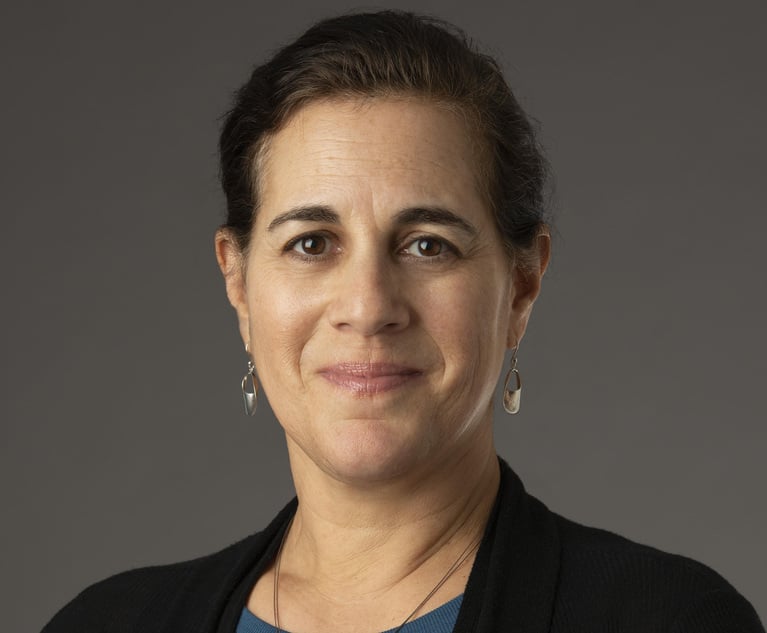
Cathy McBroom, Kent's former case manager, told Vinson, "I will forever be scarred" by what happened to her in Galveston.
She said that she would avoid Kent at the courthouse when he was intoxicated. "Being molested and groped by a drunken giant is not my idea of an affair," McBroom said, noting that Kent falsely told others that she was pursuing him.
The other woman, Donna Wilkerson, who worked as Kent's secretary, said Kent "maliciously manipulated and controlled everyone around him." She also said, "My life is forever changed."
During the hearing, Kent's defense lawyer, Dick DeGuerin of Houston said, although Kent says he's not an alcoholic, Kent is an alcoholic.
Kent said in the hearing that he has been sober for 26 months. He also apologized for his behavior.
During the hearing, Vinson said Kent would undergo treatment for alcohol abuse in prison.
DeGuerin asked Vinson to be merciful when sentencing Kent. He noted Kent has "tendered his resignation" to the State Bar of Texas.
One of the prosecutors, Peter Ainsworth, asked Vinson to "send a signal and a message that no one is above the law."
Following the sentencing, both women said they were pleased with the sentence, with McBroom noting, "You don't have to put up with it, no matter who the person is."
DeGuerin said only it is "a sad day."
Kent, who was accompanied by his wife, declined comment following the sentencing. Prosecutors also declined comment.
TWO-YEAR ODYSSEY
The charges against Kent stem from a complaint McBroom filed with the 5th U.S. Circuit Court of Appeals two years ago.
On Sept. 28, 2007, the Judicial Council of the 5th Circuit reprimanded Kent after a Special Investigative Committee looked into McBroom's "sexual harassment" complaint and other "instances of alleged inappropriate behavior toward other employees of the federal judicial system." The committee recommended that Kent be reprimanded "along with the accomplishment of other remedial courses of action," and by a majority vote the Judicial Council accepted the recommendations.
The council concluded the proceedings "because appropriate remedial action had been and will be taken, including but not limited to the judge's four-month leave of absence from the bench, reallocation of the Galveston/Houston docket and other measures," wrote Edith Jones, chief judge of the 5th Circuit, who signed the order reprimanding Kent.
In October 2007, before Kent returned to the bench, an executive session of the judges of the U.S. District Court for the Southern District decided to transfer Kent's Galveston Division to the Houston Division. He only received civil suits when he returned to the bench in January 2008.
A federal grand jury indicted him on Aug. 28. 2008, on three federal criminal charges stemming from McBroom's complaint.
On Sept. 3, 2008, Kent pleaded not guilty to three charges: two counts of abusive sexual contact and one count of attempted aggravated sexual abuse. On Jan. 6, a federal grant jury issued a superseding indictment in United States v. Samuel B. Kent that added three criminal charges against him: one count of aggravated sexual abuse, one count of abusive sexual contact and one count of obstruction of justice. The alleged victim in the superseding indictment was only identified as "Person B," but on Feb. 23 her identity became known: Wilkerson, who is represented by Terry W. Yates of Houston.
The obstruction charge in the superseding indictment alleged that Kent obstructed justice when he falsely stated to the Special Investigative Committee that "the extent of his unwanted sexual contact with Person B was one kiss and that when told by Person B his advances were unwelcome no further contact occurred, when in fact and as he well knew defendant Kent had engaged in repeated unwanted sexual assaults of Person B, in order to obstruct, influence and impede" the investigation.
On Jan. 7, Kent pleaded not guilty to the three additional charges.
The three additional charges in the superseding indictment prompted the Judicial Council of the 5th Circuit to reopen a disciplinary case against Kent on Jan. 9, according to an order from the Judicial Council of the 5th Circuit. That inquiry is still pending.
In February, on the day jury selection was supposed to begin in Kent’s criminal trial, Kent pleaded guilty to the obstruction-of-justice charge in exchange for the government dropping five sex abuse charges. Kent pleaded guilty to making false statements to the Special Investigative Committee of the 5th Circuit, which was investigating McBroom's complaint.
In the Feb. 23 Factual Basis for the Plea, Kent stipulated that in August 2003 and in March 2007, he engaged in nonconsensual sexual contact with McBroom without her permission, and from 2004 through at least 2005, he engaged in nonconsensual sexual contact with Wilkerson without her permission.
Kent is the first federal judge in history to be indicted for alleged sexual crimes. While the maximum sentence for obstruction of justice is 20 years, the 12-page plea agreement noted that the government agreed the maximum term of imprisonment that it might seek is three years, and it might seek a lesser sentence.
On the day Kent pleaded guilty, DeGuerin said Kent would retire from the bench.
In February, Kent notified President Barack Obama and Jones that he would retire immediately from the bench. DeGuerin said at that time that Kent would seek a medical disability for "some very serious health problems that were greatly exacerbated by his legal problems."
But for Kent to qualify for medical disability, Jones must certify it and Obama must approve it.