Font Size:
![]()
Board Meeting Remarks Result in $2.1 Million Verdict Against Corporate Counsel
New Jersey Law Journal
April 01, 2009
It's the type of remark a lawyer would advise a client never to make. Yet corporate counsel William Wachtel allegedly told a management meeting after a hostile takeover that the way to avoid paying severance to the prior management members was to kill them or hope they die.
Wachtel, of Wachtel & Masyr in New York, is now attempting to set aside a $2.1 million Hudson County jury verdict, including $250,000 in punitive damages, in a whistleblower and defamation suit that hinged on those words.
In 2003, Chelsey Capital, a New York hedge fund, acquired a controlling interest in Hanover Direct, a Weehawken direct-marketing company, and placed Wachtel on the Hanover board.
In the suit, Blue v. Hanover Direct, HUD-L-5153-0, Hanover's former chief financial officer Charles Blue alleged that Wachtel got him fired for opposing a plan to deny severance to another member of old management based on trumped up "good cause" for termination, which Blue believed violated the Employee Retirement Income Security Act.
Hanover had a change-in-control plan, adopted in 2001 and governed by ERISA, that paid enhanced severance benefits of up to 18 months' salary to certain members of management if they were ousted within two years of a change in ownership. The benefit did not have to be paid if the firing was for good cause.
At some point after Wachtel's comment at the Dec. 3, 2003, management meeting, Blue, as plan administrator, was asked to deny change-in-control benefits to vice president of purchasing Douglas Steinberg, fired in November 2004 for allegedly accepting gift certificates from vendors. Blue claims he kept asking for evidence of good cause for Steinberg's termination but it was never provided.
By that point, Hanover had paid out nearly $2 million under the plan to two terminated employees.
Still, Blue signed off on the benefits on Feb. 23, 2005 -- which he claims was months after the initial request -- when Wayne Garten, the chief executive officer installed by Chelsey, came to his office with Hanover's general counsel, Daniel Barsky, and put the denial letter in front of him.
On March 7, 2005, the board of directors voted to terminate Blue, based on the findings of an independent investigation into accounting irregularities at the company's Roanoke, Va., distribution center.
The three-month investigation concerned improper "soft closes," in which purchases were improperly billed against credit cards, and revenue recognized, after goods were loaded onto trucks but before they were actually shipped.
The investigator -- Wilmer Cutler Pickering Hale & Dorr in Washington, D.C., which was retained by the board's audit committee -- concluded in February 2005 that Blue was at fault because he knew about the soft closes.
Blue alleged that Wachtel, by then the board chairman, tainted the investigation by telling the lawyer who headed it, Joseph "Ted" Killory Jr., that Blue had admitted he knew of the practice and was lying when he said he did not.
Killory testified at trial that Wachtel only told him Blue was a liar once the investigation was done and Wachtel's words did not influence his report.
Blue's lawyer argued that evidence of Wachtel's kill-or-die comment should be admitted at trial because it sent a message that the new owners were not going to pay the benefits and felt so strongly about it that they might retaliate against Blue for his interference.
The defense took the position that the comment, if made, was uttered in jest and that Blue wanted to get it in to poison the jury against Wachtel.
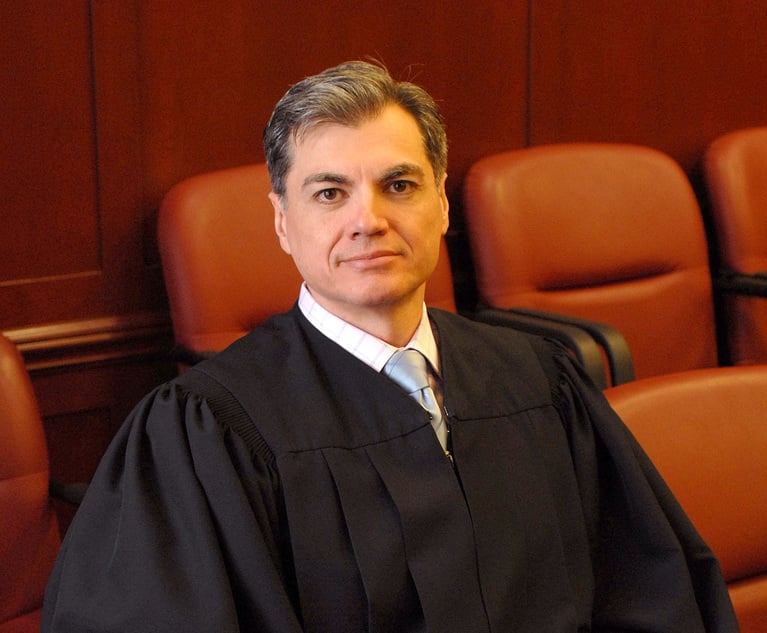
Superior Court Judge Barry Sarkisian ended up letting in the statement, which he quoted as "The way to get rid of severance is to either kill them or hope they die." Sarkisian said the comment could "reasonably lead a jury to infer that there was a policy where the company did not want to pay severance benefits."
The jury apparently so concluded. On Feb. 26, it returned a $1,876,248 compensatory damages verdict against Hanover, Wachtel, Garten and Chelsey principal Stuart Feldman.
The award was comprised of $526,248 for back pay and $750,000 for emotional distress on the whistle-blower claim and $600,000 for reputational damage on Blue's defamation claim, which was based on Hanover's Securities and Exchange Commission filings that flagged Blue's suit as pending litigation and said he was fired for cause.
The jury followed up on March 3 with $600,000 in punitive damages on the whistle-blower claim: $250,000 against Wachtel, $200,000 against Feldman and another $150,000 against Hanover.
The verdict totals almost $2.5 million and, because the compensatory damages are joint and several, Wachtel is on the hook for more than $2.1 million.
On March 23, Wachtel and his fellow defendants filed papers asking the court to enter judgment notwithstanding the verdict, remit the damages and/or grant a new trial.
They contend that Blue's whistle-blower claim, under New Jersey's Conscientious Employee Protection Act, was pre-empted by ERISA and that the CEPA verdict is against the weight of the evidence. They also argue the defamation verdict was in error because Blue was, in fact, terminated for cause and the description of his pending lawsuit reported in the SEC filings was privileged.
They want Sarkisian to reduce the awards for emotional distress and defamation as excessive or alternatively order a new trial. Blue secured a new job within a year, making close to $300,000 at Bloomingdale's -- more than he earned at Hanover -- which was why the jury did not give him front-pay damages and should not have given him $600,000 for reputational damage, the papers say.
Neither Wachtel nor his lawyer, Todd Sahner, of Marcus Brody Ford Kessler & Sahner in Roseland, returned a call for comment.
Killory declines comment, as does Blue's lawyer, Neil Mullin, of Smith Mullin in Montclair.
Hanover is the successor to Horn & Hardart, founded in 1911, which owned the coin-operated cafeterias known as automats. Since Blue's discharge, Chelsey has taken Hanover private.