Law.com
  • News
    • Newswire
    • Large Firm
    • Corporate Counsel
    • Technology
    • Washington
    • Supreme Court
    • International
    • Legal Blog Watch
    • Video
  • Publications
    • The American Lawyer
    • Corporate Counsel
    • Law Technology News
    • The National Law Journal
    • New York Law Journal
    • New Jersey Law Journal
    • Connecticut Law Tribune
    • The Legal Intelligencer (PA)
    • Daily Business Review (FL)
    • Delaware Law Weekly
    • Daily Report (GA)
    • The Recorder (CA)
    • Texas Lawyer
    • Publication E-Alerts
    • More Publication Sites
  • Legal Research & Directories
    • Books Online
    • Smart Litigator
    • ALM Experts
    • Verdict Search
    • Court Reporters
    • Legal Dictionary
    • LegalTech® Directory
    • Newsletters
    • More Directories
  • Surveys, Lists & Rankings
    • Amlaw 100
    • NLJ 250
    • Global 100
    • The A-List
    • ALM Legal Intelligence
    • Surveys
    • More Lists & Rankings
  • lawjobs.com
    • Post a Job
    • Find a Job
    • Post a Resume
    • The Careerist Blog
    • News & Views
  • LawCatalog Store
    • Books Online
    • Best-Selling Books
    • Books
    • Directories
    • E-Newsletters
    • Magazines
    • Newspapers
    • Newsletters
    • Surveys
    • Research Services
    • Webinars
    • Events
  • CLE & Events
    • CLE Center
    • ALM Events
    • LegalTech
    • Virtual LegalTech
    • Insight Legal Events
    • Webinars
Home
 
Article
  • email
  • twitter
  • LinkedIn
  • alert
  • rss

Law.com Home > A Low-Profile Ride to Top of High Court Bar

Font Size: increase font decrease font

A Low-Profile Ride to Top of High Court Bar

By Tony Mauro All Articles 

Legal Times

March 18, 2009

  •    
  •    
  •    
  •      
 
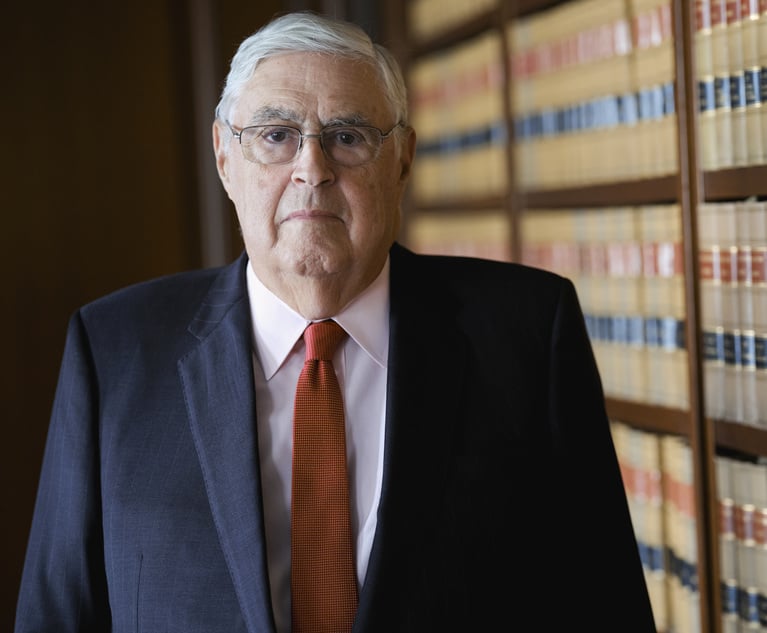
Kellogg Huber's David Frederick

Kellogg Huber's David Frederick
Image: Legal Times / Patrice Gilbert

Related Items

  • Supreme Court's Wyeth Ruling Deals a Blow to Pre-emption Defense

On March 4, the morning he won the biggest Supreme Court case of his career, David Frederick happened to be in Baltimore at a business meeting with Peter Angelos, the famed trial lawyer and Baltimore Orioles owner.

The Court ruled for Frederick in Wyeth v. Levine (pdf), a major defeat for Big Pharma. The win meant that Frederick's client, Diana Levine, whose forearm was amputated because a Wyeth drug was improperly administered to her, would finally receive the $7 million a jury awarded her. It also meant that plaintiffs lawyers like Angelos would still be able to sue pharmaceutical companies in state courts in "failure to warn" cases like Levine's.

As the magnitude of the victory became clear, Angelos told Frederick, "Let's have a toast to Diana Levine." Suddenly the unassuming Frederick, 47, found himself sipping wine before noon with Angelos.

The Wyeth win was just the latest confirmation that Frederick, a partner at the low-profile D.C. firm of Kellogg, Huber, Hansen, Todd, Evans & Figel,, had arrived in the top tier of Supreme Court advocates. In 26 high court oral arguments over a 13-year period, first at the solicitor general's office and then at Kellogg Huber, his stature has only grown.

Frederick's win in the Wyeth case, defeating his former boss Seth Waxman of Wilmer Cutler Pickering Hale and Dorr, was not even the first time this term that Frederick defeated a former solicitor general who represented big business in a federal pre-emption case. Frederick also won Altria v. Good (pdf) on behalf of injured "light" cigarette smokers after arguing against Theodore Olson of Gibson, Dunn & Crutcher. Justice John Paul Stevens authored both decisions.

Asked how he reached his position among Supreme Court advocates, Frederick stops to consider his words, as he often does. "How a practice develops is the most mysterious thing in the world to me," he replies.

FEWER CONFLICTS

At one level, though, the answer is clear, and Frederick doesn't hesitate to provide it. The bigger firms in town with Supreme Court practices could never go up against the Wyeths and Altrias of the world on the issue of pre-emption; they'd be conflicted out because of other corporate clients who prefer federal pre-emption in the fields of cigarette and drug labeling and advertising.

"We have many fewer conflicts" at Kellogg, Huber, says Frederick, who notes that he also represents companies, not just consumers, on a range of issues. The 50-lawyer firm was created in 1993 with a base of telecommunications work that has expanded to other kinds of civil and white-collar criminal litigation, but none, apparently, that prevents Frederick from representing consumers in the pre-emption, securities, and other cases that have come his way. On March 9, the Court granted review in another case of Frederick's, Jones v. Harris Associates, in which he represents investors suing an investment advisory firm over excessive fees.

But the absence of conflicts does not explain it all. As Paul Clement, another former solicitor general, puts it, "There are a lot of other people, in academia and elsewhere, who aren't conflicted out in pre-emption cases that people could go to. But clients go to David." Clement, now at King & Spalding, adds, "If I were a client taking the nonpre-emption side, I'd go to David, too. He wrote the book on oral advocacy. He is very gifted at the podium."

That book, "Supreme Court and Appellate Advocacy," published by Thomson West in 2003, is a practical primer on oral advocacy, complete with anecdotes from the best and worst of Supreme Court arguments. In an introduction, Justice Ruth Bader Ginsburg calls Frederick "an accomplished advocate" whose treatise "can arm an attorney to perform to best effect" before the high court and other appellate tribunals.

When he argues, Frederick is straight with the justices and calm as he responds to a barrage of questions. They, in turn, have a high level of comfort with him. In his book, Frederick says with understatement that the current Court is "quite active" in its questioning, placing a "high premium on the advocate's nimbleness in maintaining focus ... and in fending off hostile questions that threaten to undermine the case."

Frederick followed his own model last October during arguments in Altria v. Good, in which the Court ultimately ruled that smokers could sue Philip Morris under state law claiming deceptive advertising for light cigarettes.

The justices were tough on Frederick, challenging him at every turn, but he appeared unfazed. When Chief Justice John Roberts Jr. pointed out a slight misstatement of the record Frederick had made, Frederick didn't split hairs or get defensive. "I misspoke, Mr. Chief Justice, with apologies to the Court," he said without hesitation, then quickly moved on -- and won the case.

Frederick has been nimble on his feet since seventh grade in San Antonio, when he began debating and public speaking. He continued in college at the University of Pittsburgh. A Rhodes Scholar at Oxford, Frederick then got his law degree at the University of Texas. He has remained connected to the law school, helping run its Supreme Court clinic.

During a 1991-92 clerkship with Justice Byron White, Frederick admired the justice's modesty and aversion to the spotlight, qualities Frederick displays today. And it's a perfect match for his firm, which has no public relations apparatus and only a bare-bones Web site. "It's very much a ‘no comment' firm," retired name partner Mark Evans says.

K. Chris Todd, a current name partner, set aside his reluctance to talk to the press to praise Frederick. "His outer glove is a whole lot of San Antonio charm, but inside there's a tough-fisted intellectual," Todd says. That Texas charm also makes room for Frederick to empathize with his clients. In an earlier pre-emption case, Bates v. Dow Agrosciences, Frederick got to know the peanut farmers he represented, whose crops had been wiped out by a Dow pesticide. "It really helped me to understand the personal impact of what had happened," Frederick says. Dow claimed the suit was pre-empted by federal law, but Frederick convinced the Court otherwise.

Similarly, in the Wyeth case, Frederick spent a lot of time getting to know Diana Levine. "It was a privilege. She's an amazing person." Levine is a Vermont musician whose career was wiped out by the injury caused by the improper administration of a Wyeth drug.

Richard Rubin of the Barre, Vt., firm of Rubin, Kidney, Myer & DeWolfe, Levine's original lawyer, says he was struck by the fact that "David took a deep personal interest in Diane -- which you don't always see from appellate lawyers." Rubin adds, "She was his client in the best sense of the word. For him the case was about Diana first, and the broader issue second."

PLAINTIFFS BAR BACKING

How did Frederick win the case? He says he studied past writings of the justices on pre-emption and saw more possible votes -- including Clarence Thomas' -- than others had in advance of argument. Thomas had expressed skepticism about pre-emption in the past, and Frederick felt he could win Thomas and other justices over if he and amicus groups stressed this point: Congress and, until recently, the Food and Drug Administration itself, had never viewed the FDA as the sole regulator of the drug industry. With the budget and legal constraints the FDA lives under, Frederick says, "I felt I had to bring out the realities of how the FDA operates."

Frederick also credited his team at Kellogg, Huber, including: partner Scott Angstreich, of counsel Scott Attaway, and associates Brendan Crimmins and Kelly Dunbar.

What Frederick won't discuss is how he is being paid for briefing and arguing the Wyeth case. The Wall Street Journal last year reported that a group of plaintiffs lawyers, members of the American Association for Justice, urged Rubin to give the case to Frederick once it got to the Supreme Court. The lawyers also raised an unspecified amount of money to pay Frederick, the Journal said. Public Citizen Litigation Group, which was already helping Rubin, was said to have been pushed out in the process, in favor of Frederick.

Public Citizen's director, Brian Wolfman, declined to comment because he still regards Levine as a client. Last year, he told The American Lawyer, "Of course I'm disappointed I'm not arguing the case."

Cecelia Prewett of the AAJ, the trial lawyers' group, says, "From my perspective, there was no drama" behind the selection of Frederick. "It was solely Richard Rubin's decision to make." She also says no AAJ money went to Frederick.

Frederick says Rubin approached him asking if he was interested in arguing the case. He talked with Rubin and Levine and agreed to take it on. "Brian was extremely gracious and made the handoff as seamless as can be," Frederick says. "Brian was a friend before this, and is a better friend since."

From Vermont, Rubin acknowledges that a group of individuals came to him "to help us with fees," though he won't say who or how much. But Rubin says the decision to go with Frederick was his alone, and it was a difficult one. Wolfman's knowledge of pre-emption doctrine is deep, Rubin acknowledges.

"We decided that, on balance, we would just as soon have a more established advocate for this case before the Supreme Court," Rubin adds. "It was not in any way a reflection on Brian."

Even before the Wyeth ruling, Frederick's reputation as a "more established advocate" who takes on at least some cases on behalf of consumers helped put his name on early lists of possible candidates President Barack Obama might pick for solicitor general or a judgeship. Obama appointed Harvard Law School Dean Elena Kagan to be solicitor general.

Frederick's response to the speculation: "I am an enthusiastic supporter of President Obama, and he has picked some fantastic people. I will do anything I am asked to help the administration to succeed."

For now, the focus is on maintaining his practice, and there his future is bright, says Mark Evans, the retired Kellogg Huber partner. Frederick has "long-term viability" in Supreme Court practice, he says.

"Success tends to breed success," Evans says. Referring to veteran Sidley Austin advocate Carter Phillips, Evans adds, "David is on the same kind of trajectory as Carter. He has a very nuanced feel for the Court. And he knows how to count noses."


Subscribe to Legal Times

You must be signed in to comment on an article

Find similar content

Firms mentioned

    
  • Gibson, Dunn & Crutcher
  • Wilmer Cutler Pickering Hale and Dorr
  • King & Spalding
  • Sidley Austin

Companies, agencies mentioned

    
  • Supreme Court
  • Kellogg
  • Baltimore Orioles
  • Hansen, Todd, Evans & Figel
  • Gibson Dunn & Crutcher
  • Harris Associates
  • American Association for Justice
  • Philip Morris
  • University of Pittsburgh
  • University of Texas
  • Rubin, Kidney, Myer & DeWolfe
  • Wall Street Journal
  • Public Citizen Litigation Group
  • Public Citizen

Most viewed stories

    
  1. Donovan Criticizes Secret Payoff to Lopez Victims
    •      
  2. The 2013 Am Law 100
    •      
  3. Real Estate Lawyers Target Closing Vendors
    •      
  4. Bernstein Upholds $78.4 Mil. Verdict in Phila. Med Mal Case
    •      
  5. New District Judge Takes Firm Line on Attorney Conduct
    •         
      • Subscription Required
lawjobs.com

TOP JOBS

MORE JOBS

POST A JOB

From the Law.com Network

3-D Printing: The Next Big Thing in IP Law?

Best Legal Departments 2013

News Corp. Hires Ex-Skadden Communications Chief Bush

Law Firm Leaders' Confidence Slipping, Says Survey

Contrite Companies Can Win Forgiveness in Bribery Cases
  •      
    • Subscription Required

Plaintiffs Want to See Toyota's 'Crown Jewels'
  •      
    • Subscription Required

CEIC: the Destination for Digital Investigation

Using Computer Forensics to Investigate IP Theft

Prolific ADA Plaintiff Faces Nemesis in Harassment Suit

Ullyot Exit Closes Chapter for Facebook
  •      
    • Subscription Required

Rothstein Bankruptcy Trustee Files New Reorganization Plan
  •      
    • Subscription Required

Fla. Bar Wants Disbarment for Former Judge
  •      
    • Subscription Required

Bar Candidate Quits N.Y. Job To Satisfy N.J. Practice Bylaw

Pro Bono Work Proposed as Condition for Bar Admission
  •      
    • Subscription Required

The Affordable State-Specific Practice Solution
Available in NY, NJ, PA and CT editions - research, draft and prepare even the most complex cases with ease.

Judge in Stop-and-Frisk Case Relishes Her Independence

Ground Is Shifting in 14-Year Litigation

High Court Names Evers as the FJD's Court Administrator

Third Circuit Rules Against Citgo in Case Over Oil Spill
  •      
    • Subscription Required

Law Schools Are Looking Beyond LSATs, Says Mich. Dean

Is Freezing Your Eggs the Solution?

Litigator of the Week: Who Needs a Jury Consultant?
  •      
    • Subscription Required

Sanction Reversed; Filing of Sexually Explicit Chat OKd
  •      
    • Subscription Required

DeKalb Judge Dismisses, Then Recuses

Jury Finds For Attorney In Legal-Mal Case
  •      
    • Subscription Required

Corporate Bribery Case Part Of National Trend
  •      
    • Subscription Required

Court Continues To Grant Lawyers Fraud Immunity
  •      
    • Subscription Required

The Law.com Network
  • ADVERTISE

law.com

  • Tour the New Site
  • Newswire
  • Special Reports
  • International News
  • Lists, Surveys & Rankings
  • Legal Blogs
  • Contact Us
  • Advertise
  • Site Map

alm national

  • The American Lawyer
  • The Am Law Litigation Daily
  • Corporate Counsel
  • Law Technology News
  • The National Law Journal

alm regional

  • Connecticut Law Tribune
  • Daily Business Review (FL)
  • Delaware Law Weekly
  • Daily Report (GA)
  • The Legal Intelligencer (PA)
  • New Jersey Law Journal
  • New York Law Journal
  • GC New York
  • The Recorder (CA)
  • Texas Lawyer
  • The Asian Lawyer
  • Focus Europe

directories

  • ALM Experts
  • LegalTech® Directory
  • In-House Law Departments at the Top 500 Companies
  • Top Rated Lawyers
  • The American Lawyer Top Rated Lawyers
  • The American Lawyer Legal Recruiter's Directory
  • Corporate Counsel Top Rated Lawyers
  • The National Law Journal Leadership Profiles
  • National Directory of Minority Attorneys
  • Go-To Law firms of the Top 500 Companies

books & newsletters

  • Best-Selling Books
  • Publication E-Alerts
  • Law Journal Newsletters
  • LawCatalog Store
  • Law Journal Press Online

research

  • ALM Legal Intelligence
  • Court Reporters
  • MA 3000
  • Verdict Search
  • ALM Experts
  • Legal Dictionary
  • Smart Litigator

events & conferences

  • ALM Events
  • LegalTech®
  • Virtual LegalTech®
  • Virtual Events
  • Webinars & Online Events
  • Insight Information

reprints

  • Reprints

online cle

  • CLE Center

career

  • Lawjobs
About ALM  |  About Law.com  |  Customer Support  |  Reprints  |  Privacy Policy  |  Terms & Conditions |  ALM User License Agreement