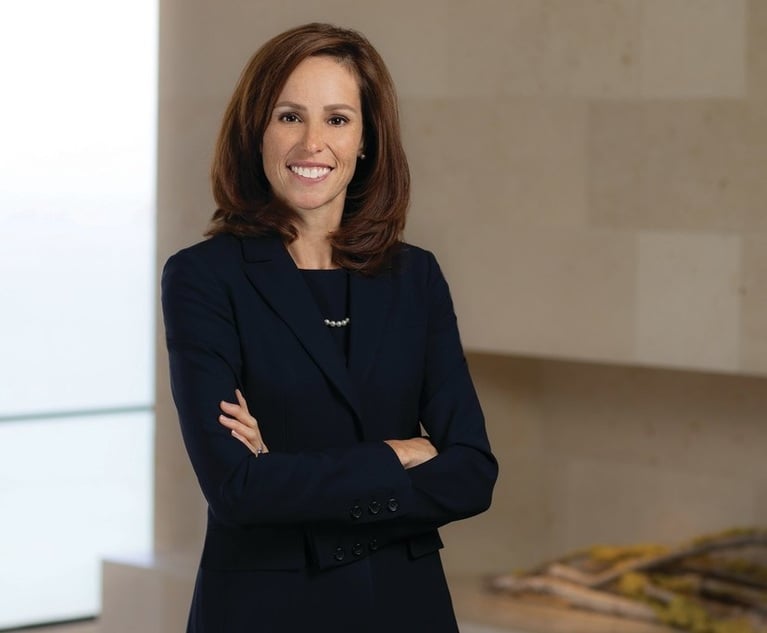
Former Pennsylvania Sen. Vincent J. Fumo
After a five-month trial that was riddled with unusual twists, a federal jury on Monday convicted former Pennsylvania state Sen. Vincent Fumo on all 137 counts, delivering a sweeping victory to the federal prosecutors who accused Fumo of abusing his power to fund a lavish lifestyle on the tabs of taxpayers and a charity he created and controlled.
The jury of 10 women and two men also convicted Fumo of orchestrating a massive cover-up scheme in which he instructed key staff members to systematically erase thousands of e-mails to and from Fumo, using a sophisticated method designed to make it impossible for the FBI to retrieve them when the computers were seized.
Fumo's co-defendant, longtime aide Ruth Arnao, was also convicted on all charges -- 45 counts -- including conspiring with Fumo to embezzle funds from Citizens Alliance for Better Neighborhoods.
Prosecutors quickly moved to revoke Fumo's bail, saying they feared that he would now flee and that he has the resources to do so. But U.S. District Judge Ronald L. Buckwalter refused, saying, "I'm not going to revoke the bail just flat out as you've suggested." In a bail hearing Monday afternoon, Buckwalter increased Fumo's bail to $2 million and ordered that Fumo post the deeds to four properties as security.
But the judge refused to order Fumo to wear an anklet with an electronic monitor. Arnao's bail was also increased, to $500,000, and she was required to post the deed to her home.
Assistant U.S. Attorney John Pease had argued that Fumo is a flight risk because he has access to large amounts of cash and is facing a significant prison term.
The verdict came on the heels of yet another bizarre twist in the case that, for a few hours at least, seemed to threaten the possibility of a mistrial.
Proceedings on Monday morning began with a closed-door hearing on the issue of whether one of the jurors had engaged in misconduct by discussing the case on his Facebook page and via Twitter.
The juror, Eric Wuest, strongly hinted in a Facebook posting on Friday that the jury had reached a verdict, saying: "Stay tuned for a big announcement on Monday everyone!" That posting prompted an emergency motion by Fumo's lawyers, who demanded that Wuest be individually voir dired to determine whether he had violated Buckwalter's instructions by discussing the case outside of court. The defense team argued in court papers that if it were found that Wuest had engaged in misconduct, he should either be removed from the jury and replaced by an alternate, or that Buckwalter should declare a mistrial.
Buckwalter held a 75-minute hearing in chambers that included a 30-minute grilling of Wuest. In the end, Buckwalter concluded that Wuest was credible and that he had not engaged in conversations with any others about the case.
For court watchers, the chatty juror was just another in a string of strange events in the Fumo case.
A key prosecution witness, Leonard Luchko, was set to testify that he had assisted Fumo in a scheme to obstruct justice, but prosecutors changed their minds at the eleventh hour, saying they had discovered that Luchko was secretly posting comments on blogs that criticized the government and had been e-mailing extensively with the defense.
The trial had also gotten off to the rockiest of starts when U.S. District Judge William H. Yohn Jr. became seriously ill during jury selection in September and was forced to step down from the case.
Nearly a year before, in late 2007, Yohn held extensive hearings on a motion by prosecutors demanding that Fumo's lawyers at Sprague & Sprague be disqualified.
Yohn denied the motion and allowed attorneys Richard A. Sprague, Geoffrey Johnson and Mark Sheppard to continue on the case, finding that although they suffered from conflicts of interest, all of the conflicts were "waivable" and that it was up to Fumo to decide.
In perhaps the first bizarre twist in the case, Fumo soon after dropped Sprague & Sprague, saying an outside lawyer had advised him not to waive the conflict.
Fumo's new lawyer, Dennis Cogan, soon after declared that Fumo would be relying on an "advice of counsel" defense in which Fumo would argue that any destruction of evidence committed by him or his staff at his behest was the result of flawed advice given to him by Richard Sprague and Robert Scandone.
In another strange twist, Sprague and Scandone were called as witnesses at the trial, but not by Fumo. Instead, both lawyers were called by the prosecution as rebuttal witnesses to contradict Fumo's claim that he had relied on their advice. U.S. Attorney Laurie Magid called the verdict a "victory for good government" and a rejection of Fumo's claim that he was simply behaving like many other senators.
"'Everyone is doing this' is not a defense," Magid said.
Magid said Fumo now faces a "very significant" prison term that she anticipates will be "well in excess of 10 years." Cogan vowed to file post-trial motions and an appeal and said, "This is not over." Without discussing any specifics, Cogan said he believed he has "significant" issues to raise in seeking a new trial.
The jurors assembled in a courtroom on a different floor to answer questions from news reporters.
"We really looked for reasonable doubt," one juror said. Another juror interjected that each charge was tied to specific documents that were introduced as exhibits in the trial and that the jury simply considered each charge separately.
Several jurors commented that Fumo's personal life ‹ including his divorces and his estrangement from his daughter ‹ was a "sad" fact in the case, but had no bearing on their decision.
The jurors also said they had flatly rejected Fumo's argument that his conduct was no worse than other senators', and that the prosecutors had failed to call a single senator as a witness.
Instead, they said, the prosecutors had proven that Fumo broke the rules, and Fumo himself had a duty to call senators as witnesses if he was relying on the defense that such rule breaking was standard practice in the Senate.
When asked for their response to Fumo's testimony, one juror focused on Fumo's remark that he had no legal duties as a senator other than to cast his votes.
"How dare he?" juror Kimm Guckin said.
Gov. Edward G. Rendell was an impressive witness, several jurors said, but not because of the testimony he gave under direct examination by Cogan about Fumo's reputation for hard work.
Instead, the jurors said, it was Rendell's testimony under cross examination by Pease when the governor said that "rules are rules" and they apply to everyone.


Reader Comments