Font Size:
![]()
Fewer Loans Available for Bar Prep
The Recorder
February 17, 2009
As bar prep loan season begins, financial aid officials at Hastings College of the Law are looking into why a growing number of students have been turned down in the past few months.
Many freshly minted J.D.'s borrow from private lenders to cover the cost of courses and associated living expenses in the months leading up to the bar exam. Because federally backed loans cover only a portion of other costs related to the exam, students have historically relied on private loans to tide them over until they start their first job.
But troubles in the global financial markets have not spared private lenders, and funds have been drying up, financial aid officials say. A number of schools have signed on to a proposed solution by an East Coast nonprofit that wants to temporarily make federal money available to students for more of their expenses.
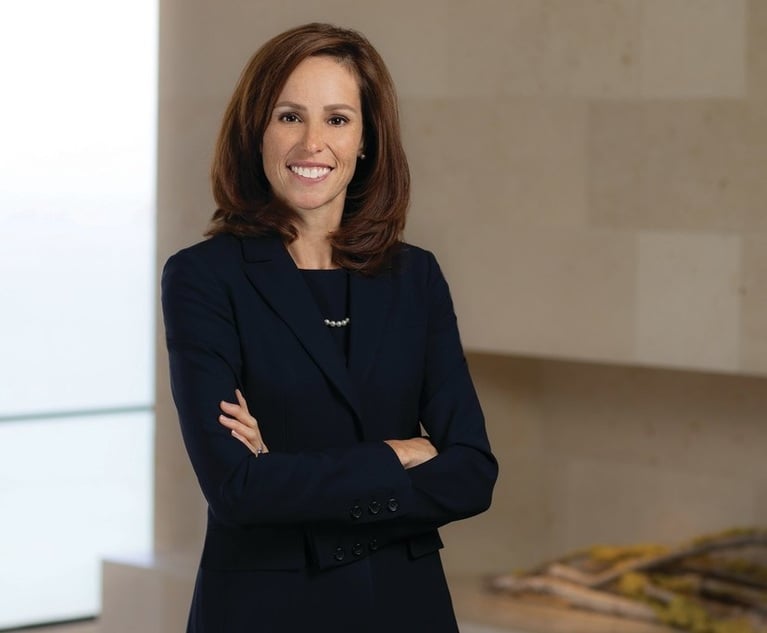
Linda Bisesi, Hastings' director of financial aid, said that a larger number of students than usual have been denied private loans since December. "It's not a big percentage of the graduating class, but it was enough to catch my eye," said Bisesi, who declined to make specific numbers public. It's a cause for concern, she said, because it's unclear whether the problem, if any, lies in the students' applications or with the lenders. Some students have been able to get money from a different lender after being denied by a first, she added. "We are addressing it because we know our students need these loans, and we can't wait until April or May to begin to find out if there is a problem."
Officials at other California law schools say it is too early to tell what effect the financial crisis will have on their spring graduating classes. Nancy Coolidge, coordinator for government relations in student financial support at the University of California Office of the President, said students at UC-Berkeley School of Law and UCLA School of Law are currently in the process of applying for their loans. "This is a potential problem, not a current problem," she said, adding: "Without question, private student loan capital for a variety of purposes, not just bar prep loans, is harder to get, as is all credit."
The number of private lenders has shrunk dramatically.
There are only four lenders with "law residency" loan products left, according to the Access Group, a Delaware nonprofit graduate loan provider that cited the numbers from the December 2008 issue of The Greentree Gazette. That higher-education trade magazine's fall 2007 issue had listed 19 such lenders.
Though no official figures are available, in recent years students have borrowed an estimated $350 million to $400 million per year for bar study nationwide, said Patricia Curry, Access Group's vice president of communications.
The costs associated with the bar exam are not insignificant. Coolidge said that registering with the bar costs $92, a background check is $431 and fingerprinting is $25. The application itself costs $529. To fill it out online costs an additional $119. Coolidge said those fees can be covered by federal loans because they are required for licensing and have to be paid while students are still enrolled in school.
Coolidge said that one vendor recently quoted a cost of about $3,550 for its bar prep courses, with a $250 deposit for a copy of course outlines. The biggest expense for most students is associated with the cost of living, she added, since many don't work for several months so they can study full time.
Gabriela De La Vega, director of financial aid at Golden Gate University School of Law, said that in October, the school was working with six or seven lenders offering bar loans. Now she works with four. Those lenders that are staying in the business have had to tighten credit criteria or charge more in fees, she said. "Some students are being denied or need a co-signer to get the loan," said De La Vega, though she added that the number of rejections hasn't reached unusual levels. "We don't know what's going to happen: Are they going to tighten it up more or pull out altogether?"
Financial aid administrators say that U.S. Bank, Citibank, Wells Fargo and Sallie Mae are still accepting applications for bar loans.
Access Group pulled the plug on bar prep loans last April. "We don't have the funding to be able to offer these loans, due to the market conditions," Curry said. But as a membership organization serving ABA-accredited law schools, Access Group has been leading a charge to help students gain access to federally guaranteed loans for more expenses tied to bar prep until financial markets correct.
So far, more than 75 law schools have signed on to the initiative to appeal to federal officials that Access Group is pushing. Among them are California's Chapman University School of Law, Loyola Law School, Southwestern Law School, University of Southern California Law School, University of San Diego School of Law and Thomas Jefferson School of Law.
Students have to get loans by April, before they leave school, Curry said.
Joe Pinkas, director of financial aid at University of the Pacific's McGeorge School of Law, said that he's not aware of any students having trouble getting private loans so far, but the tougher credit criteria and shrinking number of companies offering loans is a concern. Of course, there are also advantages to federally backed loans, he said, including fixed interest rates, better deferment options and eligibility for forgiveness programs.