Law.com
  • News
    • Newswire
    • Supreme Court
    • International
    • Legal Blog Watch
    • The Hot Seat
    • Video
  • Publications
    • The American Lawyer
    • Corporate Counsel
    • Law Technology News
    • The National Law Journal
    • New York Law Journal
    • New Jersey Law Journal
    • Connecticut Law Tribune
    • The Legal Intelligencer (PA)
    • Daily Business Review (FL)
    • Delaware Law Weekly
    • Daily Report (GA)
    • The Recorder (CA)
    • Texas Lawyer
    • Publication E-Alerts
    • More Publication Sites
  • Legal Research & Directories
    • Books Online
    • Smart Litigator
    • ALM Experts
    • Verdict Search
    • Court Reporters
    • Legal Dictionary
    • LegalTech® Directory
    • Newsletters
    • More Directories
  • Surveys, Lists & Rankings
    • Amlaw 100
    • NLJ 250
    • Global 100
    • The A-List
    • ALM Legal Intelligence
    • Surveys
    • Top Rated Lawyers
    • More Lists & Rankings
  • Special Reports
  • lawjobs.com
  • LawCatalog Store
  • CLE & Events
    • CLE Center
    • ALM Events
    • LegalTech
    • Virtual LegalTech
    • Insight Legal Events
    • Webinars
Home
 
Article
Twitter LinkedIn RSS
Sign Up for Newsletters

Law.com Home > 2nd Circuit Questions Prosecutor's Obesity Explanation for Striking Juror

Font Size: increase font decrease font

2nd Circuit Questions Prosecutor's Obesity Explanation for Striking Juror

By Mark Hamblett All Articles 

New York Law Journal

January 14, 2009

  •    
  •    
  •    
  •      
 

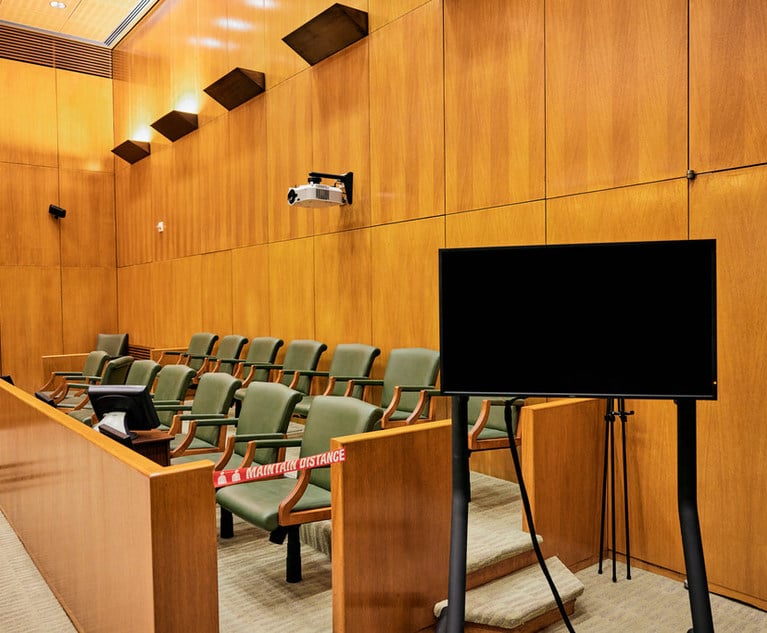
A federal appeals court has ordered another look at a prosecutor's explanation for striking a black woman from a jury -- that she was obese.

Seth Dolphy is challenging his convictions on drug and weapons charges, saying they should be vacated because the prosecutor was using obesity as a pretext to discriminate against the only black on the jury.

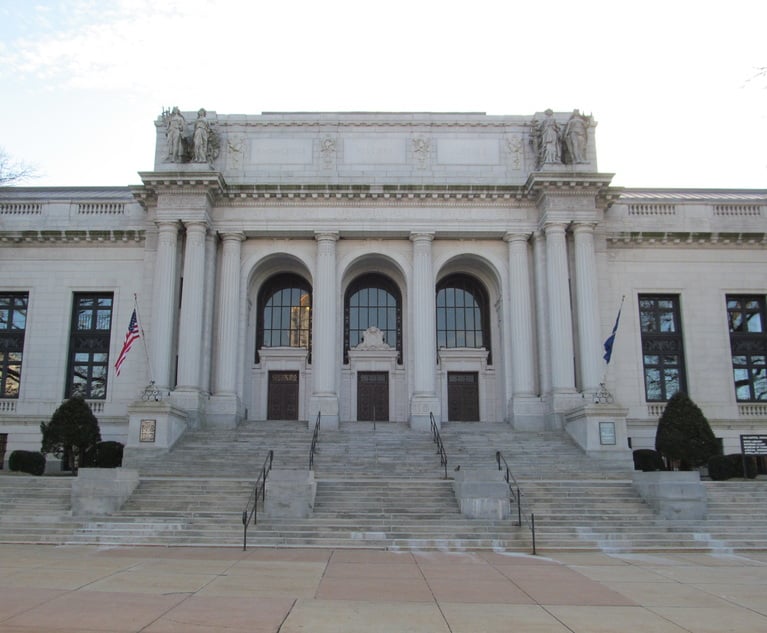
The 2nd U.S. Circuit Court of Appeals, in a ruling by Judge Dennis Jacobs, has remanded the case, Dolphy v. Mantello (pdf), 03-2738-pr, to give a lower court the chance to hold a hearing to reconstruct what happened at Dolphy's 1997 trial in state court in Binghamton.

The prosecutor, then-Broome County Assistant District Attorney Michael A. Korchak, was in the middle of jury selection with County Court Judge Martin E. Smith and defense counsel William Maney when he challenged the black juror.

The defense immediately objected to the challenge as based on race in violation of Batson v. Kentucky, 476 U.S. 79 (1986). Judge Smith said the burden now was on Korchak to advance a race-neutral explanation for the peremptory challenge.

Korchak said he struck the juror for her "appearance."

"I do not select overweight people on the jury panel for reasons that, based on my reading and past experience, that heavy-set people tend to be very sympathetic toward any defendant," he said.

Judge Smith said he was satisfied the prosecutor had offered a valid race-neutral explanation and ruled that the strike could stand.

At the end of jury selection, the defense moved for a mistrial on the grounds that two of the jurors who had been selected for the panel and seated were overweight.

Smith said that "overweight is a subjective term," and he noted that while both he and defense counsel were "a little overweight," the challenged juror was "grossly overweight." He denied the motion.

Dolphy was later sentenced to serve 14 1/2 years to 16 years in prison.

The Appellate Division, 3rd Department, rejected his appeal in People v. Dolphy, 257 A.D. 681 (1999), saying Dolphy had offered nothing more that a "bald contention that the explanation was pretextual."

When the New York Court of Appeals denied leave to appeal, Dolphy filed a pro se petition for a writ of habeas corpus in the Northern District.

Magistrate Judge Gustave Di Bianco recommended Judge Lawrence Kahn find that the trial court misapplied Batson, but Judge Kahn denied the petition, holding that U.S. Supreme Court and 2nd Circuit precedent did not require an explicit credibility determination for the prosecutor's explanation under Batson.

Dolphy had assigned counsel for his appeal to the 2nd Circuit, Robert Culp of Garrison. The appeal was heard by Judges Dennis Jacobs and Peter Hall and, sitting by designation, Western District Judge Richard Arcara.

Jacobs wrote for the court in discussing the three stages of a Batson analysis: a prima facie showing of "purposeful discrimination," an offer of a race-neutral explanation and, finally, a determination by the court of whether the defendant had established a discriminatory motive.

Judge Jacobs said the court was vacating Judge Kahn's order because "the record does not show whether the trial court made an ultimate determination on the issue of discriminatory intent."

"While the prosecution's proffered explanation was facially race-neutral, it rested precariously on an intuited correlation between body fat and sympathy for persons accused of crimes (seemingly without regard to the weight of the defendant,)" Jacobs said. "Yet the trial court's initial ruling was made without inquiry or finding, as though the ground for making the strike was self-evident: 'Very well. Strike will stand.'

"And when defense counsel immediately renewed his objection, the judge's words seemed to assume that a race-neutral explanation (Batson step two) was decisive and sufficient."

Justice Martin had said, "I'm satisfied that is a neutral explanation, so the strike stands."

But Jacobs said "such a conclusory statement does not necessarily indicate -- even by inference -- that the trial court credited the prosecution's explanation, especially since (i) the judge's words suggested that the proffer of a race-neutral explanation was itself enough, and (ii) the explanation given here lends itself to pretext. (Which side is favored by skinny jurors?)"

On remand, the district court has the option of holding a reconstruction hearing or, "if the passage of time has made such a determination impossible or unsatisfactory, the district court may grant the writ contingent on the state granting Dolphy a new trial."

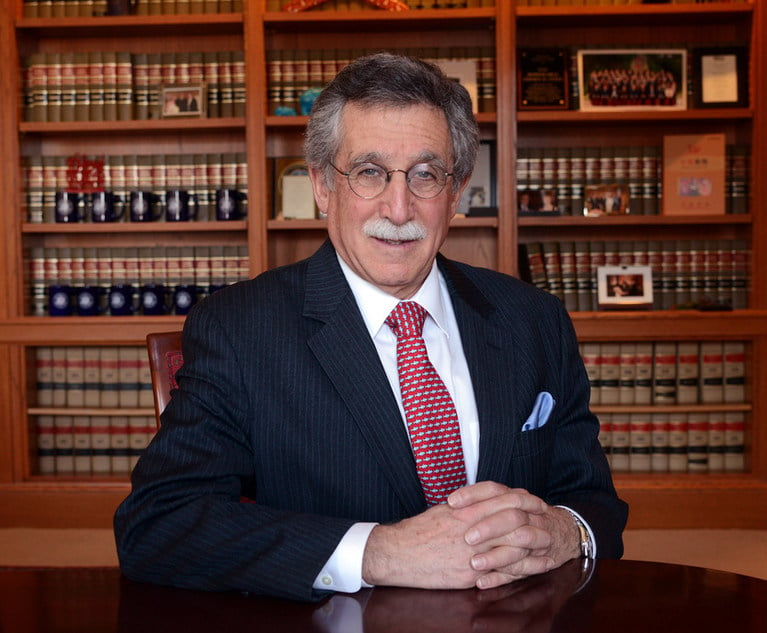
Culp said he was pleased his client has a chance to challenge his conviction.

"I hope this decision moves us forward toward the goal of judging people as individuals rather than through assumptions or stereotypes based on appearances," said Culp.

Assistant Attorney General Lisa E. Fleischmann represented the state.

A spokeswoman for the Broome County district attorney said the office is reviewing the decision and declined further comment.


Subscribe to New York Law Journal

Find similar content

Companies, agencies mentioned

    
  • U.S. Circuit Court of Appeals
  • Appellate Division
  • New York Court of Appeals
  • U.S. Supreme Court

Most viewed stories

    
  1. Proskauer, Former CFO Settle Bias Suit
    •      
  2. Largest State Poised to Require Practical Skills Training
    •      
  3. Lawyer Vanishes Leaving N.J. Firm With A Broken Settlement
    •      
  4. The 2013 Am Law 100
    •      
  5. Judge Strikes Law Banning Demonstrations at Supreme Court
    •      
lawjobs.com

TOP JOBS

MORE JOBS

POST A JOB

From the Law.com Network

In-House Counsel Go to Privacy Boot Camp

In-House Changes at News Corp Ahead of Corporate Split

Proskauer, Former CFO Settle Bias Suit

Global Firms Cope With Istanbul Unrest

D.C. Circuit Nominations a Defining Moment

D.C. Circuit Nominees Widely Respected Within the Bar

Nine Tips to Avoid Starring in a Spreadsheet Horror Story

Snapshot: Tom Gelbmann

The Recorder 25: California Golden Again for Many Firms
  •      
    • Subscription Required

Capital Accounts: Judicial Branch's Brothers Don't See Eye to Eye
  •      
    • Subscription Required

Miami Photographer Sues Pop Star Justin Bieber
  •      
    • Subscription Required

Jeremy Alters Settles With Argentinian Firm For $1 Million
  •      
    • Subscription Required

Alcotest Should Be Discontinued Right Away, DWI Lawyers Say

Lawyer's Fudging of HUD Forms Draws Supreme Court Censure
  •      
    • Subscription Required

The Affordable State-Specific Practice Solution
Available in NY, NJ, PA and CT editions - research, draft and prepare even the most complex cases with ease.

Restaurant in Union Square Park Ruled Permissible
  •      
    • Subscription Required

Magistrate Judge Finds Few Benefits to Class in Settlement
  •      
    • Subscription Required

Third Circuit Could See Rise in Pay-for-Delay Litigation

Cozen Debt Forgiveness Is Campaign Contribution, Court Says
  •      
    • Subscription Required

Sorry, Charlie, Your Wife Won't Support You

Top Reasons to Take Your Husband's Name

Interim Dean Named at Texas Wesleyan University School of Law
  •      
    • Subscription Required

Water Works: H2O Kept Lawyer-Lobbyists Busy
  •      
    • Subscription Required

Boosting Lawyers And Saving Lives
  •      
    • Subscription Required

11th Circuit Conflicted On Juveniles Stance
  •      
    • Subscription Required

Chimp Attack Victim Is Denied $150M State Lawsuit

Auto Body Case May Lead To CUTPA Reassessment

  • About |
  • ALM Properties |
  • ALM Reprints |
  • Customer Support |
  • Privacy Policy (updated 6/14/13) |
  • Terms & Conditions |
  • ALM User License Agreement
ALM Media