Princeton University will pay $90 million to settle a claim that it misused a multimillion-dollar gift received in 1961 from the heirs to the A&P Supermarket fortune.
By settling, the university avoids a costly trial and the risk of losing hundreds of millions of dollars the gift is now worth.
The suit, Robertson v. Princeton University, C-99-02, was lodged by children of the creators of the Robertson Foundation, founded to prepare students at Princeton's Woodrow Wilson School of Public and International Affairs for government careers. The plaintiffs claimed Princeton had fraudulently diverted the proceeds from the original purpose.
Instead of going to trial as scheduled on Jan. 20, Princeton agreed on Wednesday to pay $50 million plus interest over a seven-year period to a new foundation, separate from Princeton, aimed at fulfilling the original purpose of the gift. The school also will pay $40 million to cover the plaintiffs' legal costs in the case.
In return, the Robertson Foundation, which the university controlled, will be dissolved and all the assets, minus $40 million for the school's own defense costs, will become a section of the university's general endowment.
Princeton, which has insisted all along that spending has conformed to the original intent of the donation and says that will continue, will have unfettered power to decide what that intent was.
U.S. universities, whose endowments totaled more than $400 billion before the market plunge, have watched the case closely because it raises a crucial question: How strictly must universities adhere to donors' wishes about how contributions should be managed and spent?
A lawyer for the disgruntled children, Seth Lapidow of Blank Rome in Princeton, says "this case highlighted and made people realize that donor restrictions are more than just words and the recipients of restricted gifts can be held accountable."
Another issue was who could engineer a better return on the foundation's assets: its own board, an outside money manager selected by the board or Princeton's own investment management operation?
The endowment was worth $900 million in June when Princeton made its fiscal-year-end report, but the university declined to say what the market plunge had done to the value, citing a policy of reporting endowment figures only once a year.
The $40 million in defense costs made the case the most expensive litigation in Princeton's 262-year history and university president Shirley Tilghman says the likelihood of bills for $20 million more for the impending trial made a settlement attractive.
Douglas Eakeley of Roseland's Lowenstein Sandler was lead trial counsel and lawyers at Simpson, Thacher & Bartlett in New York were co-counsel.
The university says it produced more than half a million pages of documents in pretrial discovery. The trial witness list had 124 names, 80 witnesses had been deposed, 3,000 pages of briefs were required and 5,000 trial exhibits were identified.
"Under the circumstances we concluded that there was little financial difference between settling the case on the terms to which we have agreed and the likely financial costs of going to trial, especially considering the agreed-upon payments are spread out over 10 years," Tilghman said in an e-mail to the university community.
"It is tragic that this lawsuit required the expenditure of tens of millions of dollars in legal fees that could have and should have been spent on educational and charitable purposes," she said.
The Robertson children, meanwhile, have been funding the litigation with money from the Banbury Fund, a foundation they control.
Under the settlement, Princeton will reimburse Banbury $40 million over three years starting in 2009.
The $50 million to the Robertson's new foundation will be paid from 2012 to 2019, and the plaintiffs estimated the interest over that time will be an additional $10 million.
The suit charged that Charles and Marie Robertson, heirs to the Great Atlantic & Pacific Tea Co. fortune, created the Robertson Foundation to be part of the Woodrow Wilson School and decreed the money should be used to prepare students for federal government jobs, especially in foreign affairs. The suit said, however, that few students have taken such jobs and that the school used the money for other needs.
The school countered that the plaintiff's interpretation of the conditions was too narrow and that the money was intended to support graduate education in general.
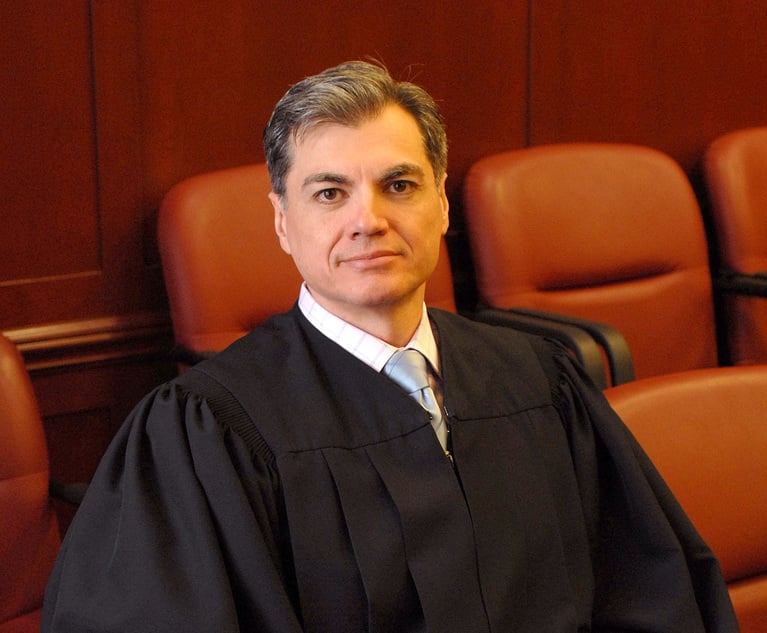
That dispute would have been the central issue at the bench trial scheduled before recalled Superior Court Judge John Fratto. Theoretically, Princeton could have lost the entire Robertson Foundation and its wealth, but pretrial rulings said that result could occur only under "the most egregious and nefarious of circumstances."
Plaintiffs lawyer Lapidow says getting the entire endowment was a possibility, but he adds, "Was it a likely outcome? No. Was it a possible outcome? Yes. Was it a probable outcome? We'll never know."
"What we are absolutely convinced of is that we would have prevailed at trial to the point where many hundreds of millions of dollars would have been returned to the Robertson Foundation," says Lapidow, who along with partner Stephen Orlofsky was co-counsel with Ronald Malone of San Francisco's Shartsis Friese.
Fratto ruled in October that the trial would concentrate in its early stages on the question of whether Princeton had followed the Robertson Foundation's original mandate, and had done so after the litigation was filed.
The plaintiff had sought to have testimony on liability and damages -- how much the school allegedly diverted from the original purpose -- to run concurrently.
Even so, Lapidow says it was the imminence of the trial, not any particular rulings, that brought the parties together. "The spectre of an actual trial date with an actual judge ready, willing and able to try it helped the parties get closer."
Lead plaintiff William Robertson issued a statement, saying the new foundation "will carry out my parents' dream of helping our country by preparing America's best and brightest students for government careers with an emphasis on federal jobs in international relations and affairs."
"As international events have shown time and time again during the nearly five decades since my parents donated the funds to establish the Robertson Foundation," he said, "our country has a constant need for talented and motivated individuals who want to serve and lead their country. The funds that this settlement provides will give us the opportunity to help fulfill this need."
Robertson's characterization of the settlement as a recovery of "nearly" 20 percent of the foundation's assets was based on interesting math. He set the value of the deal -- $100 million in payments and interest -- next to what he estimated to be the current value of the fund: $600 million.
While the university won't divulge the exact value of the foundation, spokeswoman Cass Cliatt says it is "substantially more" than $600 million.