Carlos Ortiz, former president of the Hispanic National Bar Association
Photo: Carmen Natale
For eight years of Clinton, then eight years of Bush, Carlos Ortiz has waited. With the election of Obama, Ortiz hopes -- trusts -- he will have to wait no more to see his dream realized: the first Hispanic Supreme Court justice.
"What more unifying appointment could there be than a Hispanic justice?" asks Ortiz, who began his campaign in 1987 as a board member, then as president, of the Hispanic National Bar Association and later as chair of the Puerto Rican Legal Defense and Education Fund. "It's not just the right thing to do, but we deserve it. I can't imagine that the next appointment will go to someone other than a Hispanic."
Encouraged by President-elect Barack Obama's talk of inclusiveness, and emboldened by the importance of the Hispanic vote to Obama's victory -- two-thirds of Hispanics voted for him -- Hispanic groups are cautiously hopeful that finally the time has come for a justice with a Latino background.
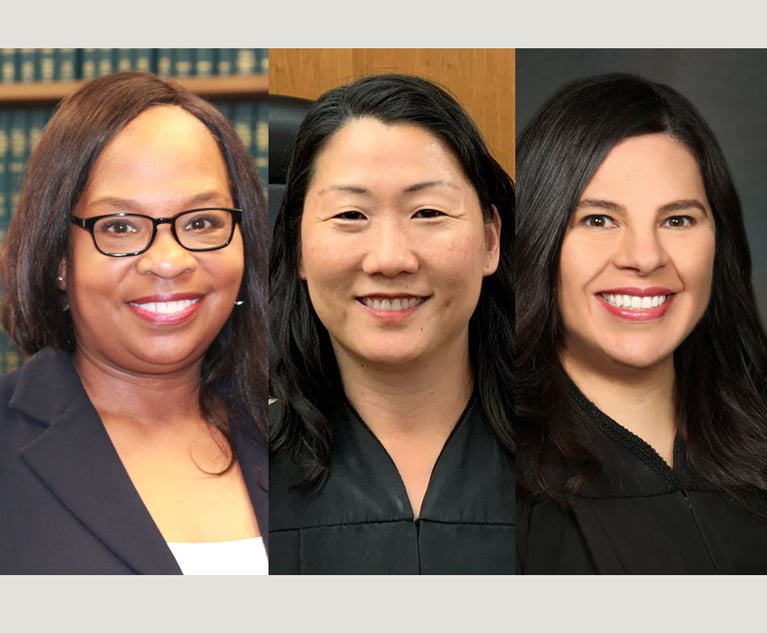
Almost every list of possible Obama nominees to the high court includes Hispanics -- most notably Judge Sonia Sotomayor of the 2nd U.S. Circuit Court of Appeals. But others who are mentioned include: Judge Kim Wardlaw of the 9th Circuit (her mother was Mexican), U.S. District Judge Ruben Castillo of Chicago, California Supreme Court Justice Carlos Moreno, and even two Democratic U.S. senators -- Ken Salazar of Colorado and Robert Menendez of New Jersey.
But Ortiz and other Hispanic legal leaders are reluctant to name names themselves, not wanting to spoil their chances and also, seemingly, bracing themselves for disappointment yet again. They know that unpredictable variables of timing and politics can turn a sure-bet candidate -- or ethnic group -- into an also-ran overnight.
President Bill Clinton was lobbied hard to name a Hispanic, and President George W. Bush's early list of possible candidates was heavy with Hispanic names, many from his Texas days. Ortiz met with then-Attorney General Alberto Gonzales to press the issue, but Gonzales' assurances turned out to be "lip service," as Ortiz puts it now. When the vacancies finally arose, other factors, both political and ideological, took precedence over naming a Hispanic to the high court.
"It was a lack of will, a lack of commitment," says current HNBA president Ramona Romero. "It was not because of the absence of qualified candidates."
This time, she says, "there is an enormous sense of urgency" behind making sure the opportunity is not lost during a Barack Obama presidency. She is assembling a committee, including Ortiz, to contact and vet possible candidates for a Supreme Court nomination, so that "we will be ready."
On Nov. 14, Romero wrote a letter to Obama urging him to "make history yet again" by nominating a Hispanic justice, thereby erasing the "unfortunate message" conveyed by a Supreme Court with no Hispanic members. "The presence of a Latino or Latina at the conference table could add a needed 'special voice' to the Supreme Court's deliberations and decisions -- a voice that can speak about the law as it affects U.S. Hispanics with the authority that only firsthand knowledge can provide."
John Trasvina, president and general counsel of the Mexican American Legal Defense and Educational Fund, also has high hopes. "We will have a president who understands the Latino community," says Trasviña, who notes that in 1995 Obama, then an associate in Judson Miner's Chicago law firm, worked with MALDEF on a voter registration case.
Add to that the growing number and stature of Hispanic lawyers, says Trasvina, and it will be hard to explain not appointing a Latino justice at some point. "We've got a deeper talent pool than ever before," he says.
But these leaders also point out that their goals reach beyond naming a justice with a Hispanic name or heritage. "Being Hispanic doesn't always mean that you are grounded in the culture," says Romero. Evidence of some connection with the Hispanic community, and an understanding of its culture and concerns, will be important in assessing candidates, says Romero.
Trasvina agrees. "Beyond the symbolism, there are cases where it really matters" to have a Latino perspective. For that reason he is hoping Obama will name Hispanics to appeals courts as well as the Supreme Court. Appeals courts decide a lot of immigration cases, and they also serve as training grounds for the high court. Justices David Souter and Clarence Thomas, he notes, were named to the high court after brief stints on courts of appeals.
MALDEF also hopes Obama will embrace a broader Hispanic agenda that includes jobs, health care, and civil rights. "We have evolved from focusing just on a Latino justice to focusing on justice for Latinos." Trasvina adds, "Clearly we can have both."