They are the rock stars of election law, particularly in a presidential election year. Newspaper reporters, television newscasters and radio personalities seek their input on everything from whether Ben & Jerry's legally can give free ice cream scoops to citizens who vote on Nov. 4, to whether there will be a provisional or absentee ballot meltdown on election day.
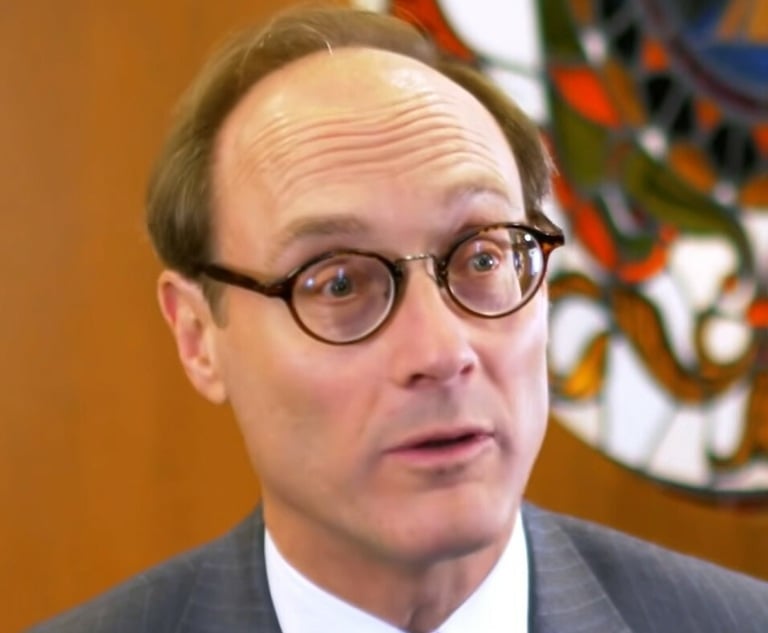
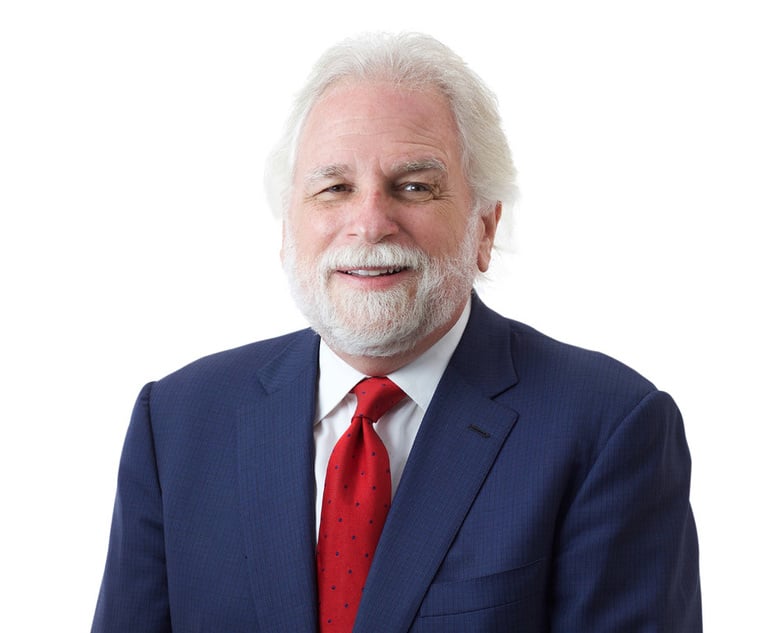
Life has gone from crazy to crazed just days before election day for Rick Hasen of Loyola Law School, Los Angeles, the author of the go-to blog for election law news -- Election Law Blog -- and for Ned Foley of Ohio State University Michael E. Moritz College of Law, the director of the equally crucial Election Law @ Moritz.
The NLJ caught up with Hasen in between virtually nonstop blogging except for teaching and seeing his family, and with Foley after he rushed to a class that, he admitted, he was "less prepared for than I would like to be."
NLJ: What has this election season been like for you personally?
Foley: It feels a little bit like being a tax attorney around April 15. It has been crazy, but on the other hand, our infrastructure here is considerably stronger than it was in 2004 when we created the Election @ Moritz team. We have all the same professors on our team today as in 2004, and because of the success of our program, we've been able, through foundation grants and university support, to hire some very capable lawyers who have helped with Web site research as well as our library. So in some sense, we're more efficient and more productive than we were.
But we reminded ourselves that we needed to rest up this past weekend.
Hasen: It usually peaks around a month before a national election. This time I can't remember ever being this busy except post-election 2000 when we were in the Florida presidential meltdown.
I've been getting up at 5:30 a.m. and often blogging until 11 at night. Besides my teaching responsibilities, it has been pretty much full time. I did 600 blog posts in the month of October. There also have been newspaper and television interviews. All of the major newspapers care about election litigation now, even the Guardian in England. The Guardian called me a "crotchety spoilsport" when I wrote that Ben & Jerry's plan to offer free ice cream to people who could show they voted could violate the federal law against compensating someone for his vote. Ben & Jerry decided to offer free ice cream to everyone on Election Day. I'm now responsible for thousands of children and others getting free scoops on Nov. 4.
NLJ: Is there more election litigation this year than four years ago or are we just more aware of it because of past, high-profile problems?
Foley: We had a lot of litigation in 2004. Most of us feel it is better to litigate before the ballots are cast than after. It feels like there's more litigation this year than in 2004. The reason is it has spread through more states, and that's a function of there being more states perceived as potential battleground states. And the more lawyers that do this litigation, the more they become experienced. The infrastructure to fight is wider and deeper and more experienced than it was four years ago.
Hasen: We basically see a dysfunctional cycle of panic stories from the press. Why haven't things gotten better? I try to interest the press in off-year elections about the problems, but it doesn't register. It's too far off. I wrote some of my 'Chicken Little' warnings in 2005 and 2006. I do think we may be reaching a critical mass of public concern about the administration of our elections. Maybe the next president will be able to get some improvements to the [federal] Help America Vote Act [HAVA] by the next time.
I think both Obama and McCain have an interest in this. Optimistic is too strong a word, but I'm not as hopeless as I usually am.
NLJ: Whatever happened to much-talked-about election reform post-Bush v. Gore?
Foley: HAVA was the first attempt at improvement, and it was incomplete at the time but has come to be seen as even more incomplete in subsequent years. It has produced some of its own problems that were unintended. We do need something else. Congress decided not to have another reform before this year. There were proposals put before them after 2004, but the two parties have competing values of how to approach ballot access and ballot fraud. Ultimately, the compromise was not there.
Hasen: HAVA created a pot of money for the states' use if they were willing to update their voting systems. States rushed in to buy electronic voting systems. HAVA caused this gold rush, and now there's a tremendous amount of buyers' remorse, and some states are going back to paper ballots. It's not that the machines are unreliable, but they're not trusted. Voter registration and the database mismatch issue -- that's big. HAVA only requires a match; it doesn't say how the information can or must be used.
Foley: There's no question that the ambiguity in HAVA gives lawyers the opportunity to dispute. It was compromise legislation, passed in 2002, that papered over some differences and that has fostered litigation.
NLJ: If you were appointed "election czar" by the new president what key reforms would you put in place?
Foley: The most important thing is that we have nonpartisan institutions that implement the rules on the administrative level as well potentially on the judicial level.
We have a very bad situation now where we have elected secretaries of state handling the rules. The umpire shouldn't be a member of one of the two teams. It causes problems each and every time there is a hotly contested, statewide election.
We also should be sensitive to pre-election litigation as a distinct category from post-election. I like the model of the three-judge court that we experimented with recently in the McCain v. Obama hypothetical case, but you could imagine a nonpartisan dispute resolution mechanism that was centered in Congress and not an Article III entity.
Hasen: Universal voter registration conducted by the federal government; uniform national ballot for federal races; and nonpartisan election administration. I'd junk the Election Assistance Commission -- another mistake of HAVA -- and start over. The thing about universal voter registration is if Republicans really are concerned about registration fraud, that would be a natural. You take the parties out of the business and give it to the Bureau of Census -- it counts everybody anyway.
NLJ: Is there a possibility of another Bush v. Gore this year?
Foley: I don't believe we will have a repeat. What is most important, looking forward, is how ready our system of constitutional democracy is to handle the next Bush v. Gore, whenever it may come. It is unlikely to happen this year, for the simple reason that the odds are against it happening in any given year. But come again it will, at some point in the nation's future.
Hasen: No, because it's not going to be that close -- so we won't see a repeat of Florida.
It's become beyond trite to quote the election administrator's prayer: "Let not the election be close." The chances in any single presidential election that you will have a meltdown are quite small. But just like you need to take precautions against a nuclear meltdown, we need to take precautions to minimize the chances of post-election litigation and meltdown. I keep hoping we don't have to do this again in 2012 but I fully expect we will.
Font Size:
![]()
Law Bloggers Weigh In on Election Reform and a Possible 'Bush v. Gore II'
The National Law Journal
November 5, 2008