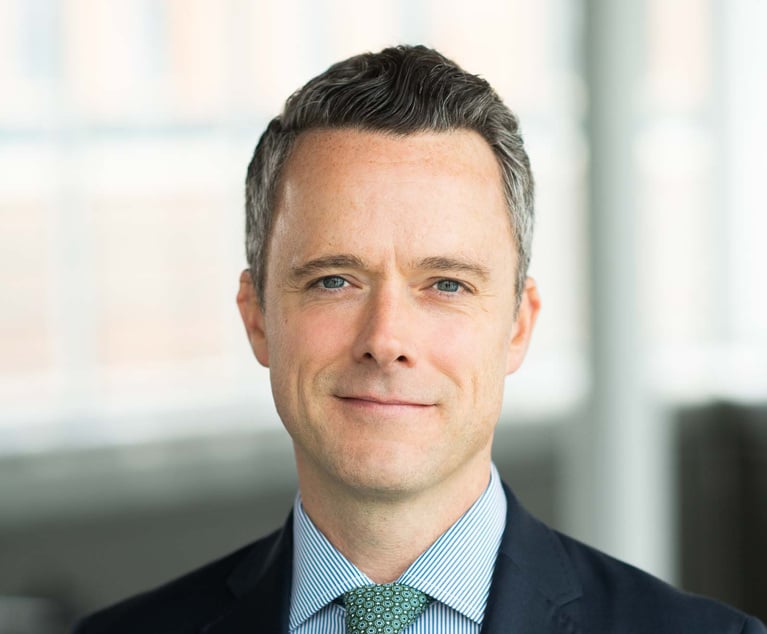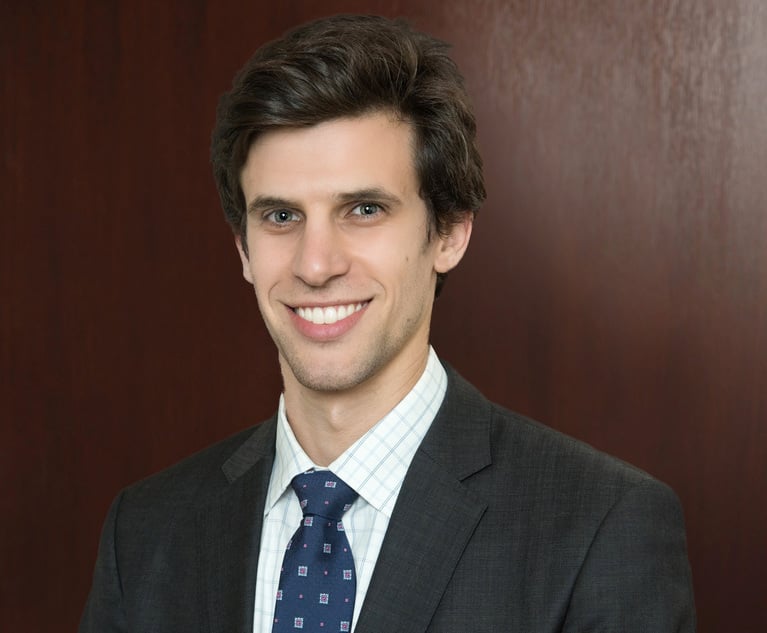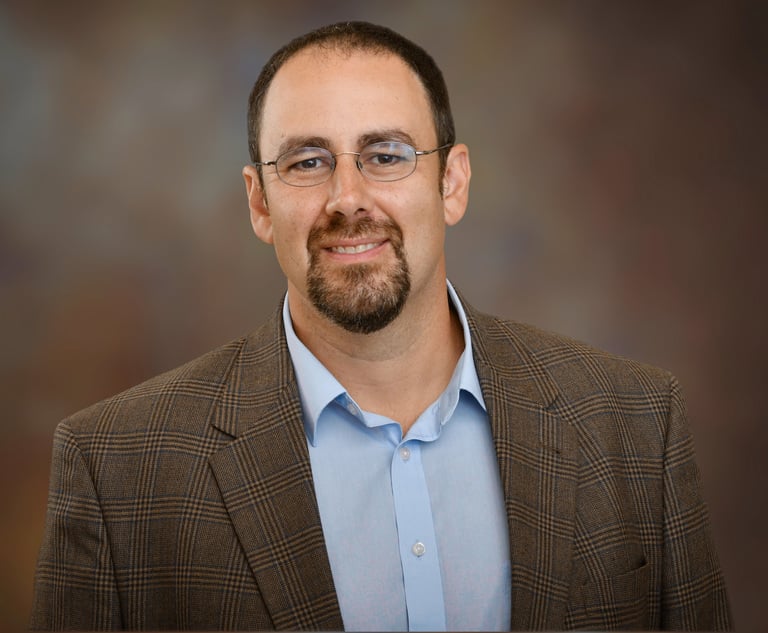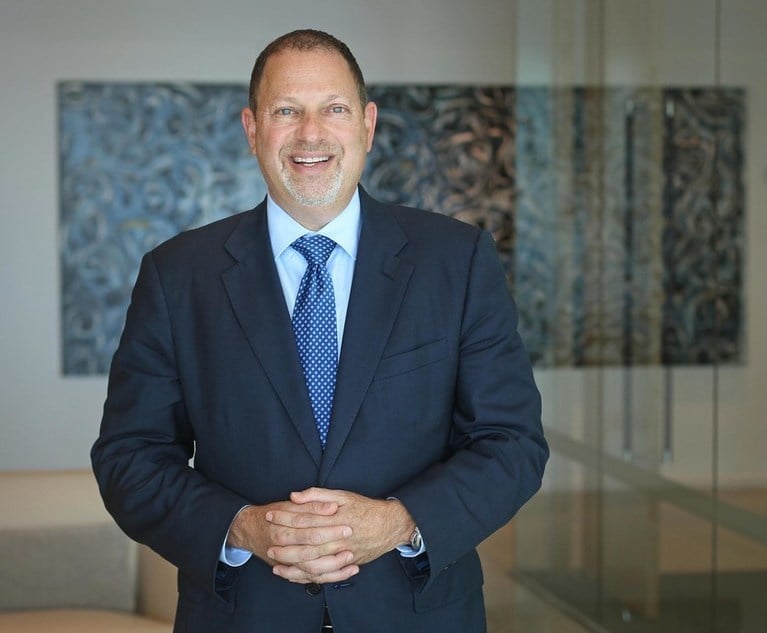
Plaintiffs seeking to derail Sen. John McCain's presidential bid by claiming that the decorated Vietnam War veteran is not a natural born U.S. citizen are being stymied in their quest by four Washington, D.C.-based Gibson, Dunn & Crutcher associates.
Aided by former U.S. Solicitor General and current Gibson Dunn partner Theodore Olson, the team of legal volunteers has spent the past several months representing McCain and the Republican National Committee in courtrooms throughout the country. (Campaign finance rules prohibit pro bono work for political campaigns, but lawyers are allowed to volunteer on their own time.) On Tuesday, a federal court in San Francisco decided the most recent suit in McCain's favor.
At issue is the fact that McCain was born at Coco Solo Naval Air Station in the Panama Canal Zone on Aug. 29, 1936. His father, an officer in the U.S. Navy, was stationed there at the time.
"The [cases] raise interesting legal questions about whether people who were born to military families overseas have a right to hold the highest office in the nation," says litigation associate Matthew McGill. "It always seemed to me a fringe view that people born to personnel on military bases outside the territorial U.S. could not be natural born citizens."
The first case to challenge McCain's presidential eligibility was filed in New Hampshire on March 14 by a pro se voter named Fred Hollander. The case was dismissed on the grounds that Hollander lacked standing, but not before Olson and a fellow constitutional scholar -- Harvard Law professor Laurence Tribe -- co-authored a memorandum that concluded McCain was indeed a U.S. citizen. Several other such cases were subsequently dismissed in various jurisdictions.
Then, over the summer, University of Arizona law professor Gabriel Chin wrote a law review article challenging Olson and Tribe's conclusions. Chin cited a 1934 federal law that explicitly gave citizenship to those born beyond U.S. boundaries and jurisdiction but whose parents were both U.S.-born.
Chin pointed to what he claimed was a relevant loophole: The Panama Canal Zone, while outside the limits of the territorial U.S., was certainly not beyond U.S. jurisdiction. Thus, he argued, McCain was not one of the natural born citizens the 1934 law sought to identify, even though McCain would qualify for citizenship if born just a few miles away in Panama proper. And, Chin argued, a subsequent law passed by Congress in an effort to clarify the 1934 statute could not be applied to McCain retroactively.
In the wake of Chin's article, Markham Robinson filed suit against McCain in U.S. district court in San Francisco on Aug. 11, seeking an injunction to keep McCain off the November ballot. Represented by Gregory Walston of San Francisco's Walston Cross, it was the first time that a nonvoter had brought a claim against the Arizona senator. (Robinson is a pledged elector of Alan Keyes, who is running for president as a candidate of America's Independent Party, of which Robinson is now chairman.) Robinson argued that McCain's presence on the ballot diminished his chance of becoming a member of the electoral college from California.
Northern District of California Judge William Alsup granted Robinson's request for an expedited schedule given the case's time sensitivity. At that point, McGill and fellow Gibson Dunn litigation associates Joshua Hess, Amir Tayrani and Aaron Lindstrom appeared before Alsup on behalf of McCain and the RNC. They argued that the Senate had voted 99 to 0 in April in favor of a resolution affirming McCain's citizenship and that Keyes himself did not support Robinson's suit. McGill also stated in oral arguments on Sept. 11 before Alsup -- Olson was not in court that day -- that Congress could decide on its own the merits of McCain's candidacy without the need for judicial intervention.
In a five-page order issued Tuesday, Alsup said it was "highly probable" that McCain was a natural born citizen, though he added that the citizenship question itself was a political one and not for the courts to decide. He also determined that Robinson's case lacked merit.
"[Judge Alsup's] order is interesting in that no court has ever said, even inferentially, what a natural born citizen is," says Walston, Robinson's lawyer. "I don't agree with the notion that you can be born somewhere else and retroactively be declared natural born, but I think it's important that the court come to some resolution as to what those words mean."
But Walston says the last two pages of Alsup's ruling trouble him.
"It essentially says that only candidates can challenge a presidential election after that process has concluded," Walston says. "Well, the process concludes when the electors are done casting their votes, and challenges to those votes are decided by Congress. But that's going to be weeks, if not days, before the actual inauguration. So as a practical matter, what that says is nobody can sue."
Robinson has not decided yet whether to pursue an appeal, Walston says.
For his part, McGill hopes Robinson's case marks the last of the McCain citizenship suits (there are no others pending).
"It's inconceivable to me that the framers of the Constitution could have intended to exclude a citizen from the office of president for no reason other than at the time of his birth, his parents were deployed overseas in the service of the nation," he says. "I mean, come on!"