Inequitable conduct -- those two little words that can cost patent owners big bucks.
And they will cost Medtronic nearly $170 million in damages that the medical device company and its legal team at McKool Smith won earlier this year in an infringement trial against Boston Scientific.
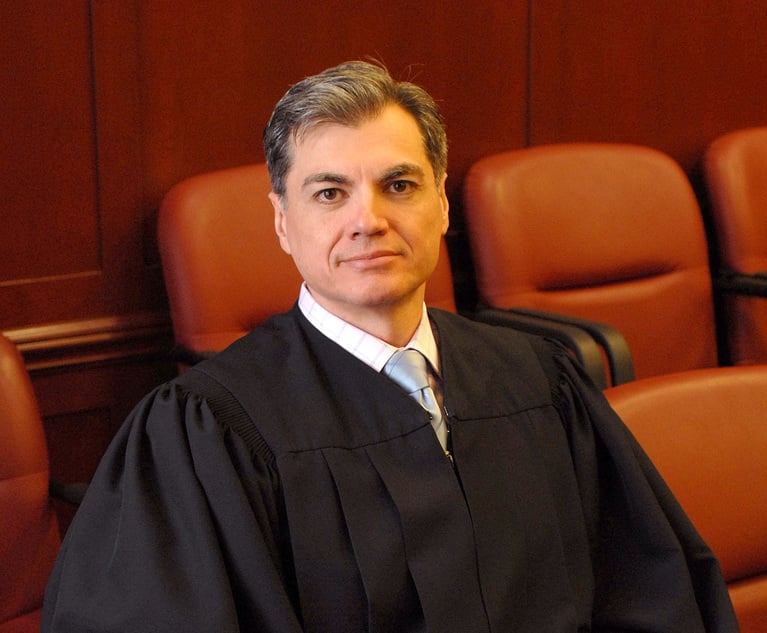
In a sometimes angry opinion, Judge T. John Ward found that a key Medtronic patent agent, James Crittenden, withheld relevant information from the U.S. Patent and Trademark Office when Medtronic sought two patents on catheters that could deliver drug-coated stents to cardiac patients. Among the omitted material was information on Medtronic's own prior inventions.
Crittenden, who is not a lawyer, suffered a seizure in 1999 and claimed during testimony that he has memory problems as a result.
A jury initially awarded Medtronic $250 million after finding that Boston Scientific infringed three stent-related patents. Boston Scientific's legal team at Howrey has since whittled that award down to a paltry $19 million, and plans to appeal the jury's finding of infringement. Edward Han and Matthew Wolf, two of the lead partners on Howrey's team, declined comment on the case and referred questions to a Boston Scientific spokesman. Partner John Nilsson was also on the team along with several associates.
McKool Smith's team was led by principals Sam Baxter, Kevin Burgess, Mark Mathie, Rosemary Snider and Theodore Stevenson III.
Medtronic released a statement saying it plans to appeal Ward's ruling. The company argued that the information Crittenden withheld was not relevant, and that Crittenden did not intentionally deceive the PTO. Judge Ward disagreed.
"Crittenden, at best, chose to remain deliberately ignorant as to the scope" of the prior inventions, Ward wrote.
As the Wall Street Journal notes, Boston Scientific and Medtronic are engaged in a death match over who will dominate the stent market. Boston Scientific alone is involved in at least 15 lawsuits, and Medtronic's new Endeavor stent, with quarterly sales of more than $80 million, is already being challenged in federal court in Delaware.
All of this comes amid increasing doubts about the effectiveness of stents, according to the WSJ Health Blog. A recent study found surgery worked better than stents for patients with especially dangerous artery blockages.