Two brothers facing 30 years to life under federal sentencing guidelines for their roles in a securities fraud scheme received five-year sentences Thursday.
In departing downward from the minimum recommended sentence by 25 years, Eastern District of New York Judge Frederic Block issued a 21-page opinion -- the longest sentencing memorandum of the senior judge's career -- highly critical of the guidelines' "fetish with absolute arithmetic."
"[W]e now have an advisory guidelines regime where, as reflected by this case, any officer or director of virtually any public corporation who has committed securities fraud will be confronted with a guidelines calculation either calling for or approaching lifetime imprisonment," Block wrote in People v. Parris, 05-CR-636.
"While I acknowledge that the Guidelines 'reflect Congress' judgment as to the appropriate national policy for such crimes,' ... this does not mean that the Sentencing Guidelines for white-collar crimes should be a black stain on common sense."
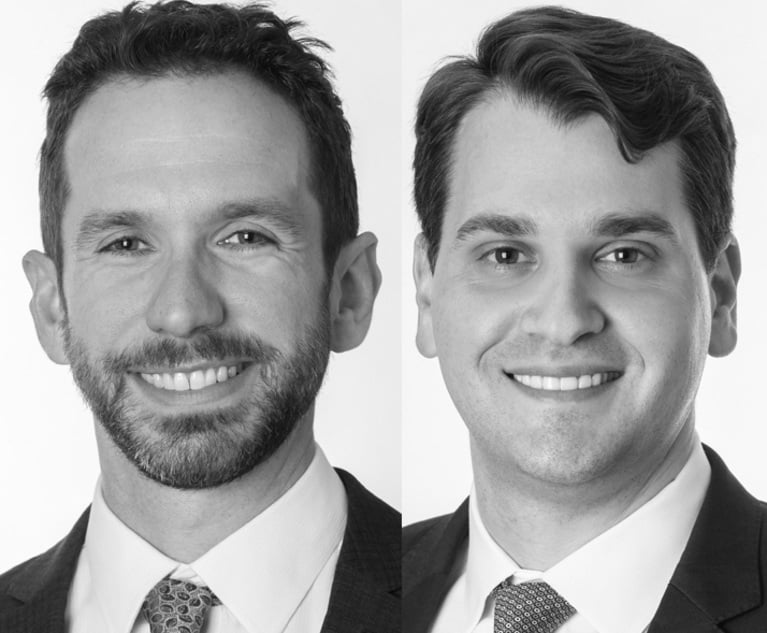
The defendants, Lennox Parris, 38, and Lester Parris, 35, served as co-directors of Queench Inc., a Jericho, N.Y.-based company whose primary projects included bottled water, also named Queench, marketed to minorities.
As Queench grew, the Parrises found themselves in the society and business pages for making sizable philanthropic contributions and hiring high-profile board members, including New York Jets running back Curtis Martin and modeling executive Bill Ford. The brothers also were executive producers of the 2000 film "Turn it Up."
The Parrises' fortunes turned in January 2005, when the Eastern District U.S. Attorney's Office charged them with running a scheme to inflate the value of the stock. The allegations centered on a series of press releases that misrepresented the company's success in landing distribution contracts with 7-Eleven, Time Warner and the U.S. military.
Queench's apparent good fortunes, as trumpeted in the releases, had led to an immediate run on its stock, which nearly doubled over the course of three press releases. The fraud resulted in either $2.56 million or $4.9 million in profits for the Parrises, a distinction the court later deemed academic.
The case went to trial in early 2007, creating tabloid headlines when actor Danny Glover made a surprise appearance in the courtroom audience late one afternoon. But in a short time, Glover stormed out of the courthouse, claiming he had been lured by the Parrises to 225 Cadman Plaza East, not knowing it was a federal courthouse, on the premise that the brothers wanted to discuss a movie project.
A jury found the brothers guilty of six counts of securities fraud, conspiracy to commit securities fraud, witness tampering and conspiracy to commit witness tampering.
The pre-sentence report assessed 42 points for each brother, based on such factors as the amount lost (more than $2.5 million), the number of victims (more than 250), the use of "sophisticated means" and the defendants' positions as directors of a publicly held company.
Under the guidelines -- now merely advisory since the U.S. Supreme Court's 2005 ruling in United States v. Booker -- the brothers faced 30 years to life.
Judge Block decided the guidelines did not "provide realistic guidance," and opted to reach "out to the parties for their thoughts," according to Thursday's memorandum.
NATIONWIDE COMPARISON
That "collaborative" effort resulted in a chart of security fraud convictions nationwide, including the amount of investors' losses and the lengths of defendants' sentences demonstrating a link between the amount of money lost and the length of time imposed.
"Those who ... were responsible for enormous losses were sentenced to double-digit terms of imprisonment ... those whose losses were less than $100 million were generally sentenced to single-digit terms," Block wrote.
At the top of the chart, in terms of both dollar amounts and sentence lengths, were the most well-known defendants: Bernard Ebbers of WorldCom (over $100 million, 14 years); Jeffrey Skilling of Enron (over $1 billion, 24 years); and Sanjay Kumar of Computer Associates ($2.2 billion, 12 years.)
At the bottom were lesser-known securities fraud defendants with smaller damages and shorter sentences: Neil Formisano ($9.8 million, 78 months); Michael Smirlock ($12.6 million, 48 months); and Christopher Betts ($1.3 million, 366 days).
Block sentenced the Parris brothers to 60 months each, citing the 2007 2nd Circuit decision United States v. Wills, 476 F.3d 103, which called for "national consistency" in sentencing.
"[T]he nature of their crimes -- while clearly deserving of the punishment which I have meted out -- is simply not of the same character and magnitude as the securities-fraud prosecutions of those who have been responsible for wreaking unimaginable losses on major corporations and, in particular, on their companies' employees and stockholders, many of whom lost their pensions and were financially ruined," Block wrote.
"Yet the sentences entailed in those cases, such as Enron, WorldCom and Computer Associates, were each less, and in some cases markedly less, than the lowest end of the guidelines range in this case."
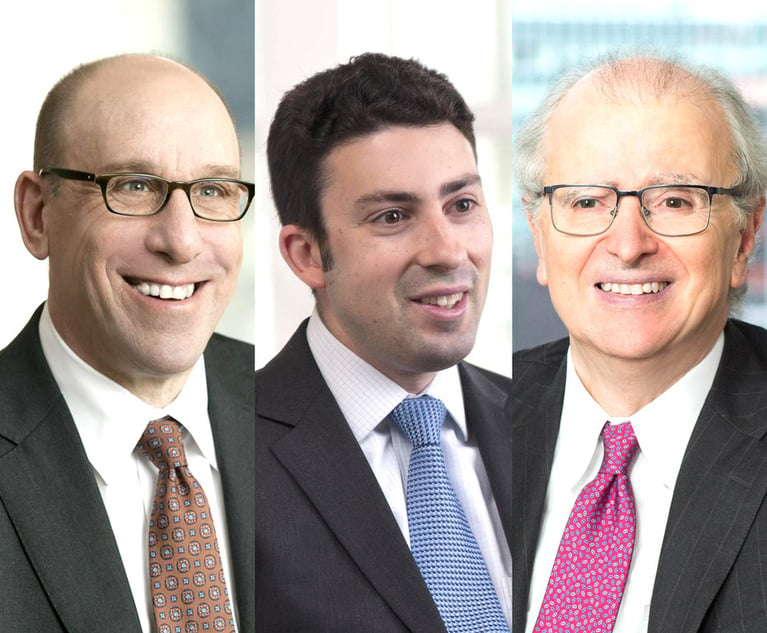
Assistant U.S. Attorneys Taryn A. Merkl, Jonathan E. Green and Laura D. Mantell prosecuted the case. Merkl and Green did not return calls for comment.
Randy Scott Zelin of Pryor & Mandelup in Westbury, N.Y., represented Lennox Parris. Douglas T. Burns represented Lester Parris.
Zelin predicted Thursday that the decision will have "major repercussions in the legal community," and praised both the judge for his diligence and the prosecution for its recognition of the shortcomings of the guidelines.
"I've never seen a judge so concerned about disparate sentences," Zelin said.