Incisive Media's Law.com
  • Law.com Network
  • Legal Web
Register for Law.com Newswire
Newsletters
RSS

Law.com Home > Donations to Law Schools Are Soaring

Font Size: increase font decrease font

Donations to Law Schools Are Soaring

They're rich, but are they efficient?

Leigh Jones

The National Law Journal

January 29, 2008

  • deliciousdel.icio.us
  • digg Digg
  • redditReddit
  • facebookFacebook
  • googleGoogle Bookmarks
  • newsvineNewsvine
  • linkedinLinkedIn
  • mixxMixx
  • stumbleuponStumbleupon
  • Print
  • Share
  • Email
  • Reprints & Permissions
  • Write to the Editor
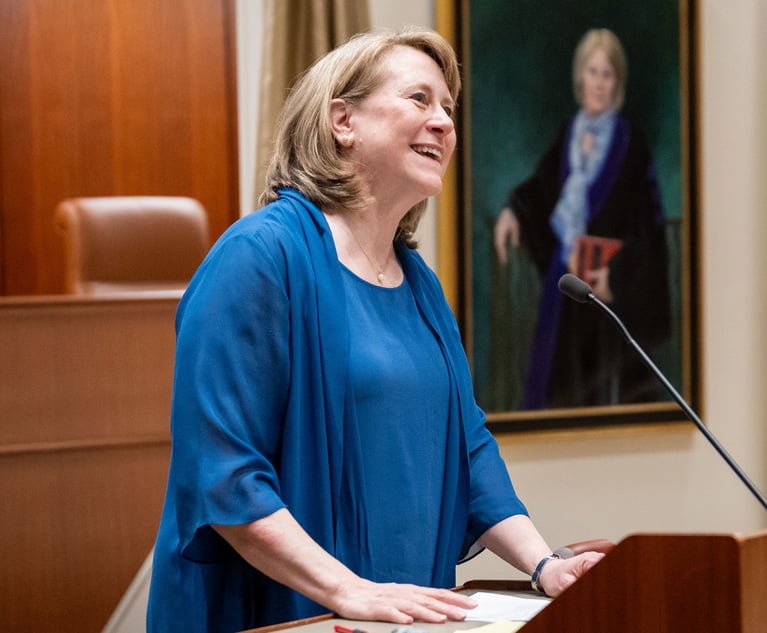
UCLA School of Law's Michael Schill

UCLA School of Law's Michael Schill

Top law schools are reporting record-breaking donations that are helping to cover tuition costs, hire faculty and promote public interest programs. But in the world of fundraising, apparently it's never enough.

Last year alone, Harvard Law School brought in $48 million in cash. New York University School of Law raised about $42 million, and Columbia Law School raked in almost $24 million. Those numbers excluded promises from donors of money yet to come, which amounted to millions more.

A look at some of the nation's elite law schools during the past five years shows huge amounts of money that they have coaxed from alums and businesses.

Rocketing costs, competition for top faculty and additional pressures to train practice-ready graduates will take every penny, according to most deans. But others question whether there is too much fat in the system.

"Money is like fuel," said Columbia Law School Dean David Schizer. "A school can go higher and higher with more fuel."

Since 2003, his school has received cash donations totaling nearly $100 million. The money has enabled the school to create seven new faculty positions, add a floor to its main building and provide more loan forgiveness to students pursuing public interest jobs after graduation, said Schizer, who became dean in 2004.

Columbia Law School, with about 1,200 students, has a $117 million annual budget. Tuition at the school is $41,226 a year. Like other schools, it has tapped into an ever-enlarging alumni base to boost donations. Three out of four graduates make donations to the school, he said.

Columbia is one of several elite law schools buoyed by recent huge gifts. Harvard, the king of the fundraisers, has received $214.9 million in donations in the past five years. New York University School of Law has collected $169.7 million since 2003, and Yale Law School, with a student body much smaller than its competitors, has garnered $111.7 million in five years.

In general, those schools and others have increased the numbers of specialized faculty, especially scholars with an international focus, and have boosted the number of scholarships available. They also have established legal clinics to provide students with practical experience and to help poor people in their communities who need legal help.

In addition, more money has sparked a talent war among elite schools, with renowned professors hopscotching from Columbia to New York University to Harvard to Yale and back again, sometimes with attractive relocation packages.

All that money also likely has enabled those schools to remain at the top of the U.S. News & World Report rankings, the annual publication both revered and reviled by law schools. More money means lower student-faculty ratios, better facilities and the ability to give scholarships to applicants with high admission test scores. All of those factors contribute to a school's ranking by the publication.

While those factors indeed may improve education, the influence of the rankings also can have perverse financial results, said Evan Caminker, dean of the University of Michigan Law School.

Because part of a law school's ranking depends upon how much it spends on each student, it can be penalized for running a tight ship, he said. The upshot is that schools may not spend dollars received, whether from donations or tuition, as wisely as they could.

"It puts pressure on schools not to become efficient," he said, adding that raising expenditures per student can serve as "a really convenient excuse" for schools to call for more money.

The University of Michigan Law School has gathered its own handsome sum of donations recently. Since 2003, the amounts received have climbed nearly threefold. Five years ago, it brought in $6 million. In 2007, the school raised $17.8 in cash. Like many other public law schools, it is receiving less and less of its funding from state sources. The school now gets about 2 percent of its annual $67 million budget from public funding, Caminker said. It has 1,130 students and charges $38,502 for nonresident tuition.

Besides funding a planned 115,000-square-foot expansion to its main building and hiring additional faculty, the money helped launch the school's Pediatric Advocacy Clinic, which enables students to work with poor families to resolve legal issues that impede children from receiving proper health care.

Dean since 2003, Caminker said that facilitating a match between the school's vision and that of potential donors is one of the most difficult parts of a dean's job. The push to raise funds can present a moral dilemma when a would-be donor's gift does not comport with a school's mission, he said.

"It becomes marginally harder to walk away when there are various external pressures to raise money," he said. "It's a difficult call."

Although fundraising is "separate and apart from rankings," said Michael Schill, dean of University of California at Los Angeles (UCLA) School of Law, the annual publication can influence how effectively they use that money once it comes in.

"It's crazy," Schill said. "In a business, you'd be ranked on how cheaply you deliver a product. In law schools, you get a higher ranking if you spend more money." UCLA law school in April will publicly launch a $100 million campaign. Schill expects to have about 50 percent of that amount pledged by April.

Regardless of the rankings, the basic tenet among all deans is that more money makes for a better law school. Richard Revesz, dean at New York University School of Law, said that the $400 million campaign at his institution in large part will go toward enhancing its needs-based scholarship program, with a particular focus on students who are the first in their families to attend graduate or professional school.

Asked if the school will ever get to the point at which the school's administrators believe that the institution finally has enough money, Revesz, who has been dean since 2002, said that the hunt will remain, due to the "ongoing need" to support faculty and students.


Subscribe to The National Law Journal

  • Print
  • Share
  • Email
  • Reprints & Permissions
  • Write to the Editor

Advertisement

Top Stories From Law.com

Legal Technology

  • Public Performance in the Digital Age

Corporate Counsel

  • United Technologies Takes a Stand, Puts Billable Hour 'on Life Support'

Small Firm Business

  • Holiday Parties: Keeping Expenses Low and Deductibility High

Advertisement

lawjobs.com

TOP JOBS

MORE JOBS >>

POST A JOB >>

Advertisement

About ALM  |  About Law.com  |  Customer Support  |  Reprints  |  Privacy Policy  |  Terms & Conditions
Close [ X ]