Incisive Media's Law.com
  • Law.com Network
  • Legal Web
Register for Law.com Newswire
Newsletters
RSS

Law.com Home > Second Ruling Is Promised on N.Y. Judicial Pay

Font Size: increase font decrease font

Second Ruling Is Promised on N.Y. Judicial Pay

Daniel Wise

New York Law Journal

January 14, 2008

  • deliciousdel.icio.us
  • digg Digg
  • redditReddit
  • facebookFacebook
  • googleGoogle Bookmarks
  • newsvineNewsvine
  • linkedinLinkedIn
  • mixxMixx
  • stumbleuponStumbleupon
  • Print
  • Share
  • Email
  • Reprints & Permissions
  • Write to the Editor
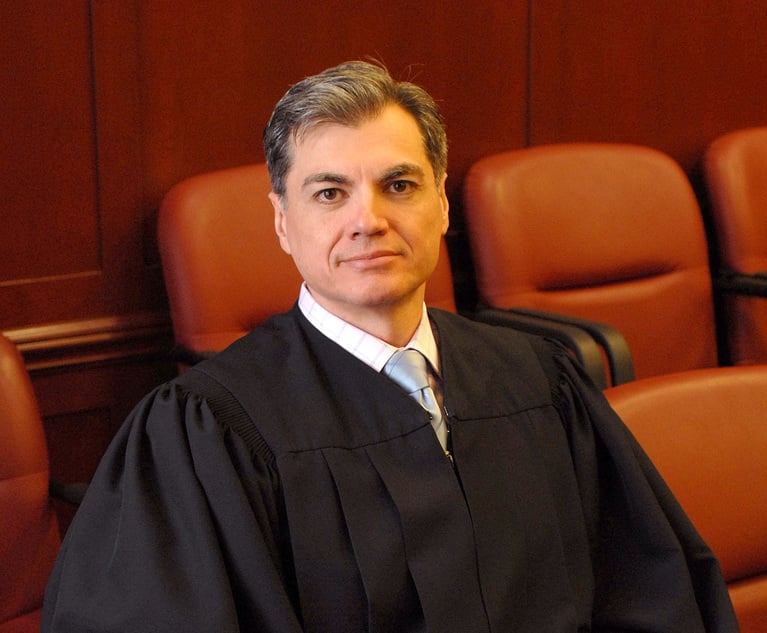
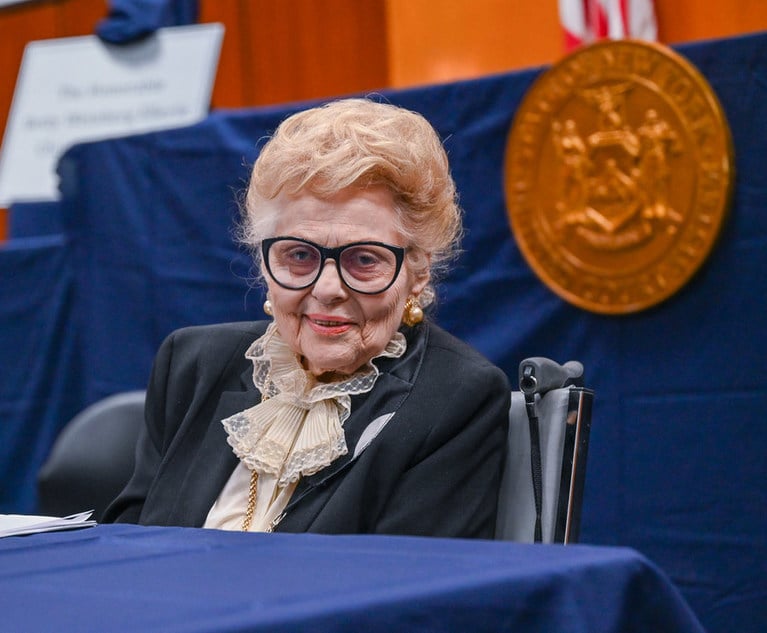
Justice Edward Lehner

Justice Edward Lehner

During oral argument Thursday of a second case to force a pay raise for New York's 1,300 judges, a Manhattan Supreme Court justice expressed views similar to those of an Albany judge, who in December ordered a trial to determine whether the Legislature's inaction since 1999 violates the separation-of-powers doctrine.

Justice Edward H. Lehner in Manhattan also determined, during a 90-minute argument on New York's motion to dismiss, that he will rule separately on the pay raise issue, denying a motion from the governor and Legislature to shift venue to Albany.

Lehner took the case under advisement and urged the two sides to settle.

In December, Acting Justice Thomas J. McNamara of Albany suggested that the three plaintiff judges in the case before him had a steep climb to prove a violation of the separation-of-powers doctrine.

Lehner, however, seemed sympathetic to the plight of the judges, whose pay has dropped to 49th in the nation when adjusted for the cost of living.

The judge pummeled Assistant Attorney General Joel Graber, who represents Gov. Eliot Spitzer and the two leaders of the Legislature, and wrung a concession from him that, at a low-enough level, judicial salaries can result in an "impairment" of judicial independence that violates separation of powers.

Lehner also grilled Graber about an issue that is not in the case -- whether the judicial compensation clause in the state Constitution precludes increases in the cost of benefits, such as a raise in the co-payments for the judges' health insurance plan.

On the merits of the case before him by four judges with the support of their judicial associations, Lehner expressed doubts that they could prevail on their claim that judicial pay has been so eroded by inflation as to violate the provision of the Constitution prohibiting a diminishment of judicial salaries, Article VI §25.

At one point, the judge said the compensation argument "seems tough," and, at another, that "very little case law supports that."

He did not point to similar difficulties with the separation-of-powers argument, but suggested that evidence that judges are leaving the bench or are working less diligently would have to be submitted.

The plaintiffs in the case before Lehner, Larabee v. Spitzer, 112301/07, are New York City Family Court Judge Susan Larabee, New York City Criminal Court Judge Patricia Nunez, New York City Civil Court Judge Geoffrey Wright and Cattaraugus County Family Court Judge Michael Nenno.

In the Albany case, Maron v. Silver, 4108-07, Justice McNamara dismissed the plaintiffs' compensation clause claim and observed that the three plaintiffs faced "a difficult task" in proving a separation-of-powers violation. He did, however, order a trial, at which the judges could try to show that "political branch benign neglect" was designed to influence the judiciary.

McNamara also said he would hear evidence on whether the Legislature had not enacted a raise because of unhappiness with court decisions on the death penalty, school funding and the respective powers of the governor and Legislature.

HEWS TO COMPENSATION CLAIM

Despite Lehner's skepticism about the compensation clause claim, the four judges' lawyer, Thomas E. Bezanson of Chadbourne & Parke, hewed closely to his argument that the clause requires an upward adjustment to reflect the effect of inflation on judges' salaries since their last raise nearly a decade ago.

At one point, Lehner joked that that approach would result in a first-year associate at a large New York City firm still taking a pay cut if she were to become the state's chief judge. Chief Judge Judith S. Kaye is paid $156,000 a year, while the pay of first-year associates at many big firms, including bonuses, is $190,000 or more.

On the separation of powers argument, Bezanson urged Lehner to reject the approach taken by McNamara and decide the issue without taking testimony.

Lehner resisted that notion, suggesting that to show an "impairment" of judicial independence, it would be necessary to show that judges are leaving the bench out of economic necessity or not working as hard.

But Bezanson insisted that all that need be shown is the toll that has been taken by inflation on judicial salaries. He said court rulings specifically bar inquiry into legislator's motives for acting, or not acting, on legislation.

Lehner, however, seemed to soften on the point when Bezanson suggested that the fact that the judiciary is demoralized is "proof that the judiciary is not being treated as a co-equal branch of government."

Bezanson's reference to a demoralized judiciary stemmed from a concession Lehner had wrung from Graber.

After grilling Graber about judges leaving the bench and threatening slow-downs, Lehner asked whether the assistant attorney general would agree that there is "no question" that the judiciary is "demoralized."

Graber conceded the point but contended that low morale had not "affected the functioning of the [judicial] branch."

The judge also asked Graber whether it would be constitutional to have kept salaries at $15,000, the level they were when he joined the bench "50 years ago."

Graber acknowledged that keeping judges' pay below the poverty level would raise a triable issue.

When Justice Lehner pressed Graber to define the level below which a constitutional issue would arise, he gamely offered the starting pay of assistant district attorneys.

Pushing further as to the starting pay for attorneys in the state Attorney General's Office, Graber said that the level depended upon the new attorney's prior experience but could be around $50,000.

Bezanson argued that both the governor and Legislature had violated the separation-of-powers doctrine by conditioning a judicial pay raise upon the enactment of other measures: a pay raise for legislators, and campaign finance reform in the case of the governor.

That insistence, Bezanson argued, relegates the judiciary "to a subordinate branch of government."

Chief Judge Kaye's latest proposal for increasing pay would boost the $136,700 annual salary of state Supreme Court justices to the level of federal district court judges. Other judges would have their salaries adjusted proportionately.

This month, federal district court judges will begin receiving a 2.5 percent cost-of-living adjustment, which will boost their annual pay to $169,300. A proposal receiving receptive treatment in Congress would further hike their annual pay to $218,000.


Subscribe to New York Law Journal

  • Print
  • Share
  • Email
  • Reprints & Permissions
  • Write to the Editor

Advertisement

Top Stories From Law.com

Legal Technology

  • Public Performance in the Digital Age

Corporate Counsel

  • United Technologies Takes a Stand, Puts Billable Hour 'on Life Support'

Small Firm Business

  • Holiday Parties: Keeping Expenses Low and Deductibility High

Advertisement

lawjobs.com

TOP JOBS

MORE JOBS >>

POST A JOB >>

Advertisement

About ALM  |  About Law.com  |  Customer Support  |  Reprints  |  Privacy Policy  |  Terms & Conditions
Close [ X ]